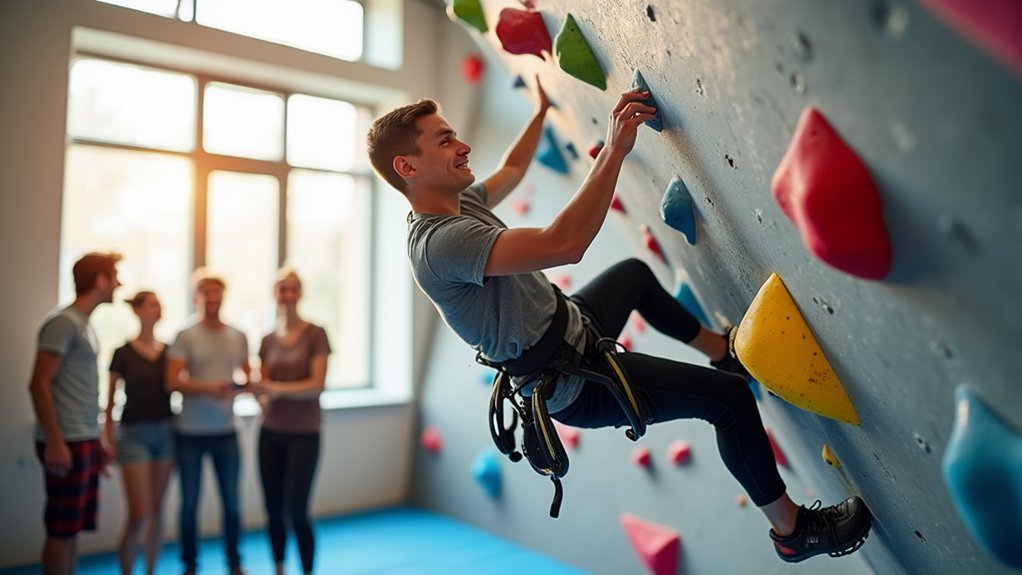
For adaptive climbing success, start with specialized equipment that fits your specific needs. Connect with adaptive climbing communities for support and guidance. Master modified movement techniques that work for your body. Establish clear communication systems with your belayer. Set achievable goals based on your current abilities. Build adaptive strength through targeted exercises. Practice in controlled environments before attempting challenging routes. The journey ahead offers incredible opportunities for both physical achievement and personal growth.
7 Rock Climbing Tips for Adaptive Beginners
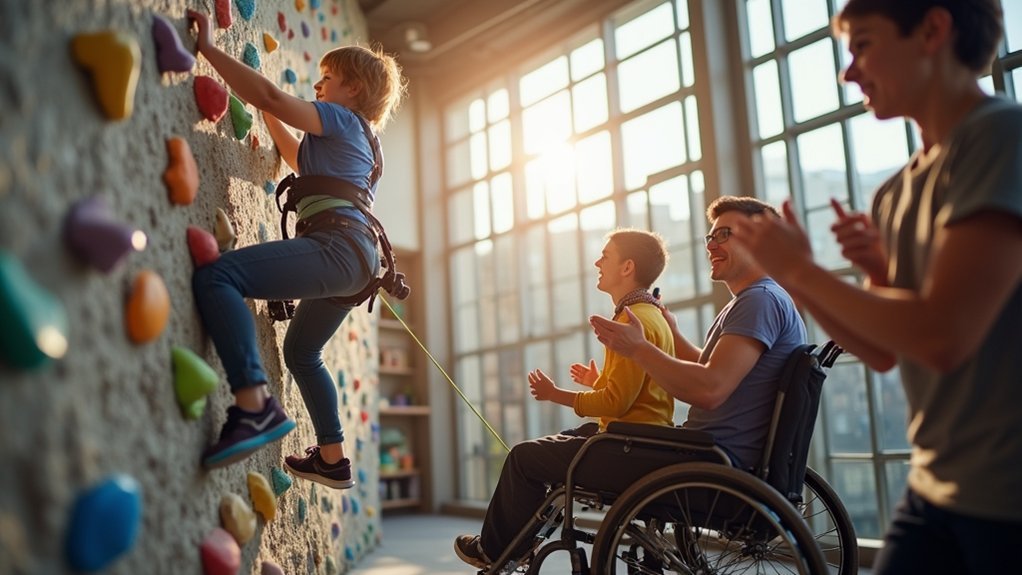
While rock climbing presents unique challenges for people with disabilities, the sport has become increasingly accessible through specialized equipment and techniques. You’ll find that customized harnesses and ascenders can dramatically improve your safety and climbing experience.
Consider joining an adaptive climbing program like those offered by the Adaptive Climbing Group. These programs provide expert instructors who understand your specific needs and connect you with a supportive community of adaptive climbers.
Adaptive climbing programs offer specialized instruction and community support, creating the perfect environment for climbers with disabilities to thrive.
Learn modified techniques such as the 5:1 system or pull-up bar ascender to navigate routes effectively. Focus on building targeted strength and balance through exercises designed specifically for your abilities.
Don’t underestimate the power of community engagement. Sharing experiences with fellow climbers can boost your motivation and transform your climbing journey from challenging to incredibly rewarding.
Finding the Right Adaptive Equipment for Your Needs
When selecting adaptive climbing equipment, you’ll need to match your specific needs with tools like specialized harnesses, prosthetics, or pulley systems that enhance your safety and performance.
Custom adaptations, including 4:1 or 5:1 pulley systems and climbing-specific prosthetics, can dramatically improve your ability to navigate routes by reducing effort and increasing stability.
Connect with adaptive climbing organizations or experienced instructors who can recommend the right combination of equipment tailored to your unique climbing goals and physical requirements.
Essential Gear Selection
Three essential considerations can make or break your adaptive climbing experience.
First, choose a specialized harness designed specifically for your body type and disability, ensuring both comfort and security during your climb. Don’t underestimate the importance of adaptive prosthetics that enhance grip and stability—they’re game-changers on challenging routes.
Second, investigate mechanical advantage systems like the 5:1 or Aztek Kit pulleys, which provide vital assistance if you have limited limb movement. These equipment used by experienced adaptive climbers can greatly improve your climbing efficiency.
Finally, connect with local adaptive climbing organizations who can guide your gear selection based on individual needs. They’ll help you access specialized resources and equipment while providing expert advice on adjustments that maximize your climbing potential.
Custom Adaptations Matter
The journey from basic gear selection to genuinely effective climbing requires personalized equipment adaptations. Your specific needs will determine which specialized tools can maximize your climbing potential.
If you have limb differences, consider prosthetics designed for climbing that enhance grip and stability on varied terrain. These technological innovations can transform your climbing experience by providing secure contact points on challenging routes.
For mobility limitations, investigate mechanical advantage systems like 5:1 pulleys or Aztek Kits. This climbing technology creates efficient ways to ascend routes that might otherwise seem impossible.
Connect with adaptive climbing organizations to find customized harnesses and equipment suited to your body. They’ll help match you with adjustable holds and inclusive route designs that accommodate your abilities while maintaining appropriate challenge levels.
Building a Supportive Climbing Community
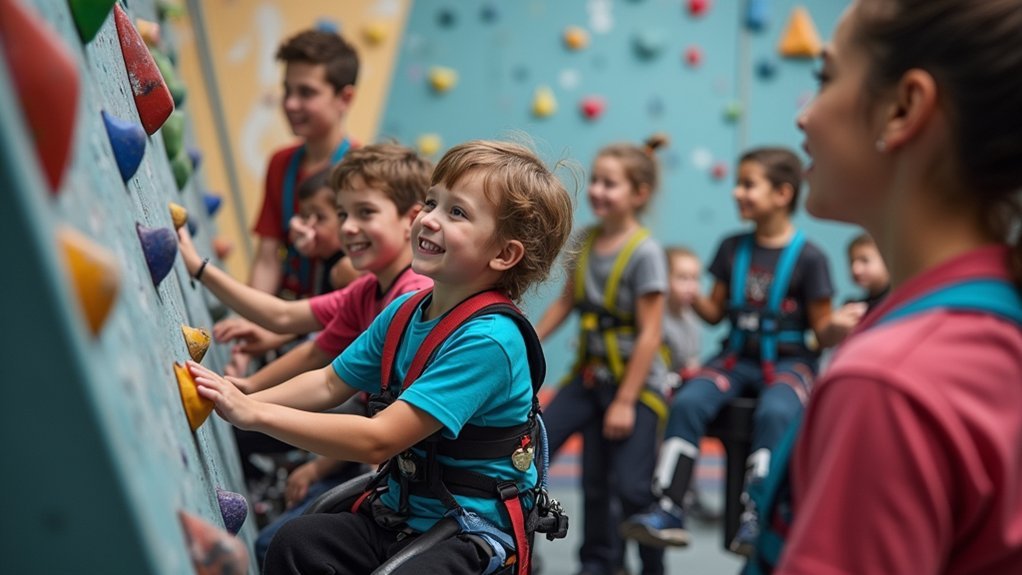
Finding your place within the climbing world becomes much easier through connection with others who share your passion. Seek out organizations like Adaptive Climbing Group and Paradox Sports that create specialized programs for people with disabilities, offering clinics and events designed to foster inclusion and skill development.
Check whether your local climbing gym offers adaptive programs—these provide valuable resources, mentorship, and a network of supportive climbers who understand your journey.
Local gyms with adaptive programs create essential communities where your climbing journey is understood and supported.
Don’t underestimate the power of social media to connect with the broader adaptive climbing community, where you can exchange tips and find motivation from others’ experiences.
Participate in community events and competitions specifically for adaptive climbers. These gatherings not only highlight achievements but strengthen the bonds that make climbing so rewarding for everyone involved.
Mastering Basic Movement Techniques With Adaptations
Successful climbing with adaptive needs requires mastering fundamental movement principles while finding personalized adjustments that work for your body. Focus on distributing your weight effectively and experiment with modified hand and footholds that suit your specific capabilities.
| Adaptive Technique | Application |
|---|---|
| Flagging | Use leg positioning to counterbalance your body weight |
| Pull-up Bar Support | Utilize for stability during challenging changes |
| Visual/Tactile Cues | Follow marked or textured routes for clearer navigation |
| Specialized Equipment | Implement adaptive harnesses for enhanced safety and mobility |
| Progressive Drills | Practice on easier routes before advancing to build confidence |
Don’t hesitate to try different climbing approaches until you find what works best. Incorporate adaptive techniques gradually as you develop your skills, remembering that customizing your climbing style is essential for long-term enjoyment and success in the sport.
Understanding Safety Systems and Communication
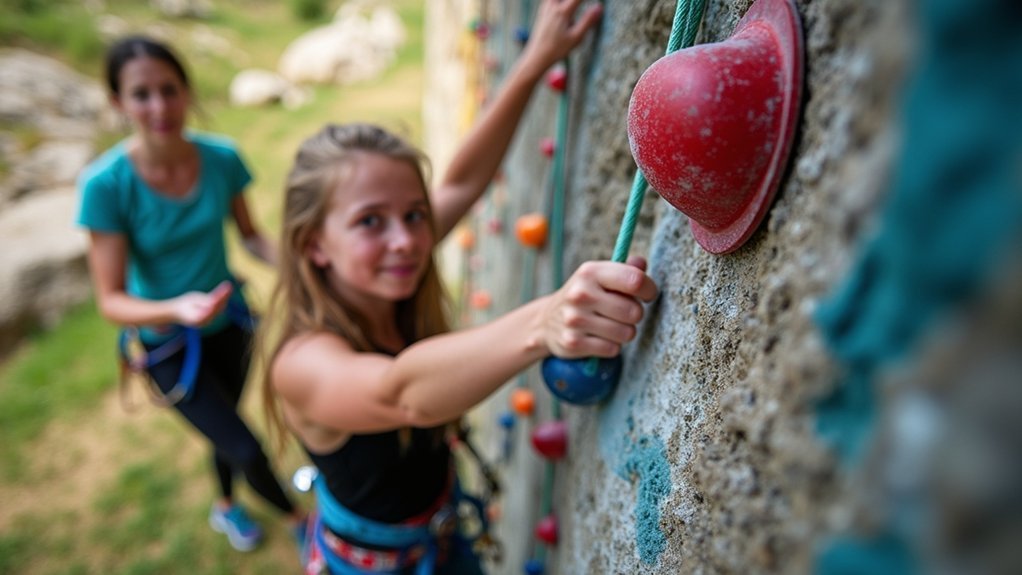
In adaptive climbing, you’ll need specialized safety equipment like the 5:1 System or inverted Aztek Kit that provides mechanical advantage for easier movement.
Clear verbal cues between you and your belayer prevent dangerous misunderstandings, especially when maneuvering through challenging sections that require additional support.
Building trust with your climbing partners starts with practicing safety checks together in controlled environments before attempting more advanced climbs.
Safety Equipment Essentials
While rock climbing provides an exhilarating challenge, your safety ultimately depends on proper equipment knowledge and clear communication skills. Investing in quality safety equipment essentials is non-negotiable for adaptive climbing success.
Start with adaptive harnesses designed specifically for your needs, ensuring proper fit and support for stability during your climb.
You’ll also need to understand the 5:1 belaying system—where your belayer manages 5 feet of rope for every foot you ascend—to maintain proper tension throughout your climb.
Always inspect your gear before each session: check ropes, carabiners, harnesses, and ascenders for wear or damage.
Establish consistent communication signals with your climbing team, using clear terminology that everyone understands.
This systematic approach to equipment management creates a solid foundation for safe, enjoyable adaptive climbing experiences.
Verbal Cues Matter
Effective communication can mean the difference between a safe climb and a dangerous situation when you’re scaling rock faces. In adaptive climbing, clear verbal cues establish a foundation of trust and safety between you and your belayer.
When at climbing gyms, use concise, specific commands that both you and your belayer understand. Consistent phrases like “climb on,” “take,” and “lower” create predictable patterns that build confidence in your safety system. Make these commands part of your regular practice sessions.
Remember to maintain eye contact when possible and supplement your verbal cues with appropriate body language, especially if you or your climbing partner has hearing or cognitive challenges.
The best communication is simple and direct—rehearse these skills frequently so they become second nature during your climbing adventures.
Establishing Trust Systems
Beyond verbal cues, the foundation of adaptive climbing relies on robust trust systems that keep you safe on the wall. Establishing clear communication with your belayer creates mutual understanding that enhances both safety and confidence during your climbs.
The 5:1 rope system is essential—your belayer manages five feet of rope for every foot you ascend, guaranteeing your movements are carefully controlled. Alternatively, you might use specialized equipment like the Aztek Kit, which functions similarly when inverted.
Always confirm your harnesses, ascenders, and other gear are properly fitted to your specific needs. Perform frequent safety checks together and maintain open dialogue about your intentions and feelings while climbing.
These practices build collaborative trust systems that support your adaptive climbing journey and prevent accidents during changes.
Setting Realistic Goals for Skill Progression
As you begin your rock climbing journey, establishing achievable goals will serve as the foundation for your development. Setting realistic goals for your skill progression allows you to celebrate small wins while building confidence and motivation. Start with short-term objectives that match your current abilities before tackling more challenging routes.
- Assess your starting point – Work with experienced adaptive climbers to understand what’s achievable with your specific capabilities and available adaptive equipment.
- Create a progression ladder – Break down your climbing ambitions into smaller, manageable steps that build upon each other.
- Schedule regular check-ins – Revisit and adjust your goals monthly based on your progress, comfort level, and newfound experiences.
Don’t hesitate to connect with adaptive climbing communities for inspiration and support in your goal-setting process.
Preparing Your Body: Adaptive Strength and Flexibility
As you begin your rock climbing journey, establishing achievable goals will serve as the foundation for your development.
Building adaptive strength through resistance training and bodyweight exercises tailored to your abilities is essential for climbing success. Focus on developing upper body, core, and grip strength specifically for climbing movements.
Don’t overlook flexibility—it reduces injury risk and expands your range of motion on the wall. Incorporate regular stretching routines into your training schedule.
Try exercises like seated rows, modified push-ups, and resistance band work to strengthen climbing-specific muscles while improving flexibility.
Consider cross-training with activities like yoga or swimming to enhance your overall conditioning.
These complementary practices will improve both your adaptive strength and flexibility, making challenging routes more accessible as you progress.
Frequently Asked Questions
Why Do Autistic People Like Rock Climbing?
You’ll find rock climbing appealing because it offers predictable structure, satisfying sensory stimulation, and logical problem-solving that matches your strengths. It’s also a supportive environment where you can build social skills at your own pace.
When a Beginner First Starts Rock Climbing, What Are Some Common Mistakes They Make?
You’ll often try routes beyond your skill level, skip proper warm-ups, and neglect equipment adjustments. You might also fail to communicate your needs to instructors and underestimate what you’re capable of achieving.
What Are the Three Golden Rules of Climbing?
You’ll find three golden rules in climbing: always use proper safety gear (harnesses, helmets, belay systems), communicate clearly with your climbing partners, and respect the environment by following etiquette and minimizing your impact on nature.
How Do You Go to the Bathroom When Rock Climbing?
You’ll need to plan bathroom breaks before climbing or use portable toilet bags during longer climbs. If you’re at a gym, use accessible restrooms. Always communicate your needs with climbing partners beforehand.
In Summary
You’re now equipped with essential tools to begin your adaptive climbing journey. Remember, your path will be uniquely yours. Trust your equipment, lean on your community, and celebrate each milestone. Don’t rush the process—climbing rewards patience and persistence. As you develop your skills and strength, you’ll discover new possibilities in the vertical world that extend far beyond the climbing gym.