Modified yoga poses offer accessible ways to build functional strength by adapting traditional positions to your unique needs. You’ll develop muscle tone and stability through chair-based exercises, wall-supported poses, and prop-assisted modifications that maintain proper alignment while reducing strain. Just 10-15 minutes of consistent practice can lead to noticeable improvements in daily activities and body awareness. The journey to strength begins with honoring your body’s abilities and gradually progressing through these adaptive techniques.
The Power of Adaptive Yoga for Building Functional Strength

While traditional yoga offers numerous benefits, adaptive yoga transforms these ancient practices into accessible strength-building tools for everyone, regardless of physical condition or experience level.
You’ll discover that modified poses help build functional strength by working with your body’s unique capabilities rather than against them.
Research confirms that adaptive yoga effectively improves muscle tone and core stability through customized modified movements.
Scientific studies support adaptive yoga’s ability to strengthen muscles and stabilize your core through personalized modifications.
By incorporating props like blocks and straps, you’ll maintain proper alignment in strength-building poses while reducing injury risk.
The practice enhances body awareness and mindfulness, connecting you to your physical potential while building confidence.
The beauty of adaptive yoga lies in its consistent results—regular practice leads to meaningful improvements in daily activities and overall quality of life.
Essential Modifications for Chair-Based Yoga Poses
When traditional yoga poses seem challenging or inaccessible, chair-based modifications offer an excellent alternative for building strength without sacrificing benefits. You’ll discover that proper alignment becomes easier when using support tools like walls or resistance bands during modified versions of classic poses.
| Pose | Modification | Benefits |
|---|---|---|
| Chair Pose | Wall support | Maintains alignment while building leg strength |
| Chair Pose | Elevated heels | Increases calf engagement and stability |
| Seated Warrior | Extended leg position | Builds strength with reduced joint strain |
| Forward Bend | Chair-supported | Improves hamstrings flexibility safely |
| Various Poses | Resistance bands | Activates additional muscle groups |
Try elevating your heels on a folded blanket during Chair Pose for an added challenge. In seated positions, you can perform modified versions of Warrior poses, extending one leg while keeping the other bent for effective strength-building.
Wall-Supported Poses to Enhance Stability and Strength
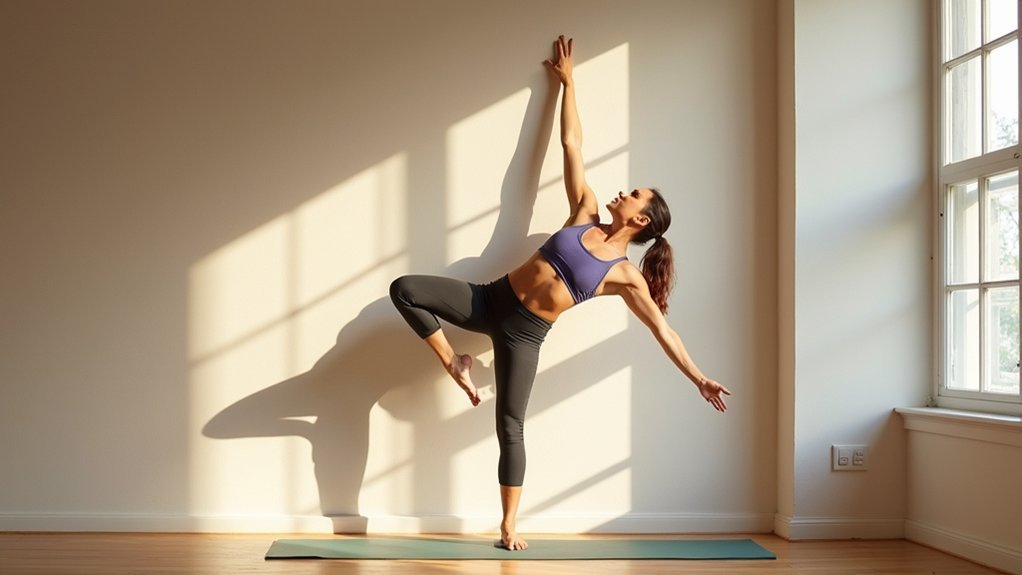
Wall-supported poses offer a perfect complement to chair-based modifications, providing another accessible approach to building strength and confidence in your yoga practice.
Using a wall helps you maintain proper alignment while engaging targeted muscle groups like your core, glutes, and quads. This support system is particularly valuable for beginners developing foundational poses without fear of losing balance.
The wall becomes your silent partner, guiding alignment while building strength—perfect for those first steps into your yoga journey.
- Try Wall Plank to build upper body and core strength while focusing on form rather than stability
- Practice Wall Warrior II to strengthen your legs while the wall guides proper alignment
- Incorporate Wall Sit to intensify quad engagement with perfect posture
- Explore Wall Bridge to improve your range of motion and posterior chain activation
These modifications enhance overall body awareness, building the endurance needed for more advanced variations as your practice evolves.
Prop-Assisted Modifications for Core Development
Props transform your core-strengthening yoga practice by providing essential support while you work on proper alignment and muscle engagement.
You’ll find that incorporating blocks, straps, and blankets allows you to maintain modified poses longer, giving your abdominal muscles time to build strength gradually without strain.
These targeted modifications help you access deeper core activation that might otherwise be unavailable in traditional poses, creating a foundation for advancing your practice safely.
Prop Support Techniques
Despite their simple appearance, yoga props serve as powerful allies in developing core strength while maintaining proper alignment. When you’re working to build stability in modified poses, props like blocks or straps allow you to achieve full range of motion without compromising form.
You’ll find your core engagement improves as you focus on technique rather than strain.
- Use blocks in Underarm Plank to maintain shoulder alignment while activating your core muscles
- Place straps around thighs during Boat Pose to provide feedback for proper leg positioning
- Rest your hands on blocks during standing balances to gradually build confidence
- Support your lower back with a bolster in core-strengthening poses to encourage mindful movement
These techniques create a foundation for beginners while developing body awareness that translates to all aspects of your practice.
Core Focus Variations
Core strength forms the foundation of a successful yoga practice, and with thoughtful modifications, you’ll access new levels of stability and control.
In Boat Pose, try placing a yoga block between your inner thighs to engage your core more effectively while improving alignment.
For Plank Pose, a folded blanket under your knees reduces pressure without sacrificing core activation—perfect when you’re building strength gradually.
Dolphin Pose becomes more accessible with a yoga strap around your forearms, helping maintain stability while you focus on core engagement rather than shoulder strain.
For seated twists, incorporate a bolster to support proper spinal alignment while still targeting those essential core muscles.
These modified variations create the perfect balance between challenge and accessibility, allowing you to develop strength safely regardless of your current flexibility or mobility limitations.
Breath-Centered Techniques to Maximize Strength Gains
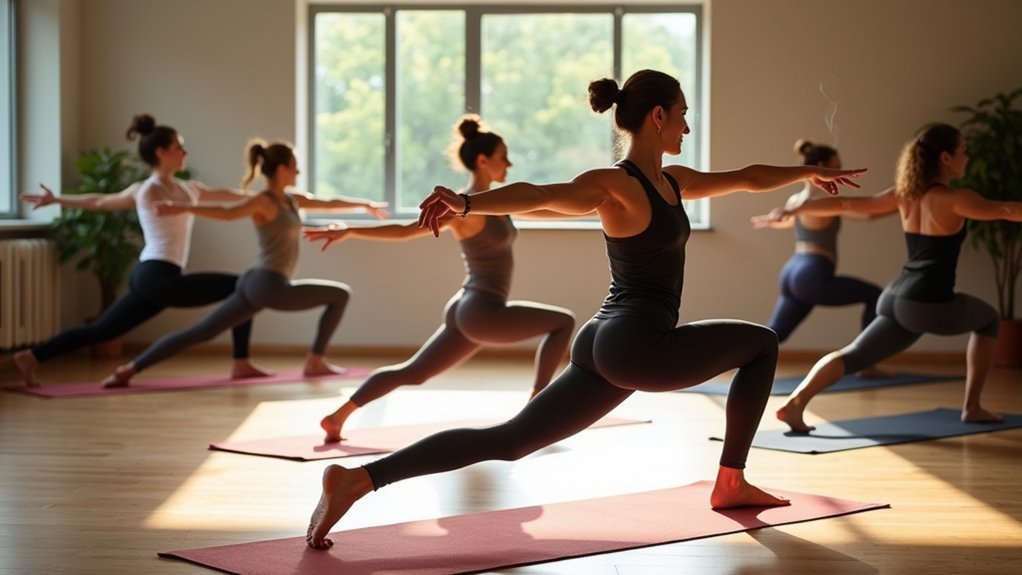
While many practitioners focus solely on physical alignment, the breath serves as the hidden engine that powers your strength development in yoga. By incorporating breath-centered techniques into your strength-building yoga poses, you’ll enhance stability and deepen muscle engagement.
Synchronized breath optimizes oxygen flow to muscles during challenging foundational poses like Plank, fueling your practice with sustained energy.
- Engage your core during exhalations by drawing your abdomen in, creating a solid foundation for poses
- Practice Ujjayi breathing to maintain focus and energy throughout intense Vinyasa flow sequences
- Inhale during upward movements and exhale during downward phases to improve control and stability
- Coordinate breath with movement to facilitate smoother shifts between poses, enhancing full-body strength
Accessible Balance Poses for Enhancing Body Awareness
As you progress in your modified yoga practice, balance poses become essential gateways to heightened body awareness and concentrated strength. Accessible balance poses like Tree Pose and Warrior III help you focus on alignment and stability, creating a powerful mind-body connection.
You’ll build strength progressively by practicing modified balance poses that accommodate your current flexibility and stability levels. Don’t hesitate to use props like blocks or a wall for additional support—these tools make challenging poses more accessible while maintaining effectiveness.
Try holding these positions longer to activate your core muscles and improve proprioception. With consistent practice, you’ll develop a stronger sense of your body’s positioning in space.
Yoga practitioners of all levels can enhance flexibility and body awareness through these foundational balancing techniques, creating a solid foundation for more advanced poses.
Progressive Strength Building Through Modified Sequences
Developing meaningful strength through yoga doesn’t require mastering complex inversions or advanced arm balances. Modified poses create an accessible path to building functional strength in just 10-15 minutes of targeted sessions. By consistently practicing sequences that include Chair Pose, Warrior I, and modified Plank, you’ll notice improved muscle tone and stability across your entire body.
- Start with props like blocks to support proper alignment while engaging your core in Boat Pose.
- Gradually increase intensity by shifting from basic poses to more challenging variations.
- Focus on core engagement during modified poses to develop foundational strength.
- Build practitioner confidence through progressive strength development at your own pace.
Your strength-building journey benefits from consistency rather than intensity—modified sequences allow you to build sustainable power while honoring your body’s unique needs.
Frequently Asked Questions
What Yoga Poses Increase Strength?
You’ll build strength with Plank Pose (core, shoulders), Chair Pose (quadriceps, hamstrings), Warrior I (lower body), Dolphin Pose (upper body), and Boat Pose (abdominals). Each targets specific muscle groups for overall stability.
Can You Build Strength Through Yoga?
Yes, you can definitely build strength through yoga. You’ll engage multiple muscle groups with poses like Plank, Warrior II, and Crow, developing muscle tone through both isometric holds and dynamic movements over time.
What Is the Best Form of Yoga for Strength?
Power Yoga and Vinyasa are your best options for building strength due to their dynamic, flowing sequences. You’ll also gain significant strength from Hatha Yoga if you consistently practice foundational poses like Plank and Warrior III.
What Is the Most Powerful Yoga Pose?
The Handstand (Adho Mukha Vrksasana) is considered the most powerful yoga pose. You’ll engage your entire body while building significant upper body strength. It’s challenging but offers tremendous benefits for your physical and mental control.
In Summary
You’ve discovered that modified yoga isn’t about limitations—it’s about possibilities. By adapting poses with chairs, walls, and props, you’re building functional strength in ways that work for your body. As you continue your practice, you’ll notice improved balance, core stability, and body awareness. Remember, it’s your breath that ties it all together. Keep embracing these accessible variations, and you’ll continue growing stronger every day.