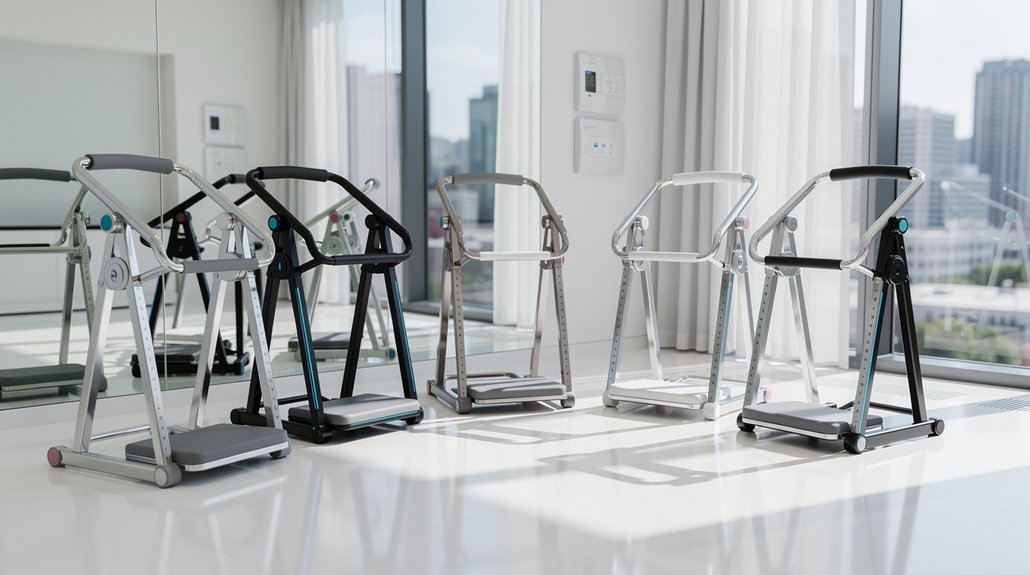
Adaptable gym workouts offer powerful mental health benefits while accommodating various physical abilities. Try seated rotations for emotional stability, single-leg box squats to reduce anxiety, and modified chest presses to release tension. Incorporate adaptive landmine rotations, single-arm strength training, low-impact assault bike sessions, seated rope pulls, and multi-rope wave therapy. These exercises combine physical strength building with emotional regulation techniques, making fitness accessible regardless of mobility limitations. The following workouts will transform both your body and mind.
10 Adaptable Gym Workouts for Mental Health

When you’re struggling with mental health challenges, finding the right exercise routine can be transformative. Adaptive fitness programs offer tailored workouts that address your unique capabilities while providing significant mental health benefits.
For individuals with disabilities or limitations, these personalized fitness routines create accessible opportunities to experience the mood-boosting effects of regular physical activity.
Research shows that consistent participation in adaptive workouts can reduce symptoms of anxiety and depression. The inclusive approach of these programs fosters valuable social connections, combating isolation that often accompanies mental health struggles.
Adaptive fitness creates a powerful intersection of physical activity, social connection, and emotional healing for those navigating mental health challenges.
Specialized trainers focus on developing exercises that build confidence and self-esteem while accommodating your specific needs. You’ll discover that adaptive fitness isn’t just about physical movement—it’s an all-encompassing tool for enhancing your emotional well-being and mental resilience.
Seated Rotation: Building Core Strength for Emotional Stability
As your mental health journey progresses, seated rotation exercises offer a powerful combination of physical and emotional benefits. This adaptive fitness technique strengthens your obliques while promoting emotional stability through enhanced physical fitness.
You’ll find seated rotation particularly accessible if you have mobility limitations, as it can be performed from any seated position, including a wheelchair.
| Benefit | Physical Impact | Mental Impact |
|---|---|---|
| Core Strength | Targets oblique muscles | Builds emotional resilience |
| Accessibility | Works for all mobility levels | Increases confidence |
| Stress Relief | Improves spinal mobility | Reduces anxiety |
| Coordination | Enhances body awareness | Sharpens focus |
| Adaptability | Scales with fitness level | Supports consistency |
The low-impact nature of this exercise makes it ideal for consistent practice, contributing to your overall well-being while creating a foundation for emotional balance through physical engagement.
Single Leg Box Squat: Grounding Exercises for Anxiety Reduction
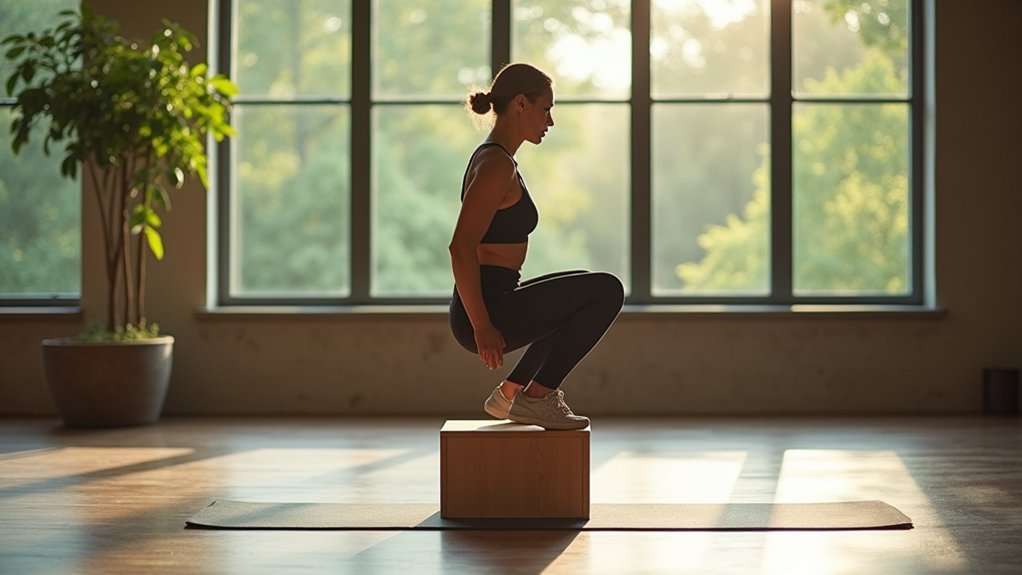
The Single Leg Box Squat stands out as a powerful grounding exercise that can considerably reduce anxiety symptoms while building physical strength. When you perform this movement mindfully, you’re not just working your lower body—you’re actively engaging in a practice that promotes mental health through improved proprioception and spatial awareness.
This exercise offers versatility for tailored fitness plans, adapting to your current ability level while still delivering benefits. As you balance on one leg and lower yourself to the box, you’re developing strength and balance that translate to greater confidence in daily life.
Your body’s focused effort creates a natural outlet for stress, clearing your mind and enhancing emotional well-being. Incorporate Single Leg Box Squats into your routine to experience both physical stability and anxiety reduction simultaneously.
Modified Chest Press: Releasing Tension Through Controlled Movements
The Modified Chest Press connects your breath with muscle engagement, creating a powerful tool for releasing built-up tension in your upper body.
You’ll discover how the controlled pushing motion naturally establishes a rhythm of inhaling during the eccentric phase and exhaling during the concentric phase, calming your nervous system.
Mind-Muscle Physical Release
Tension melts away through the deliberate motion of a modified chest press, creating a powerful mind-muscle connection that extends beyond mere physical training.
As you engage in this adaptive fitness routine, you’re not just building strength—you’re cultivating mindfulness and emotional release.
The mind-muscle connection works through:
- Focused breathing that synchronizes with each controlled movement, anchoring you to the present moment
- Endorphin release triggered by strength training, naturally elevating your mood and reducing anxiety
- Progressive adaptation that accommodates physical limitations while still providing challenge and growth
- Body awareness development as you consciously engage specific muscle groups, fostering a deeper connection with your physical self
This exercise becomes a meditation in motion, transforming a simple chest press into a powerful tool for mental health.
Anxiety-Reducing Breathing Pattern
Three critical elements converge in the modified chest press to form a powerful anxiety-reduction tool: controlled breathing, mindful movement, and deliberate tension release.
As you lower the weights, inhale deeply through your nose, allowing your chest to expand naturally. When pressing upward, exhale steadily through your mouth, releasing built-up tension.
This anxiety-reducing breathing pattern transforms a standard exercise into a mental health intervention. The rhythmic coordination between your breath and movement enhances mindfulness, grounding you in the present moment.
Research confirms that exercise improves psychological well-being when paired with controlled breathing, markedly lowering heart rate and promoting a calming effect.
Progressive Tension Control
While many focus solely on the physical benefits of chest exercises, progressive tension control through the modified chest press offers a powerful method for mental health management.
By deliberately controlling muscle tension, you’re activating a powerful mind-body connection that reduces anxiety and promotes mental clarity.
Your personalized approach to this exercise might include:
- Using lighter weights with controlled movements to focus on technique rather than maximum effort
- Adjusting bench inclines or resistance bands to match your comfort level
- Performing each repetition with deliberate tempo—inhaling during the eccentric phase, exhaling during contraction
- Concentrating on the sensation of gradually releasing tension through each controlled movement
This modified chest press technique transforms a standard strength exercise into a mindful practice, helping your body release endorphins while teaching your mind to manage stress effectively.
Adaptive Landmine Rotation: Transforming Stress Into Physical Power
The Adaptive Landmine Rotation exercise transforms your mental stress into physical power while strengthening your core and reducing anxiety through its controlled twisting movements.
You’ll find various equipment options to match your mobility needs, including seated variations that work effectively from a wheelchair.
As you master the basic rotation technique, you can gradually increase the challenge by adding weight or extending your range of motion, building both physical strength and mental resilience simultaneously.
Core-Strengthening Anxiety Relief
As anxiety builds in your body, channeling that nervous energy into purposeful movement can transform stress into physical strength. The Adaptive Landmine Rotation offers accessible core-strengthening that accommodates your physical abilities while delivering powerful anxiety relief.
Perform this exercise from a seated position or wheelchair to experience:
- Improved spinal mobility and posture, reducing physical tension that fuels anxiety
- Enhanced coordination as rotational movements engage your obliques, lower back, and abs simultaneously
- Boosted emotional regulation through mindful focus on the mind-body connection
- Increased mental well-being as endorphins release during this adaptive fitness routine
Regular practice strengthens not just your core muscles, but your resilience against anxiety, transforming what once felt like weakness into a source of power.
Adaptive Equipment Options
Maneuvering gym equipment options for the Adaptive Landmine Rotation doesn’t require specialized gear, just thoughtful modifications.
You’ll need a barbell with one end secured to the floor—either using a dedicated landmine attachment or simply wedged into a corner with padding.
This adaptive equipment transforms traditional core exercises into accessible workouts for individuals with disabilities, including those using wheelchairs. You can perform seated variations that still effectively engage your obliques and strengthen your core.
Beyond physical health benefits, these exercise programs greatly impact your mental health by releasing tension and stress.
As you rotate the barbell, you’re not just improving balance and coordination—you’re building a sense of accomplishment and control that combats anxiety.
Adaptive fitness training empowers you to harness physical movement as a tool for emotional well-being.
Progressive Rotation Techniques
When you begin exploring progressive rotation techniques, your body learns to channel mental tension into controlled physical power.
The Adaptive Landmine Rotation exercise creates a perfect bridge between fitness and mental health through core stability training that’s accessible to individuals with disabilities.
You’ll experience these transformative benefits:
- Versatile accessibility – perform seated or in a wheelchair while still engaging your obliques and lower back
- Enhanced coordination – physical activity that redirects stress and anxiety into purposeful movement
- Core strength development – improved posture and resilience through regular practice
- Mental empowerment – each rotation builds confidence as you master the exercise
This adaptive exercise doesn’t just strengthen your body—it creates a powerful outlet for transforming mental pressure into physical achievement.
Wheelchair-Accessible Cardiovascular Training for Mood Enhancement
The powerful connection between physical movement and mental wellbeing remains equally important for individuals with mobility challenges.
Wheelchair-accessible cardiovascular training options like the Seated Assault Bike and Ski Erg engage both upper and lower body muscles, boosting calorie burn while protecting joint issues.
You’ll find these adaptive fitness routines not only improve cardiovascular health but also greatly reduce anxiety and depression symptoms.
The low-impact nature of these machines guarantees you can work out effectively without risking injury, creating positive exercise experiences that enhance mental well-being.
Safe, low-impact workouts create positive experiences that naturally boost mental health while protecting your body.
Don’t underestimate the social interaction benefits—adaptive programs connect you with others during workouts, combating isolation while building emotional support networks.
With consistent participation, you’ll likely experience improved self-esteem and mood enhancement, enjoying both physical progress and a genuine sense of accomplishment.
Single-Arm Strength Training: Focusing Techniques for Racing Thoughts

Racing thoughts and mental clutter often sabotage your ability to remain present, but single-arm strength training offers a powerful antidote to this common struggle.
By focusing intensely on unilateral movements, you’ll naturally quiet your mind while building physical strength and mental resilience.
Incorporate these exercises into your routine to reduce anxiety and enhance focus:
- Single-arm pull-ups – Challenge your coordination while entering a meditative state that silences racing thoughts.
- Unilateral shoulder presses – Improve body awareness as you stabilize your core and maintain proper form.
- Single-arm rows – Build endurance while promoting mindfulness through controlled breathing.
- Asymmetrical farmer’s carries – Develop mental toughness as you balance uneven loads.
This targeted approach not only strengthens your body but creates the mental clarity needed to combat racing thoughts effectively.
Low-Impact Assault Bike Sessions for Depression Management
You’ll find assault bikes offer unique mood-boosting benefits through mindful pedaling techniques that connect your breathing to your movement.
Progress gradually with the bike’s adjustable resistance to build both physical strength and mental resilience while tracking your improvements.
Try alternating between high-intensity pushes and recovery periods to trigger endorphin release, creating a natural antidepressant effect that can last hours after your workout.
Mood-Boosting Pedaling Techniques
When feeling weighed down by depression, low-impact assault bike sessions offer a powerful yet accessible way to elevate your mood and manage symptoms.
These mood-boosting cardiovascular exercises can be tailored to your fitness level, making them ideal for those with physical disabilities or mobility challenges.
Try these accessible pedaling techniques to enhance your mental health:
- Start with gentle 5-minute intervals – Begin at a comfortable pace that allows conversation while gradually increasing resistance.
- Incorporate 30-second power bursts – Alternate between normal and increased intensity to maximize endorphin release.
- Practice rhythmic breathing patterns – Sync your breath with pedaling to create a meditative effect.
- Gradually extend workout duration – Build from 10 to 30 minutes as your body adapts, maximizing mental health benefits.
Mindful Resistance Progression
Mindful resistance progression takes the mood-boosting benefits of assault bike workouts to the next level by teaching you to listen to your body while methodically increasing challenge.
This practice fosters a powerful sense of accomplishment that naturally elevates your self-esteem with each session.
As you gradually adjust resistance levels on the assault bike, you’re not just strengthening your body—you’re building mental resilience.
This form of adaptive fitness creates an inclusive environment where everyone, regardless of mobility limitations, can access the mental health benefits of cardiovascular exercise.
The rhythmic pedaling becomes meditative, reducing anxiety while improving focus.
You’ll notice depression symptoms easing as endorphins are released during these sessions.
The key is consistency—each time you engage in this physical activity, you’re actively supporting your mental wellbeing through mindful movement.
Endorphin-Releasing Interval Protocols
Through carefully designed intervals on the assault bike, endorphin-releasing protocols create powerful natural antidepressant effects that can greatly reduce symptoms of depression.
These low-impact cardiovascular exercises provide an accessible pathway to improved mental health while minimizing joint stress.
Your tailored workouts can follow these adaptive fitness protocols:
- Start with 30-second moderate efforts followed by 90-second recovery periods to stimulate initial endorphin release
- Progress to 1:1 work-rest ratios as your cardiovascular capacity improves
- Incorporate heart rate monitoring to maintain ideal 65-80% of max HR for mental health benefits
- Schedule 3-4 sessions weekly, adjusting resistance rather than duration when energy levels fluctuate
The adjustable nature of assault bike interval training allows you to maintain consistency even during difficult periods—a vital factor in depression management.
Seated Rope Pull: Building Confidence Through Progressive Resistance
The Seated Rope Pull stands out as an exceptional exercise for individuals seeking to build confidence through physical activity. From a comfortable seated position, you’ll engage your back, arms, and core while working at your own pace.
This adaptive exercise is perfect for individuals with physical disabilities who want to improve both physical fitness and mental health simultaneously.
What makes this exercise particularly effective is its progressive resistance system. As you grow stronger, you can gradually increase weights and resistance, creating measurable achievements that boost self-esteem.
The exercise can be modified for one or two-handed use, accommodating various grip needs and strength levels. You’ll experience a sense of empowerment as you safely challenge your limits in a controlled environment, transforming physical progress into genuine confidence.
Multi-Rope Wave Therapy for Emotional Expression and Release
Often overlooked in traditional fitness programs, multi-rope wave therapy offers a powerful outlet for emotional expression while delivering a thorough full-body workout. This accessible technique harnesses rhythmic movements that simultaneously build physical strength and provide stress relief.
When you engage in multi-rope therapy, you’ll experience:
- Natural release of endorphins that combat anxiety and promote improved mood
- Engagement of core and upper body muscles while processing emotions
- Mindful focus that connects physical exertion with emotional awareness
- Adaptable intensity that accommodates your current fitness level and emotional state
You don’t need to separate mental and physical wellness—multi-rope therapy integrates both. The rhythmic motion creates a meditative state where you can process feelings while strengthening your body, making it an efficient dual-purpose exercise for holistic health.
Frequently Asked Questions
What Can You Do at the Gym for Mental Health?
You can do cardio, strength training, group classes, yoga, or Pilates at the gym to reduce anxiety, boost mood, improve self-esteem, enhance mental clarity, and decrease stress through endorphin release and social interaction.
What Is the 3-3-3 Rule Gym?
The 3-3-3 rule at the gym is your mindfulness technique where you identify three things you can see, three you can hear, and three you can feel, helping you stay grounded during workouts.
What Workout Is Best for Mental Health?
You’ll benefit most from workouts you enjoy consistently. Try cardio for mood-boosting endorphins, yoga for mindfulness, or strength training to build confidence. The best mental health workout is one you’ll actually do.
How to Make Gyms More Accessible for People With Disabilities?
You’ll create accessible gyms by installing adaptive equipment, designing wide pathways with clear signage, offering inclusive fitness classes, incorporating sensory-friendly spaces, and training staff on disability awareness and supportive practices.
In Summary
By integrating these adaptable workouts into your routine, you’re not just building physical strength—you’re creating a foundation for better mental health. Remember, exercise doesn’t need to be intense to be effective. Start where you are, modify when necessary, and celebrate your progress. Your gym time isn’t just about changing your body; it’s about transforming your mind and nurturing your emotional wellbeing.