Building strength with oxygen limitations requires strategic approaches. Master diaphragmatic breathing to maximize oxygen efficiency, then customize resistance training with extended rest periods and lighter loads. Synchronize your breathing with movement patterns and alternate between body regions to allow recovery. Monitor your essentials carefully, particularly oxygen saturation and heart rate. Implement progressive respiratory training alongside strength work, starting with brief sessions and gradually increasing intensity. These evidence-based techniques will transform your strength development journey despite respiratory challenges.
Start With Breathing Techniques That Maximize Oxygen Efficiency

How you breathe can make all the difference when working with limited oxygen capacity. Practicing slow, diaphragmatic breathing enhances oxygen efficiency by allowing deeper lung expansion and improved gas exchange—crucial for peak exercise performance.
Focus on nasal breathing rather than mouth breathing to regulate airflow and activate your diaphragm, promoting better respiratory muscle function. This technique helps your breathing muscles work more effectively during physical activity.
Try incorporating structured techniques like box breathing (4-count inhale, hold, exhale, hold) to reduce anxiety and enhance lung function. For advanced training, add breath-holding exercises to stimulate adaptations in respiratory muscles, increasing their strength and endurance.
Monitoring your breathing patterns during workouts guarantees proper oxygen delivery to working muscles, maintaining efficient muscle contractions despite oxygen limitations.
Customize Resistance Training for Low-Oxygen Conditions
You’ll need to adapt your workout strategy by implementing breathe-focused resistance patterns that synchronize movements with deliberate inhalation and exhalation cycles.
When lifting weights, try breathing out during the exertion phase and in during the recovery phase to maximize oxygen utilization during vital moments.
For interval training, modify your typical routines by extending rest periods between sets and reducing weight loads to maintain form while your body copes with oxygen constraints.
Breathe-Focused Resistance Patterns
While traditional resistance training focuses primarily on load and repetitions, breathe-focused resistance patterns offer a specialized approach for those dealing with oxygen limitations. By synchronizing your breath with strength exercises, you’ll optimize oxygen delivery when your body needs it most.
| Breathing Technique | Resistance Application |
|---|---|
| Slow, controlled breathing | Improves diaphragm function during training |
| Pursed-lip breathing | Maintains oxygen saturation during exercises |
| Breath holding at end range | Enhances isometric strength with minimal oxygen demand |
| Low-intensity breathing pattern | Supports high-repetition strength development |
Try incorporating isometric holds at the end of each exercise while maintaining deliberate breathing. This approach allows you to build strength without overtaxing your respiratory system. Adopting a high-repetition, lower-intensity approach accommodates your oxygen constraints while still stimulating muscle development.
Interval Training Modifications
Although traditional interval training demands vigorous exertion, those with oxygen limitations can still benefit from this effective training style through strategic modifications. Shorten your work periods to 10-30 seconds while extending rest intervals to 60-90 seconds, allowing sufficient oxygen supply replenishment between sets.
Use lower resistance during strength training to maintain proper form and reduce muscle fatigue risks. This approach helps you complete intervals without compromising your oxygen supply.
Try alternating between upper and lower body exercises, as different muscle groups have varying oxygen demands, optimizing recovery while maintaining activity.
Incorporate diaphragmatic breathing during rest periods to enhance oxygen intake and improve recovery times.
Consider circuit training formats with minimal rest between exercises, which maintain engagement while ensuring all movements remain manageable despite oxygen limitations.
Incorporate Strategic Rest Periods During Workouts

You’ll need to master interval training by alternating between high-intensity efforts and deliberate recovery phases that allow your oxygen levels to normalize.
Timing your rest periods correctly—typically 1-3 minutes between challenging sets—can transform your strength training results when dealing with oxygen limitations.
Master Interval Training
Because your body needs to adapt to oxygen limitations, interval training offers a strategic approach to building strength without overwhelming your respiratory system. By alternating between high-intensity exercise bursts and short recovery intervals of 30 seconds to 1 minute, you’ll enhance oxygen delivery to your muscles while preventing excessive fatigue.
This technique works exceptionally well when you’re experiencing breathlessness, as it accommodates your body’s constraints while still building muscular strength. Research confirms that interval training enhances both aerobic and anaerobic fitness, often delivering similar or greater strength gains compared to traditional steady-state workouts.
You’ll improve your workout efficiency by allowing muscles to recover during strategic rest periods, enabling sustained effort despite oxygen challenges. The rhythmic alternation between work and recovery creates an ideal environment for strength development while respecting your respiratory limitations.
Perfect Recovery Timing
When oxygen limitations challenge your workout performance, strategic rest intervals become your secret weapon for maintaining strength development. By incorporating rest periods of 30-90 seconds between sets, you’ll allow your ATP stores to replenish and anaerobic systems to recover.
For maximum muscle strength gains, extend your rest to 2-3 minutes during heavy resistance training. This longer recovery guarantees you can maintain quality and intensity in subsequent sets.
Don’t just stand still during these breaks—employ active recovery techniques that promote blood flow and oxygen delivery to working muscles.
Monitor your breathing and heart rate to gauge your recovery status. When you feel your exercise tolerance improving, you’re ready to push again. This perfect timing between efforts enables you to build strength efficiently despite respiratory constraints.
Leverage Adaptive Equipment for Energy Conservation
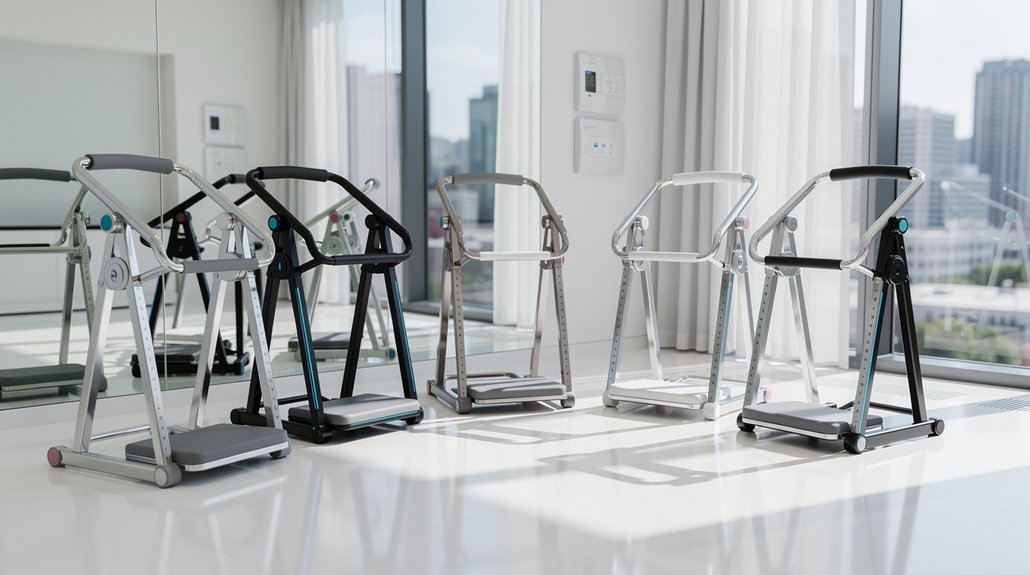
Despite facing oxygen limitations, building strength becomes more accessible and efficient with the right adaptive equipment. You’ll find that tools like resistance bands and weighted vests provide effective strength training while minimizing oxygen demand during exercises.
| Equipment Type | Benefits | Energy Conservation |
|---|---|---|
| Resistance Bands | Versatile, portable, adjustable resistance | Allows controlled movements without oxygen spikes |
| Stability Balls | Engages core, improves balance | Supports good posture while seated |
| Chair-Based Tools | Targets specific muscle groups | Reduces cardiovascular demand during workouts |
Using adaptive equipment lets you track progress and make personalized adjustments while respecting your oxygen limitations. Hand grips and ankle weights offer targeted muscle engagement without extensive energy expenditure, making your strength-building journey sustainable and effective.
Build Core Strength as Your Foundation

A strong core serves as the essential foundation for all physical activities when facing oxygen limitations. Your abdomen and back muscles provide critical spine stability, reducing injury risk while improving your body’s overall functionality.
By focusing on core strength, you’re enhancing your breathing mechanics through better diaphragm stabilization.
Core training optimizes breathing efficiency by properly anchoring your diaphragm for maximum respiratory function.
Start with basic exercises like planks and bridges to build strength and muscle endurance. These movements require minimal oxygen expenditure while maximizing stability benefits.
As you progress, incorporate resistance training to increase muscle mass, which naturally improves your metabolic rate and oxygen utilization during exertion.
Remember to advance gradually—begin with simple exercises and slowly increase intensity. This progressive approach guarantees your body adapts appropriately, creating a solid foundation that supports all your physical endeavors despite oxygen constraints.
Implement Progressive Training for Respiratory Endurance
Building respiratory endurance requires a systematic approach that gradually challenges your breathing capacity while adapting to oxygen limitations. Start with diaphragmatic breathing exercises, then progressively increase duration and resistance through specialized respiratory muscle training.
Incorporate interval training by alternating between intense breath control and recovery periods to improve oxygen delivery and utilization during activity.
| Week | Exercise Type | Duration | Intensity |
|---|---|---|---|
| 1-2 | Diaphragmatic | 5 min × 3/day | Low |
| 3-4 | Pursed-lip | 7 min × 3/day | Moderate |
| 5-6 | RMT with device | 10 min × 2/day | Moderate-High |
| 7-8 | Interval training | 15 min × 2/day | Progressive |
Monitor your progress using a spirometer to track lung function improvements, then adjust your progressive training regimen accordingly to optimize respiratory endurance development.
Monitor Your Vitals to Optimize Performance Safely
While exercising with oxygen limitations, monitoring your essential signs becomes critical to maintain safety while maximizing performance gains. Track your heart rate during activity, staying under 85% of your maximum (220 minus your age) to prevent overexertion while still challenging your muscles.
Use a pulse oximeter to measure oxygen saturation levels, ensuring they don’t drop below 90%, which could indicate your muscles aren’t receiving adequate oxygen. Count your respiratory rate to detect excessive breathlessness that signals you need to reduce intensity.
Document your perceived exertion on a 1-10 scale to gauge how hard your body’s working, and check blood pressure before, during, and after workouts.
These monitoring practices create a thorough picture of how your body responds to exercise, allowing you to make evidence-based adjustments for ideal strength development.
Frequently Asked Questions
Does Oxygen Affect Muscle Growth?
Yes, oxygen directly impacts your muscle growth. It fuels the aerobic metabolism that produces ATP for muscle contractions, supports recovery processes, and enables protein synthesis. Without adequate oxygen, you’ll experience limited hypertrophy and performance.
Can Strength Training Improve Maximal Oxygen Consumption?
Yes, strength training can improve your maximal oxygen consumption (VO2 max). You’ll experience enhanced muscle efficiency, better oxygen utilization, and increased mitochondrial density. When combined with aerobic exercise, you’ll see even greater cardiovascular benefits.
Can I Exercise With Hypoxemia?
Yes, you can exercise with hypoxemia, but you’ll need medical clearance first. Work with your doctor to create a safe plan that might include low-intensity activities, proper breathing techniques, and possibly supplemental oxygen.
What Happens When Muscles Don’t Get Enough Oxygen?
When your muscles don’t get enough oxygen, they switch to anaerobic metabolism, producing lactic acid that causes fatigue. You’ll experience reduced ATP production, decreased endurance, and possible muscle soreness during physical activity.
In Summary
You’ve now got seven practical strategies to build strength while respecting your oxygen limitations. Don’t let respiratory challenges define your fitness journey. By adapting your approach, you’ll develop strength, improve endurance, and enhance your quality of life. Remember, progress happens gradually—celebrate small wins and listen to your body. With these techniques, you’re well-equipped to build strength safely and effectively despite oxygen constraints.