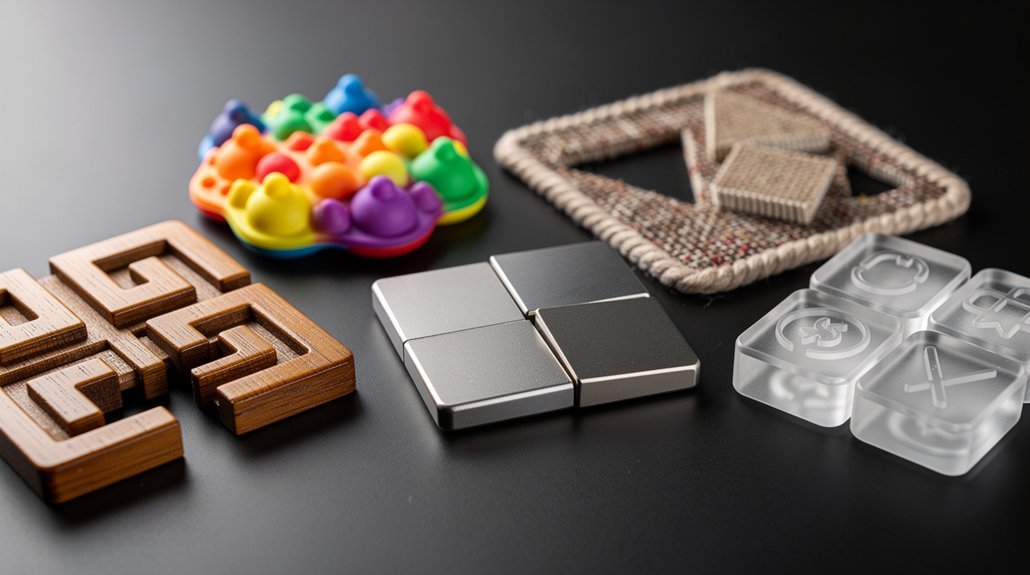
You’re looking for tactile puzzles that blend durability, clear cues, and portability, and the 2026 lineup offers exactly that. From a Braille‑embossed 3×3 speed cube that lets you solve independently to a compact domino set with raised dots and a travel box, each option caters to hands‑on enthusiasts. The fidget kit, wooden pattern blocks, and textured speed cube add variety without sacrificing accessibility. Curious how these features stack up against your needs?
| 3X3 Magic Cube for Blind Braille Embossed Speed Cube |  | Tactile Champion | Target Audience: Visually impaired users (13+) | Tactile Design: Six distinct embossed shapes per face | Material: Plastic (durable, embossed) | CHECK ON AMAZON | Read Our Analysis |
| Tactile Fidget Kit for Blind Kids (5 Toys) | 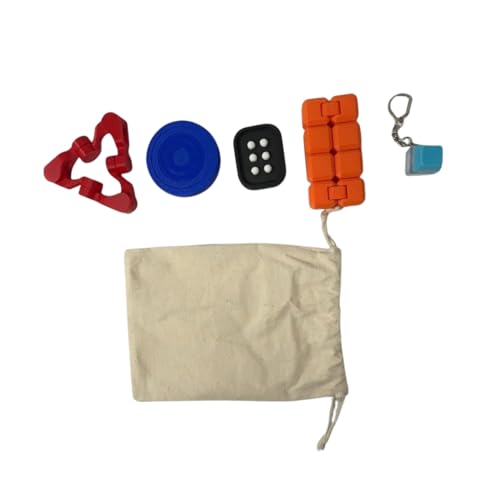 | Portable Focus | Target Audience: Blind children | Tactile Design: Fully tactile toys, Braille cell with pop‑up dots | Material: Durable plastic | CHECK ON AMAZON | Read Our Analysis |
| Braille Double 6 Dominoes Set with Storage Box |  | Social Play | Target Audience: Blind and visually impaired (2‑4 players) | Tactile Design: Raised Braille dots on both sides of each domino | Material: Wood | CHECK ON AMAZON | Read Our Analysis |
| Melissa & Doug Wooden Pattern Blocks and Boards Set |  | Montessori Classic | Target Audience: Children (Montessori, all abilities) | Tactile Design: Wooden shapes with textured edges, tactile puzzles | Material: Wood | CHECK ON AMAZON | Read Our Analysis |
| AMAZA 3×3 Speed Cube – Black Puzzle for Kids & Adults |  | Versatile Brain‑Teaser | Target Audience: General audience, includes visually impaired option | Tactile Design: Touch‑twist patches, smooth adjustable mechanism | Material: Plastic (high‑quality, adjustable) | CHECK ON AMAZON | Read Our Analysis |
More Details on Our Top Picks
3X3 Magic Cube for Blind Braille Embossed Speed Cube
The X3 Magic Cube, a 3×3×3 tactile speed cube with Braille‑embossed faces, is the top pick for anyone who needs a clear, touch‑responsive puzzle. At 2.2 × 2.2 × 2.2 inches, each side bears a distinct shape, letting you feel the difference instantly. You can solve it with eyes closed, thanks to six uniquely embossed faces that convey orientation without sight. Designed for visually impaired users aged 13 and up, it promotes independent manipulation and tactile learning. Keep in mind that color and shape configurations may differ between batches, so the product image might not match the exact appearance you receive.
- Target Audience:Visually impaired users (13+)
- Tactile Design:Six distinct embossed shapes per face
- Material:Plastic (durable, embossed)
- Portability / Storage:Small cube (2.2 in³) – easy to carry
- Educational / Developmental Benefit:Tactile learning, shape discrimination
- Age Recommendation:13 years and up
- Additional Feature:Six distinct tactile shapes
- Additional Feature:Color/shape batch variation
- Additional Feature:Closed‑eye play possible
Tactile Fidget Kit for Blind Kids (5 Toys)
Looking for a portable, tactile‑only fidget solution that also introduces Braille? This five‑toy kit delivers exactly that. Each piece is fully tactile, letting you explore shapes, textures, and pop‑up Braille dots without needing sight. The Braille cell invites you to feel and recognize patterns, building early literacy while you fidget. All toys fit snugly in a sturdy drawstring cloth pouch, so you can slip them into a backpack or pocket and stay relaxed on the go. Made in the USA from durable plastic, the set promotes focus, stress relief, and productive hand activity for blind kids.
- Target Audience:Blind children
- Tactile Design:Fully tactile toys, Braille cell with pop‑up dots
- Material:Durable plastic
- Portability / Storage:Drawstring cloth pouch
- Educational / Developmental Benefit:Braille familiarity, stress relief, focus
- Age Recommendation:Children (unspecified, blind kids)
- Additional Feature:Braille pop‑up cell
- Additional Feature:Drawstring cloth pouch
- Additional Feature:Made in USA
Braille Double 6 Dominoes Set with Storage Box
Who needs a compact, tactile domino game that’s instantly recognizable by touch? You’ll love the Braille Double 6 Dominoes Set: 28 wooden pieces with raised dots on both sides, a tactile line in the middle, and a smooth, textured surface that lets you identify each number by feel. The set fits neatly into a 19 × 6.5 × 5.5 cm storage box, making it lightweight and travel‑ready. Designed for 2‑4 players, the rules are simple, so you can start playing right away. It encourages social interaction, communication, and inclusion, while the clear raised dots support blind and visually impaired users alike.
- Target Audience:Blind and visually impaired (2‑4 players)
- Tactile Design:Raised Braille dots on both sides of each domino
- Material:Wood
- Portability / Storage:Wooden storage box (19 × 6.5 × 5.5 cm)
- Educational / Developmental Benefit:Number recognition, social interaction
- Age Recommendation:2‑4 players (all ages)
- Additional Feature:28 wooden dominoes
- Additional Feature:Dual‑sided raised dots
- Additional Feature:Travel‑friendly storage box
Melissa & Doug Wooden Pattern Blocks and Boards Set
If you need a tactile puzzle that’s both colorful and easy to manipulate, Melissa & Doug’s Wooden Pattern Blocks and Boards Set stands out. You’ll receive 120 multi‑colored wooden tiles, five double‑sided boards, and a portable storage box, letting you sort, stack, and match shapes to fill unique patterns. The set encourages spatial awareness, hand‑eye coordination, and early math concepts through open‑ended, screen‑free play. Its Montessori design supports hands‑on learning for both boys and girls, while the sturdy wooden pieces feel satisfying to touch. As a gift, it celebrates milestones and offers lasting, wholesome educational value.
- Target Audience:Children (Montessori, all abilities)
- Tactile Design:Wooden shapes with textured edges, tactile puzzles
- Material:Wood
- Portability / Storage:Portable storage box with tiles
- Educational / Developmental Benefit:Spatial awareness, early math, Montessori concepts
- Age Recommendation:Preschool‑to‑element (Montessori)
- Additional Feature:120 multi‑colored tiles
- Additional Feature:Five double‑sided boards
- Additional Feature:Montessori‑style learning
AMAZA 3×3 Speed Cube – Black Puzzle for Kids & Adults
The AmazA 3×3 Speed Cube’s high‑quality, adjustable structure and smooth‑touch twist patches make it an ideal tactile puzzle for anyone who relies on touch rather than sight—especially kids, teens, and adults with visual impairments. Its classic design feels modern, and the textured patches give you clear feedback as you turn each face. You’ll notice the cube’s sturdy core lets you tighten or loosen tension, so it stays smooth while you practice algorithms or simply fidget. Beyond speed‑solving, the cube doubles as building blocks, encouraging creativity, hand‑flexibility, and cognitive exercise. It fits holidays, birthdays, or office rewards, and the brand offers reliable support whenever you need it.
- Target Audience:General audience, includes visually impaired option
- Tactile Design:Touch‑twist patches, smooth adjustable mechanism
- Material:Plastic (high‑quality, adjustable)
- Portability / Storage:Compact cube, optional gift packaging
- Educational / Developmental Benefit:Brain‑teasing, hand flexibility, imagination
- Age Recommendation:Kids & adults (all ages)
- Additional Feature:Touch‑twist patch design
- Additional Feature:Cube‑plus‑blocks combo
- Additional Feature:Holiday‑gift packaging
Factors to Consider When Choosing Tactile Puzzle Sets for People With Visual Impairments Who Love Hands‑On Hobbies
When you pick a tactile puzzle, start by checking the material’s texture and safety, ensuring it’s sturdy yet comfortable for frequent handling. Look for clear, distinguishable features that make each piece easy to identify by touch, and consider how portable and easy to store the set is for your hobby space. Finally, match the puzzle’s complexity to the user’s age and skill level so it stays engaging without becoming frustrating.
Materials Sensory Features
What material feels right in your hand? You’ll notice that smooth, grippy wood offers a warm, natural contrast to cool, toxin‑free plastic, letting you differentiate pieces by temperature and weight. Textured patterns—raised dots, braille lines, or subtle ridges—create distinct tactile signatures that your fingertips can map instantly. Choose sets where each component varies in thickness or surface finish, because those nuances speed recognition and reduce guesswork. If a puzzle includes audible clicks or haptic snaps, the material’s elasticity matters; a slightly softer plastic yields a satisfying “pop” when pieces lock together. Clear braille or multilingual labeling on the storage box reinforces independence, letting you locate the right set quickly without visual cues.
Material Durability and Safety
Smooth, grippy wood and BPA‑free plastic feel great, but they must also hold up to daily play. You should pick sets built from solid wood or BPA‑free plastic that won’t chip, crack, or splinter under frequent handling. Check that each piece has a smooth, rounded edge and a well‑finished joint to keep hands safe while you manipulate them. Reinforced components—like solid domino tiles or screw‑fastened parts—stand up to repeated gripping, dropping, and transport without breaking. Make sure any coloring or textured coating is durable, so tactile cues stay intact over time. Finally, look for sturdy packaging or storage boxes that protect the pieces and prevent sharp edges from forming during travel.
Accessibility and Tactile Clarity
Ever wonder how a puzzle can feel intuitive without a single glance? You’ll want pieces that boast raised, well‑defined features—large dots, tactile lines, or embossed symbols—so you can locate edges and corners by feel alone. Look for Braille or raised indicators that label sections, letting you identify pieces independently of sight. Consistent feedback across all parts matters; if some pieces feel smooth while others feel grainy, you’ll mis‑identify them during play. Strong texture contrast—smooth versus bumpy surfaces, distinct edge profiles—helps you discriminate shapes quickly. Finally, make sure color cues aren’t the only differentiators; the puzzle should rely on shape, texture, and tactile markers so visual impairments never limit enjoyment.
Portability and Storage Convenience
Look for a puzzle that fits your bag without sacrificing organization? Choose a compact set that includes a sturdy pouch or box, so you can toss it in a backpack and keep pieces tidy. Look for clear dimensions and a lightweight build; a 12‑inch case weighing under a pound slides easily into a travel bag. Designs that stack or nest reduce bulk, letting you slide one module into another like a puzzle within a puzzle. Protective lids or cases guard tiny tactile pieces from getting lost during transit. Consistent batch labeling helps you spot variations in shape or color quickly, so you won’t waste time searching when you move between locations. Prioritizing these features ensures you stay organized and ready to play wherever you go.
Age Appropriateness and Complexity
A compact, well‑organized puzzle set is great for travel, but once you’ve got the pieces safely stored, the next step is matching the set’s difficulty to the user’s age and tactile skill level. Aim for age 13 + as a baseline, because most designs balance manageable cues with enough complexity to stay engaging. Look for puzzles that use distinct textures, raised‑dot markers, and varied piece sizes; these signal higher difficulty without overwhelming the thumb. If the user is new to braille, choose sets with simple, unambiguous identifiers and clear rule explanations. As tactile literacy improves, you can graduate to smaller pieces and added braille clues, ensuring the challenge scales while keeping manipulation comfortable and confusion minimal.
Frequently Asked Questions
How Durable Are the Puzzle Pieces for Long‑Term Use?
You’ll find the pieces built from high‑grade, impact‑resistant ABS and reinforced silicone, so they resist cracking, warping, and wear. Even after years of frequent handling, they stay solid and tactile.
Can the Puzzles Be Sanitized Without Damaging Textures?
You can sanitize the puzzles with mild soap and water or a 70% is solution; just wipe gently and air‑dry, and the durable silicone or ABS textures won’t degrade or lose their tactile detail.
Do Any of the Sets Include Audio Feedback Features?
Yes, you’ll find several sets that embed speakers or Bluetooth modules, delivering spoken cues or sound effects when pieces snap together, so you get tactile and auditory guidance simultaneously.
Are the Puzzles Compatible With Other Tactile Learning Tools?
You’ll find they’re compatible with most tactile learning tools; they use standard Braille‑grade dimensions and magnetic connectors, so you can integrate them with tactile boards, embossers, and adaptive apps without hassle.
What Warranty Coverage Is Offered for Manufacturing Defects?
You get a two‑year limited warranty covering any manufacturing defects; you’ll receive a replacement or repair at no cost, provided you register the product within thirty days of purchase.