
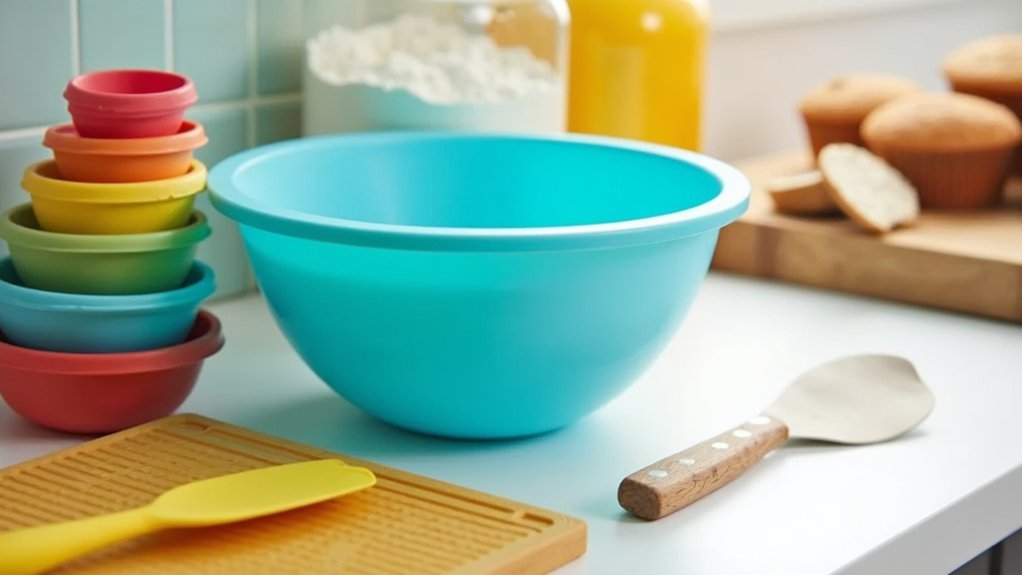
Five essential tools for special needs baking include ergonomic mixing tools with contoured handles to reduce hand fatigue, adaptive measuring equipment like angled cups for precise viewing, non-slip baking mats that stabilize work surfaces, one-handed kitchen gadgets for independent baking, and sensory-friendly tools with visual aids. These accessible options help transform baking into an inclusive activity everyone can enjoy. Discover how these simple adaptations can open up a world of culinary creativity for all abilities.
Ergonomic Mixing Tools for Reduced Hand Fatigue
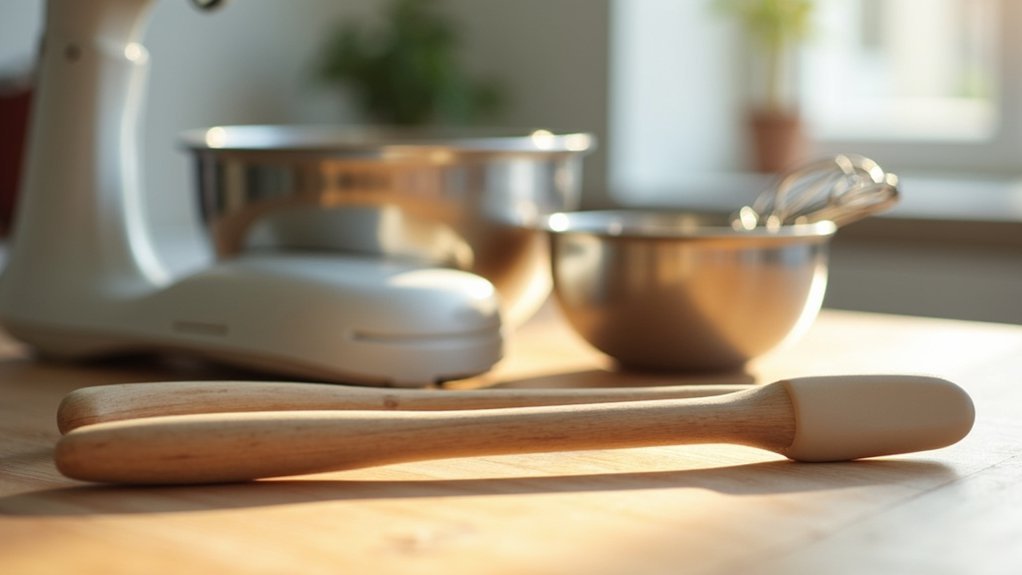
When baking with special needs, the right mixing tools can transform a challenging task into an enjoyable experience.
Look for whisks with large, contoured handles that distribute pressure evenly across your palm, reducing strain during extended mixing sessions.
Electronic mixers with ergonomic grips offer valuable assistance while requiring minimal hand strength. Many models feature adjustable speeds to accommodate different abilities and recipes. Ability Superstore offers a variety of adaptive kitchenware specifically designed to enhance independence in the kitchen.
For manual mixing, consider tools with non-slip silicone handles that provide secure control even with limited dexterity.
Leverage-based mixing tools can help you apply force efficiently through body weight rather than hand strength.
Adaptive utensil holders secure mixing implements for those with grip challenges, while tools with extended levers allow comfortable mixing from a seated position.
Adaptive Measuring Equipment for Precise Baking
Precise measurements form the foundation of successful baking, especially for individuals with special needs who may face challenges with traditional measuring tools. Adaptive measuring equipment offers solutions that enhance independence and accuracy in the kitchen.
You’ll find angled measuring cups that allow viewing from above without bending, and switch-activated options for those with mobility limitations. Many products feature non-slip bases, clear markings, and easy-grip handles to accommodate diverse abilities. Visual measuring cups with distinctive shapes and colors make size identification easier for those with cognitive challenges or visual impairments.
| Tool Type | Benefit | Recommended Brand |
|---|---|---|
| Angled Cups | Easy visibility | OXO |
| Switch-Activated | Independent pouring | Enabling Devices |
| Digital Cups | Precise measurements | KitchenAid |
| Removable Sets | Simple cleaning | Tupperware |
| Liquid Jugs | Stability while pouring | Pyrex |
These tools can be paired with other adaptive equipment, creating a fully accessible baking experience.
Non-Slip Baking Mats and Stabilizing Bowls
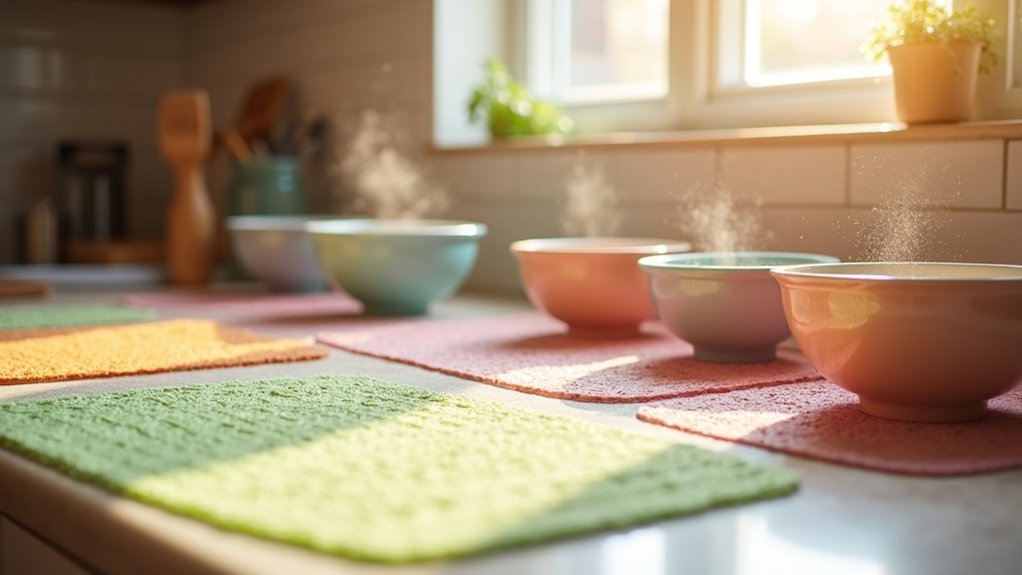
Creating a stable workspace remains essential for special needs bakers, which is where non-slip baking mats and stabilizing bowls become invaluable tools.
These mats provide a secure foundation that prevents dishes from sliding while withstanding temperatures up to 470°F. They’re typically made from 100% silicone that’s latex-free, non-toxic, and includes helpful measurement guides.
Stabilizing bowls with non-slip bases eliminate frustrating movement during mixing, giving users with limited dexterity greater independence. These tools help develop fine motor skills as children pour, measure, and mix ingredients with increased control and confidence. The combination of these tools greatly reduces kitchen accidents, particularly for children with disabilities and elderly bakers.
You’ll appreciate how these products cushion standing fatigue while protecting your countertops from heat damage. When selecting these items, prioritize high-quality anti-slip backing designed for wet surfaces to maintain grip throughout your baking projects.
One-Handed Kitchen Gadgets for Independent Baking
Independence in baking presents unique challenges for individuals with limited hand mobility or strength, making one-handed kitchen gadgets essential tools for accessible culinary experiences.
One-handed whisks eliminate the need for two-handed mixing, while adaptive measuring cups simplify ingredient preparation.
You’ll find automatic mixers and pan stirrers particularly valuable, allowing for hands-free operation while you focus on other tasks.
Battery-operated can openers and one-handed grinders reduce dependency on assistance. Placing a Dycem Non-Slip Mat under your mixing bowl prevents unwanted movement during vigorous stirring. For improved control, look for utensils with ergonomic handles and non-slip grips.
Consider investing in one-handed mixing bowls that remain stable during use and jar openers that don’t require dual-hand strength.
Many bakers also benefit from adaptive spatula sets with various sizes for different techniques, from folding delicate batters to removing cookies from baking sheets.
Sensory-Friendly Baking Tools and Visual Aids
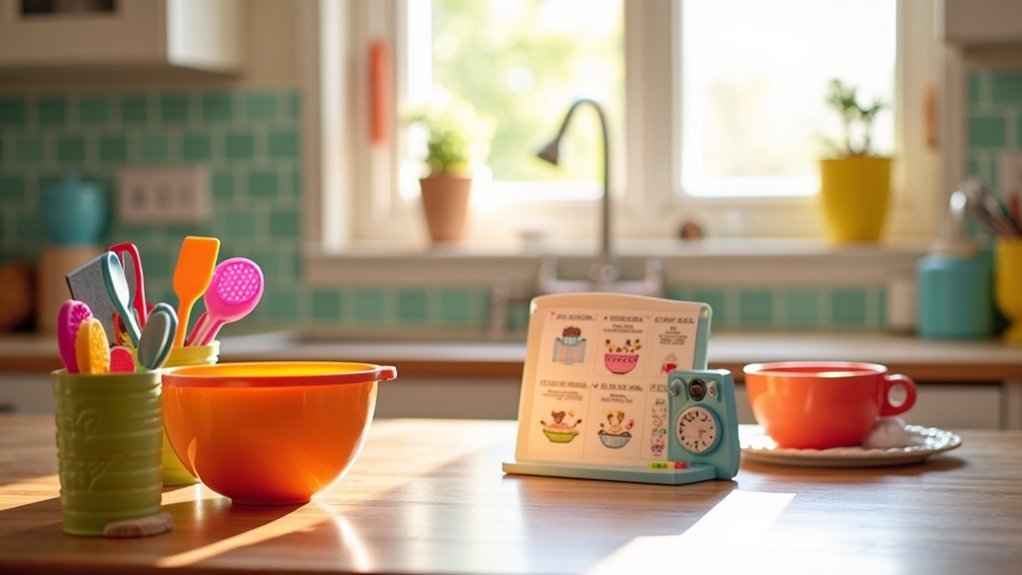
Sensory experiences in the baking process can overwhelm individuals with special needs, making sensory-friendly tools and visual aids essential components of an accessible kitchen.
Adaptive utensils with ergonomic handles improve control while reducing fatigue, and non-slip surfaces enhance stability during preparation. For individuals with limited hand mobility, EasieEaters Curved Utensils promote independent participation in baking activities.
Special baking tools designed for comfort and stability empower everyone to participate with confidence and independence.
Visual recipes and step-by-step guides with color-coded ingredients break down complex processes into manageable tasks, reducing anxiety.
For noise sensitivity, consider rubber mats, quiet cooking tools, and noise-reducing machinery to create a calmer environment.
Incorporate tactile elements through textured mixing tools and varied consistency ingredients that provide soothing sensory feedback.
Play dough practice sessions can build fine motor skills before actual baking begins.
These thoughtful adaptations transform baking from a potentially overwhelming experience into an enjoyable, confidence-building activity.
Frequently Asked Questions
How Do I Modify Recipes for Individuals With Dietary Restrictions?
Modify recipes by substituting ingredients based on specific restrictions. Use gluten-free flours, dairy alternatives, natural sweeteners, or allergen-free options. Always test for flavor and texture consistency after making your changes.
What Kitchen Modifications Can Make Ovens More Accessible?
You’ll find front controls, side-opening doors, and adjustable heights make ovens more accessible. Consider models with automatic shut-off features and guarantee there’s clear floor space for wheelchair users to approach safely.
Are There Specific Cleaning Techniques for Adaptive Baking Tools?
You’ll need to clean adaptive baking tools regularly using mild soap and water first. Follow with MadaCide-FDW-PLUS wipes for disinfection. Machine wash fabric components and check manufacturer guidelines for battery-operated tools.
How Can I Introduce Baking Skills to Nonverbal Special Needs Children?
Start with visual recipes and consistent routines. Use gestures, physical guidance, and sensory-friendly tools. Break tasks into small steps, offer positive reinforcement, and follow your child’s pace. Create a calm, organized environment for success.
Which Adaptive Tools Work Best for Group Special Needs Classes?
You’ll find visual recipe cards, non-slip mats, one-handed tools, and switch-activated equipment work best for groups. Choose durable items that accommodate various grip styles and can be easily sanitized between users.
In Summary
By investing in these five essential tools, you’ll transform your kitchen into an inclusive baking space. Whether you’re dealing with motor challenges, visual impairments, or sensory sensitivities, these adaptive tools will help you create delicious treats with greater independence and less frustration. Don’t let special needs limit your baking passion—with the right equipment, you’ll continue to enjoy the therapeutic and rewarding experience of baking.


Leave a Reply