

Adaptive balance beams transform sensory development by providing essential vestibular stimulation that enhances your child’s spatial awareness and body positioning. The textured surfaces and adjustable heights offer customized sensory input while simultaneously building core strength and stability. As kids navigate these challenges, they develop problem-solving skills, improve proprioception, and enhance emotional regulation through confidence-building experiences. These multi-sensory benefits support children at every developmental stage, creating a foundation for both physical and cognitive growth.
The Vestibular Connection: How Balance Beams Enhance Spatial Awareness

While many playground elements offer children entertainment, balance beams provide essential vestibular stimulation that’s crucial for developing spatial awareness. As children navigate these narrow pathways, they’re actively engaging their inner ear systems, helping them understand their body’s position in three-dimensional space.
Balance beams enhance both physical and cognitive development simultaneously. You’ll notice improvements in your child’s core strength and balance skills as they practice maintaining stability on different beam widths and heights.
This vestibular engagement forces their brain to integrate sensory information from multiple sources—eyes, ears, and muscles. The challenges presented when crossing these structures naturally develop problem-solving skills as children learn to adjust their movements and anticipate spatial relationships.
This sensory integration becomes fundamental for coordinated movement in everyday activities.
Adaptive Features That Support Various Sensory Processing Needs
Since children process sensory information differently, modern balance beams have evolved with adaptability at their core. You’ll find textured surfaces and varied shapes catering to diverse sensory processing needs, enhancing tactile engagement while strengthening balance and coordination.
Today’s balance beams adapt to every child’s unique sensory needs, offering textured surfaces and varied shapes that build skills while honoring differences.
The adjustable heights and widths allow you to customize challenges based on your child’s comfort level, creating a pathway for gradual skill progression. These adaptive features deliver essential proprioceptive input as children navigate their movements, fostering improved body awareness and spatial orientation.
Colorful designs and sound elements stimulate visual and auditory processing, making sensory integration more accessible for children with sensitivities.
Beyond physical benefits, these balance beams promote cognitive development through problem-solving opportunities as your child learns to adjust their movements—transforming a simple balance activity into an all-encompassing sensory experience.
Building Core Strength Through Progressive Balance Challenges
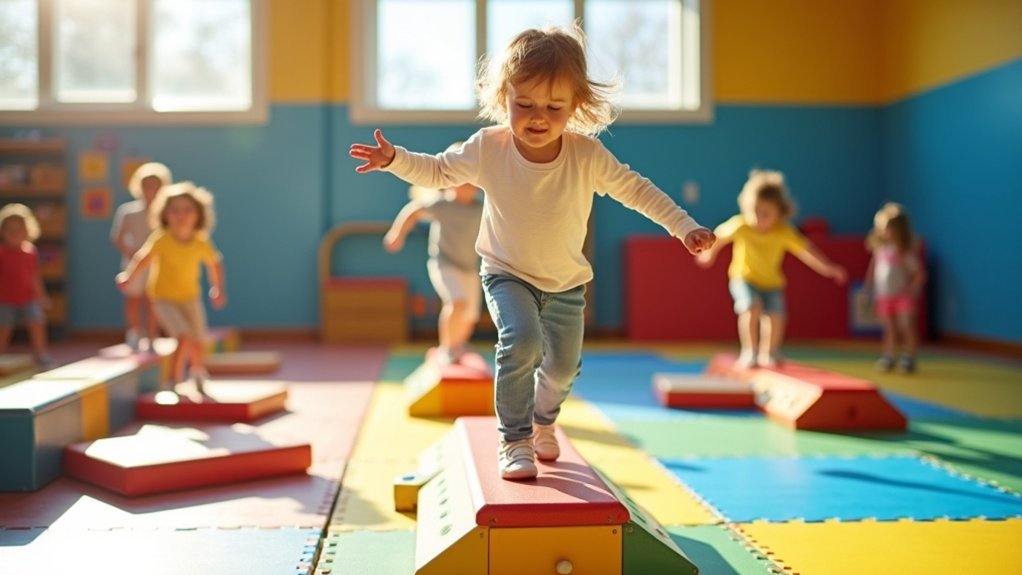
Beyond sensory development, adaptive balance beams serve as powerful tools for building core strength in children. As your child navigates varying widths and heights, they’re actively engaging their core muscles against gravity, developing essential stability and improved posture.
These physical activity platforms offer progressive challenges that naturally activate the body’s stabilizing muscles. When children hop, walk, or balance on these beams, they’re constantly adjusting their position, which strengthens their core far more effectively than stationary exercises.
The motor planning skills developed through these balance activities directly enhance gross motor development. You’ll notice your child’s overall stability improve as they master increasingly difficult challenges.
Regular beam work builds the core foundation they’ll need for more complex skill development and athletic performance later in life.
Cross-Sensory Benefits: Beyond Physical Development
Although physical development remains a primary focus, adaptive balance beams offer remarkable cross-sensory benefits that extend into cognitive and emotional domains.
When your child navigates these equipment pieces, they’re simultaneously strengthening core muscles while enhancing cognitive functions through problem-solving and multi-causal thinking.
The vestibular stimulation experienced during balance activities promotes sensory integration, developing essential spatial awareness as your child learns to control their body through movement.
You’ll notice improved emotional regulation as they face manageable risks, building confidence with each successful crossing. Even tactile development flourishes through the varied textures and surfaces they encounter.
Don’t overlook the social interaction benefits—these activities naturally encourage teamwork and communication between peers.
Balance beams create a thorough developmental experience where motor skills and sensory processing advance together, creating well-rounded developmental growth.
Therapeutic Applications for Different Developmental Stages

While children progress through distinct developmental phases, adaptive balance beams offer specialized therapeutic benefits tailored to each stage. When you incorporate these versatile tools into therapy sessions, you’ll notice how children learn to navigate sensory challenges while developing critical motor skills.
Adaptive balance beams provide stage-specific therapeutic benefits, helping children overcome sensory challenges while building essential motor skills.
- Early Development (2-4 years) – Wider beams provide a supportive foundation for children with sensory processing disorders, building confidence through achievable challenges.
- Middle Development (5-7 years) – Adjustable heights and textures stimulate proprioceptive awareness, enhancing vestibular integration.
- Advanced Development (8+ years) – Narrower configurations promote cognitive growth through complex problem-solving and risk assessment.
You’ll find that therapeutic applications of adaptive balance beams create engagement through manageable challenges, fostering emotional regulation and child development at every stage.
Frequently Asked Questions
What Do Children Learn From Balance Beams?
Balance beams teach you motor coordination, spatial awareness, and cognitive problem-solving skills. You’ll develop emotional resilience as you overcome challenges, while also improving your concentration and focus through controlled movement practice.
What Are the Learning Outcomes of Balancing Beam?
You’ll develop core strength, stability, coordination, and spatial awareness through balance beams. They’ll enhance your concentration, improve posture, and build problem-solving skills as you adapt to different balancing challenges.
How Do Balance Beam Activities Contribute to Control?
Balance beam activities improve your control by requiring real-time adjustments, enhancing motor planning, and building core strength. You’ll develop better body awareness and stability as you navigate different surfaces and configurations.
Why Is a Balance Beam Used?
You’ll use a balance beam to develop your core strength, stability, and coordination. It helps you build focus, encourages creative play, and boosts your confidence as you master new balancing skills in a safe environment.
In Summary
You’ll find adaptive balance beams are invaluable tools for your child’s sensory journey. They don’t just improve physical strength and vestibular processing—they work across multiple systems to support holistic development. Whether your child faces sensory challenges or you’re simply fostering their growth, these adjustable equipment pieces offer the perfect blend of challenge and support at every developmental stage. Consider them essential investments in your child’s sensory foundation.


Leave a Reply