

When your hands won’t cooperate during crochet, try using ergonomic hooks with cushioned grips to distribute pressure evenly. Switch to a pencil-style grip for better control, and position yarn between your pinky and ring finger for a relaxed hold. Take regular breaks to prevent cramping, and guarantee proper body positioning with good back support and adequate lighting. Small adjustments to your technique and tools can transform your crafting experience from painful to pleasurable.
Crochet Hacks When Your Hands Won’t Cooperate
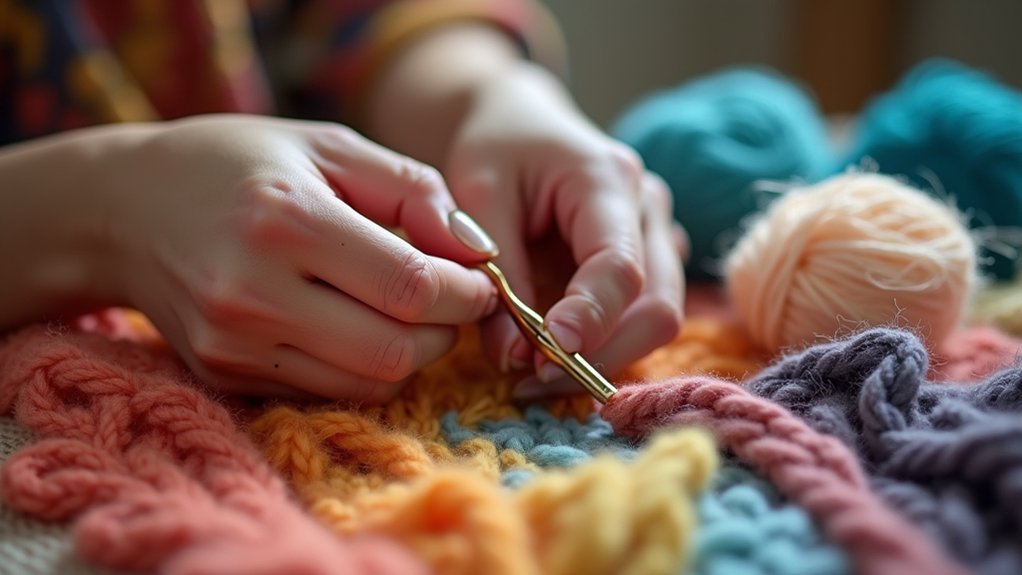
When your hands refuse to cooperate during a crochet session, you don’t need to set your project aside completely. Try holding your hook like a pencil—it might feel strange at first, but this grip can reduce strain a little bit.
Make sure you’re using the right yarn holding technique by wrapping around your middle and index fingers while stabilizing with your thumb.
Proper yarn tension starts in your fingers—wrap correctly and let your thumb be your anchor.
Don’t forget to take regular breaks to prevent cramps and give your hands recovery time.
Ergonomic hooks are worth the investment for their hand-friendly design. You can also experiment with tension control by adjusting how the yarn flows through your index finger while your pinky and ring finger maintain stability.
These small adjustments can make a significant difference in your comfort level during longer projects.
Ergonomic Tools That Reduce Hand Strain
Cushioned grip hooks offer your hands welcome relief with their larger, padded handles that distribute pressure more evenly across your palm and fingers.
Yarn tension tools eliminate the strain of manually controlling yarn tightness, allowing you to focus on your stitches while maintaining consistent tension throughout your project.
Thumb-rest attachments clip onto standard hooks, creating a comfortable platform for your thumb that prevents awkward gripping positions and reduces fatigue during longer crocheting sessions.
Cushioned Grip Hooks
Three hours into a crocheting session, your hands shouldn’t be screaming for relief. That’s where cushioned grip hooks come to the rescue.
When you first started crocheting, you probably used standard hooks, but go ahead and upgrade to these ergonomic game-changers.
The magic lies in their wider diameter handles that distribute pressure evenly across your hand. Simply wrap it around your fingers and feel the difference—soft, textured surfaces enhance your control without requiring excessive tension.
These hooks considerably reduce hand cramps and fatigue, letting you enjoy longer projects without discomfort.
Available in rubber or silicone materials, cushioned hooks maintain comfortable temperatures while you work, preventing cold hands.
For those with arthritis or hand strain, these tools provide the extra support needed to keep your creativity flowing.
Yarn Tension Tools
Maintaining consistent yarn tension might be the most underrated skill in crocheting, yet it’s responsible for both the quality of your finished pieces and the comfort of your hands.
When your hands won’t cooperate, specialized tension tools can be your saving grace.
Consider investing in tension rings or yarn guides that slip onto your finger, automatically regulating the flow of yarn without requiring your constant grip adjustment.
These small tools greatly reduce hand fatigue during longer sessions.
A yarn bowl provides another excellent solution, keeping your yarn neatly contained while allowing it to unspool smoothly as you work.
The controlled movement means less pulling and tugging, which directly translates to less strain on your wrists and fingers.
Look for adjustable options that accommodate your specific hand size and crocheting style for maximum comfort.
Thumb-Rest Attachments
The humble thumb bears much of the burden during crocheting, often leading to fatigue and discomfort that can cut your creativity short.
That’s where thumb-rest attachments come to the rescue. These ingenious tools provide additional support and stability, allowing you to maintain proper grip on your hook with less strain.
Many thumb-rests are adjustable to accommodate different hand sizes and gripping styles, ensuring a customized fit for your unique needs.
They’re particularly beneficial if you have arthritis or joint issues, as they redistribute pressure away from sensitive thumb joints.
Modified Grip Techniques for Limited Hand Mobility
Many crocheters with limited hand mobility feel frustrated when traditional methods cause pain or fatigue. Switching to a pencil grip style for your hook can dramatically improve control and comfort during your crafting sessions.
Try positioning your yarn between your pinky and ring finger while using your index finger to manage tension. This creates a more relaxed hold that reduces strain on tired hands.
Ergonomic hooks designed specifically for accessibility make a noticeable difference in your crocheting experience.
Don’t hesitate to experiment with grip aids or silicone covers that enhance stability and control.
Remember that consistent adjustments to your technique are key – you’ll need to adapt your approach as your hands respond differently throughout your crocheting sessions.
These modifications can transform painful crocheting into a pleasurable experience again.
Positioning Your Body for Pain-Free Crochet Sessions
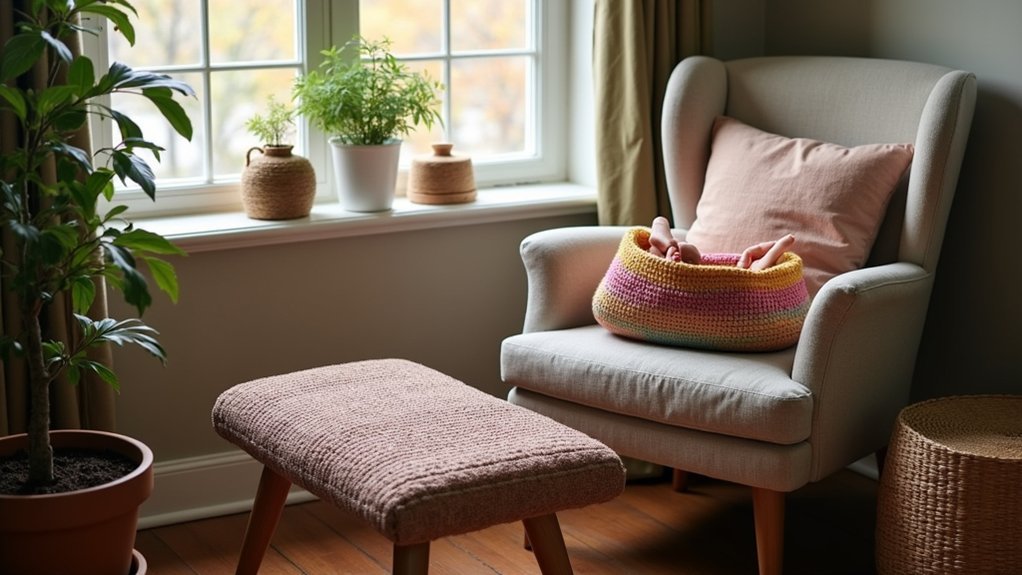
While your hands do the intricate work of crocheting, your entire body’s positioning plays an essential role in preventing pain during longer sessions. Choose a comfortable chair with proper back support to maintain good posture and reduce strain on your hands and wrists.
Proper body positioning is your secret weapon against crafting discomfort—start with a supportive chair and good posture.
For ideal comfort during your crafting time:
- Keep feet flat on the floor or use a footrest to support your legs and promote better circulation.
- Position your project at a comfortable height—whether on a table or lap—to avoid awkward angles that cause hand fatigue.
- Make sure you’re working in a well-lit area to minimize eye strain and prevent unnecessary tensing.
Don’t forget to take regular breaks to stretch your hands, wrists, and body to prevent stiffness.
Adaptive Yarn Management for Various Dexterity Levels
Different dexterity levels require customized yarn management approaches that you’ll find liberating as you explore your crochet journey.
You can transform your experience by trying alternative threading techniques like using a yarn bowl or guide, adjusting hand positions to distribute tension through your pinky and ring fingers, and adapting tools with larger grips or ergonomic designs.
These simple modifications can dramatically reduce hand strain and frustration, allowing you to focus on creating beautiful crochet pieces regardless of mobility challenges.
Alternative Yarn Threading Techniques
How can crocheters with varying dexterity levels maintain their craft without frustration? When threading yarn becomes challenging, adaptive tools can make all the difference.
Try using a crochet hook with a larger grip or ergonomic design to reduce hand strain during threading.
For smoother yarn management, consider these practical solutions:
- Use a yarn needle or hook with a wider eye to simplify the threading process, especially when precision feels difficult.
- Incorporate a yarn guide or bowl to keep yarn positioned correctly without constant readjustment.
- Try supportive tools like fingerless gloves or a crochet clamp to stabilize both yarn and hook.
These techniques allow you to focus on creating rather than struggling with yarn manipulation, making crochet accessible regardless of dexterity challenges.
Tension-Managing Hand Positions
Finding your ideal yarn tension technique can transform your crochet experience, especially if you face dexterity challenges.
Try positioning the yarn between your pinky and ring finger while using your index finger to control tension – this provides stability when your hands aren’t fully cooperative.
Experiment with different hook grips; holding it like a pencil might reduce strain and improve comfort during longer sessions.
When starting your project, steady the yarn’s tail end with your thumb and ring fingers to prevent slipping during those vital initial chains.
Don’t settle for just one approach. Regular practice with different adaptive grip styles helps identify what works best for your specific needs.
The right technique not only improves your crocheting precision but also minimizes hand cramps and fatigue during extended crafting sessions.
Grip-Saving Tool Adaptations
Beyond proper hand positioning, specialized tools can transform your crochet experience when standard equipment doesn’t work for your unique needs. Ergonomic hooks with cushioned grips provide immediate relief by distributing pressure more evenly across your hand, reducing the pinch-grip that often leads to cramping.
Don’t underestimate these game-changing adaptations:
- Add silicone or rubber grips to your existing hooks—they’re inexpensive yet dramatically improve stability for limited dexterity.
- Try hook extenders or handles that allow for a relaxed, palm-based grip rather than finger-intensive holding.
- Use yarn guides or bowls to maintain consistent tension without constant hand adjustments.
Complement these tools with fingerless compression gloves that provide warmth and support during extended sessions, keeping your hands comfortable when they’d otherwise protest.
Alternative Tension Control Methods for Weak Grip
Many crocheters struggle with maintaining proper tension when dealing with grip weakness or hand fatigue. You don’t need to rely solely on finger strength to create beautiful pieces.
Try wrapping the yarn around your pinky and ring fingers in a way that creates natural tension without constant adjustment. This technique reduces the need for tight gripping while maintaining consistent tension.
A yarn tensioner or guide can be a game-changer, as it holds the yarn at the perfect tension for you. Look for hooks with built-in tension control features that do much of the work automatically.
When traditional methods fail, experiment with ergonomic hooks featuring larger handles that provide better leverage.
Remember to take frequent breaks and stretch your hands to prevent fatigue during longer sessions.
Frequently Asked Questions
How Do You Crochet With Bad Hands?
You’ll crochet more comfortably with bad hands by using ergonomic hooks, trying different grip styles, wearing supportive gloves, adjusting yarn tension between fingers, and taking regular breaks for hand exercises.
Why Is Gen Z so Obsessed With Crochet?
You’re seeing Gen Z embrace crochet because it offers sustainable fashion alternatives, mental health benefits, creative self-expression, and community connection. Social media has amplified its popularity through viral tutorials and challenges on TikTok and Instagram.
How to Keep Hands From Cramping When Crocheting?
Hold your hook between thumb and index finger, with remaining fingers providing stability. Control yarn tension with your index finger, and take regular breaks. Try different grip styles to find what’s most comfortable for you.
How to Crochet so Your Hands Don’t Hurt?
Hold your hook between thumb and index finger. Maintain relaxed tension by threading yarn through fingers. Take breaks every 20-30 minutes. Use ergonomic hooks with cushioned grips. Stretch your hands regularly while crocheting.
In Summary
Don’t let uncooperative hands stop you from enjoying crochet. By adopting ergonomic tools, modified grips, proper positioning, and adaptive techniques, you’ll find ways to continue your craft despite limitations. Remember, it’s okay to take breaks and adjust your approach. With these hacks, you’re equipped to create beautiful projects while caring for your hands. Your crochet journey doesn’t need to end—it simply evolves.


Leave a Reply