

Adaptive bikes like handcycles and recumbent models offer stability for autistic individuals struggling with traditional bicycles. You’ll find specialized accessories—leg supports, steering dampers, and foot fixation trays—that enhance safety and comfort. Community programs provide inclusive cycling opportunities with equipment tailored to special needs, while balance bikes help develop essential motor skills. Don’t let costs deter you—organizations like AdaptAbility offer custom bikes and funding assistance to make cycling accessible for everyone on the spectrum.
Adaptive Bike Types for Sensory Integration
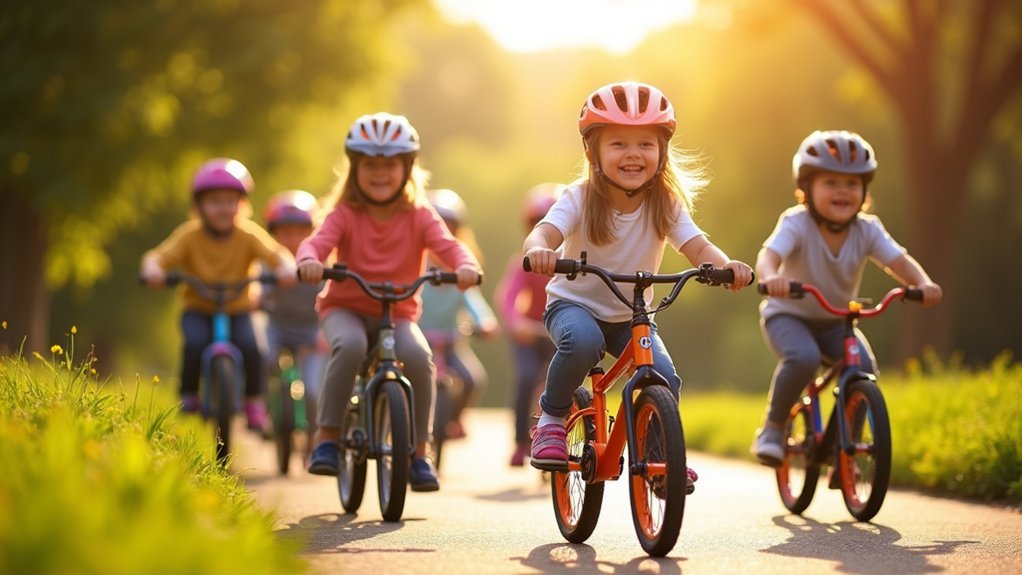
While traditional bicycles can overwhelm individuals with autism, adaptive bikes offer specialized features that transform cycling into a therapeutic sensory experience.
You’ll find handcycles and recumbent models specifically designed for stability and comfort, promoting sensory integration through controlled movement and balance.
Tandem bikes with semi-recumbent designs provide essential back support, helping riders with sensory sensitivities feel secure while experiencing cycling’s rhythmic motion.
For enhanced focus, look for adaptive bicycles with accessories like leg supports and foot fixation trays that minimize distractions.
E-assist handcycles offer customizable power options, allowing you to control speed and intensity to match specific sensory needs.
These adaptive cycling solutions, combined with specialized training programs, emphasize gradual skill development and sensory acclimation in supportive environments.
Supportive Accessories and Safety Equipment
Because safety remains paramount for cyclists with autism, specialized accessories transform standard adaptive bikes into truly personalized mobility solutions.
You’ll find supportive accessories like leg supports and positioners that secure your rider’s limbs during cycling, enhancing stability and preventing accidents.
For individuals with disabilities affecting balance, steering dampers improve stability at higher speeds, making rides notably safer.
Consider special pedals with calf support or one-sided leg support if your cyclist has partial paralysis or asymmetrical movement patterns.
Foot fixation trays deserve special attention as they hold feet securely on pedals, preventing slippage that could lead to falls.
When selecting safety equipment, focus on accessories that address your cyclist’s specific needs rather than generic solutions, ensuring they’ll experience both freedom and security while riding.
Community-Based Cycling Programs for Autism
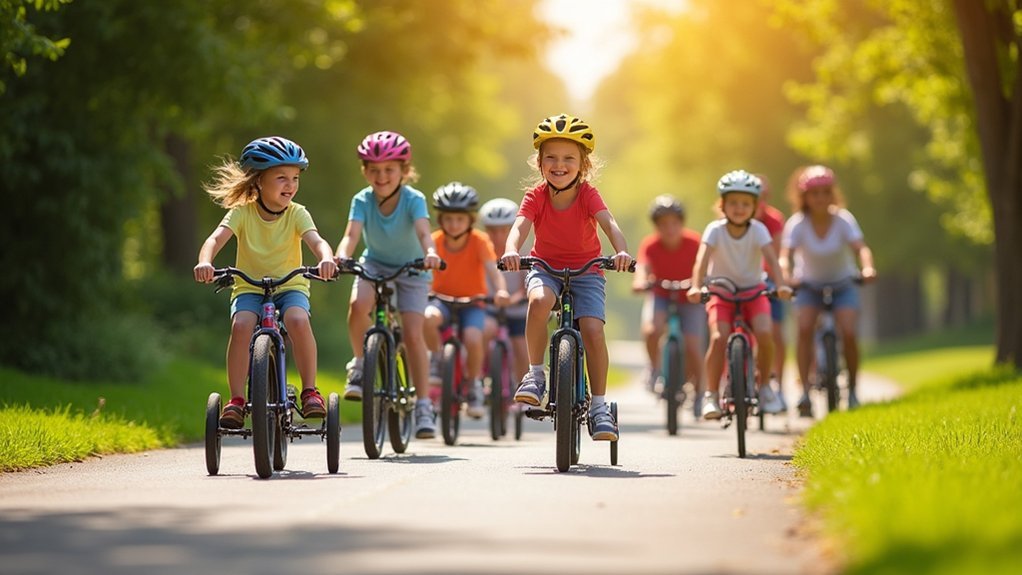
As specialized cycling initiatives continue to emerge nationwide, community-based cycling programs have become essential resources for families guiding autism. Organizations like Adaptive Adventures offer inclusive adaptive cycling opportunities that foster social connections while promoting physical activity.
You’ll find programs utilize equipment tailored to special needs, including handcycles and tandem bikes that enhance independence and confidence. Many initiatives reduce financial barriers through free programs, equipment rentals, and community rides—making cycling accessible regardless of economic situation.
Structured learn to ride camps specifically designed for developmental disabilities build confidence through step-by-step instruction, often providing participants with their own equipment after completion.
These programs frequently encourage family participation, allowing you and your child to bond while enjoying physical activities together in a supportive environment.
Balance Development and Motor Skills Training
Building balance and coordination forms the foundation of successful cycling for individuals with autism. You’ll find that specialized balance bikes allow riders to focus exclusively on stability before shifting to pedals, building confidence and independence throughout the process.
| Development Area | Training Method | Adaptive Equipment |
|---|---|---|
| Balance | Balance bikes | Stabilizers, wider seats |
| Motor Skills | Progressive challenges | Adapted handlebars, grips |
| Coordination | Guided practice | Recumbent bikes, handcycles |
Motor skills training through cycling addresses both fine and gross motor challenges commonly experienced by individuals with autism. You’ll see improvements beyond cycling as these skills transfer to daily activities. The social benefits are significant too—as your child develops these physical skills, they’ll have more opportunities to ride alongside peers and family, creating natural social interactions in an enjoyable context.
Funding Resources and Equipment Grants
While adaptive bicycles offer tremendous benefits for individuals with autism, their specialized designs often come with significant price tags.
You’ll find valuable support through the AdaptAbility Program, which provides custom adaptive bikes free of charge to families with children who’ve special needs. To apply, you’ll need to submit documentation about your child’s condition, medical recommendations, and commit to raising $1,000 for another child’s bike if selected.
AdaptAbility Program offers free custom bikes for special needs children, requiring medical documentation and a pay-it-forward commitment.
The AdaptAbility 4Ride initiative offers a no-cost rental option for therapy, exercise, or family recreation. This program addresses the affordability barrier many families face when seeking adaptive cycling solutions.
Some programs may provide conversion kits to modify existing bikes rather than purchasing entirely new equipment.
Remember that ongoing donations help maintain these bikes and expand program availability for all children with special needs.
Frequently Asked Questions
What Is the Best Bike for an Autistic Child?
You’ll find that the best bike depends on your child’s specific needs. Consider adaptive options like tricycles for stability, balance bikes for skill development, or tandem bikes for shared riding experiences.
Will Insurance Pay for an Adaptive Bike?
Insurance may cover your adaptive bike with a doctor’s prescription proving medical necessity. Check your policy, contact your provider, and consider Medicaid options. Don’t forget to document specific therapeutic benefits for stronger claims.
How to Teach Cycling to an Autistic Child?
Start with a balance bike to develop coordination, then introduce pedals gradually. Use visual aids and clear instructions. Maintain a consistent routine, and consider adaptive programs that fit your child’s specific needs.
What Is the Best Balance Bike for Autistic Children?
The Strider balance bike is often ideal for your autistic child due to its lightweight design, adjustable seat height, and ability to transform into a pedal bike as your child’s skills develop.
In Summary
You’ve now got the tools to make cycling a rewarding experience for your child with autism. From adaptive bikes to supportive programs, you’re equipped to choose options that meet their sensory and physical needs. Don’t forget to explore funding resources that can help cover costs. With the right equipment and support, you’ll watch their confidence and motor skills flourish through cycling.

Leave a Reply