
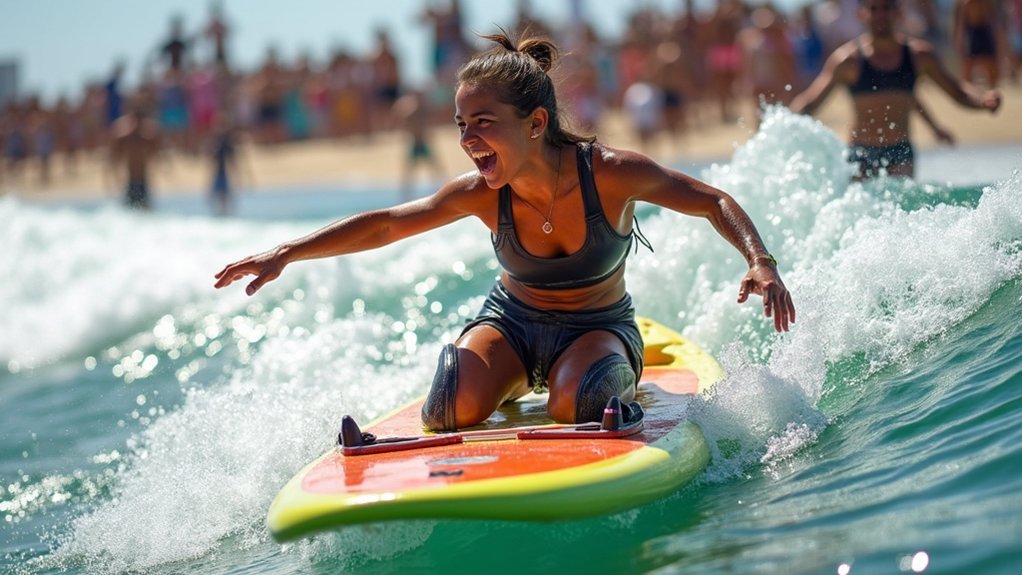
Adaptive surf gear has evolved from DIY modifications to sophisticated equipment that allows everyone to experience the thrill of catching waves. You’ll find specialized surfboards with stabilizing features, all-terrain beach chairs for sand mobility, and wetsuits with easy-entry systems tailored to different abilities. Prone boards, standing support systems, and sensory-friendly materials make surfing accessible regardless of physical or cognitive differences. Discover how these innovations connect a diverse community of wave riders in the lineup.
The Evolution of Adaptive Surfboards and Their Unique Features

While traditional surfboards have followed a well-documented evolutionary path, adaptive surfboards have undergone their own remarkable transformation since the late 1970s.
What began as DIY modifications with basic hand grips and wider decks has evolved into sophisticated designs utilizing cutting-edge materials and technology.
Today’s adaptive boards feature specialized non-slip decking, integrated support systems, and custom shapes tailored to individual needs.
You’ll find innovations like stabilizing fin configurations, strategically placed handles, and responsive materials that enhance performance for riders of all abilities.
The introduction of computer-aided design and 3D printing has revolutionized customization possibilities, while materials like carbon fiber and epoxy resins provide the ideal balance of durability and performance.
These technological advances continue making wave riding more accessible and enjoyable for everyone.
The two primary adaptive board types—prone boards with concave designs for lying down and wave skis propelled with kayak paddles—offer options for various mobility levels and preferences.
Custom Modifications for Different Abilities and Needs
Modern adaptive surfboards excel as blank canvases for personalization, transforming standard designs into highly specialized equipment tailored to individual needs. Your physical abilities directly inform how your board can be customized—from stabilizing outriggers for balance challenges to modified fin setups that enhance turning responsiveness.
Core and trunk support features integrate seamlessly with custom cushioning to maintain proper posture and reduce fatigue during sessions. You’ll find these adaptations particularly valuable if you’re managing spinal injuries or core weakness. Expert craftsmanship shines through in these thoughtful designs, where functionality never compromises the rider’s freedom on the water.
Precision trunk stabilization transforms ordinary surfboards into therapeutic platforms, especially for those navigating spinal challenges.
For different sensory or cognitive needs:
- Tactile markers and bright contrasting colors help with navigation if you have visual impairments.
- Sensory-friendly materials reduce overstimulation during wave riding.
- Custom communication tools enhance coordination between surfers and guides.
Beach Accessibility Equipment for Seamless Shore-to-Surf Transitions
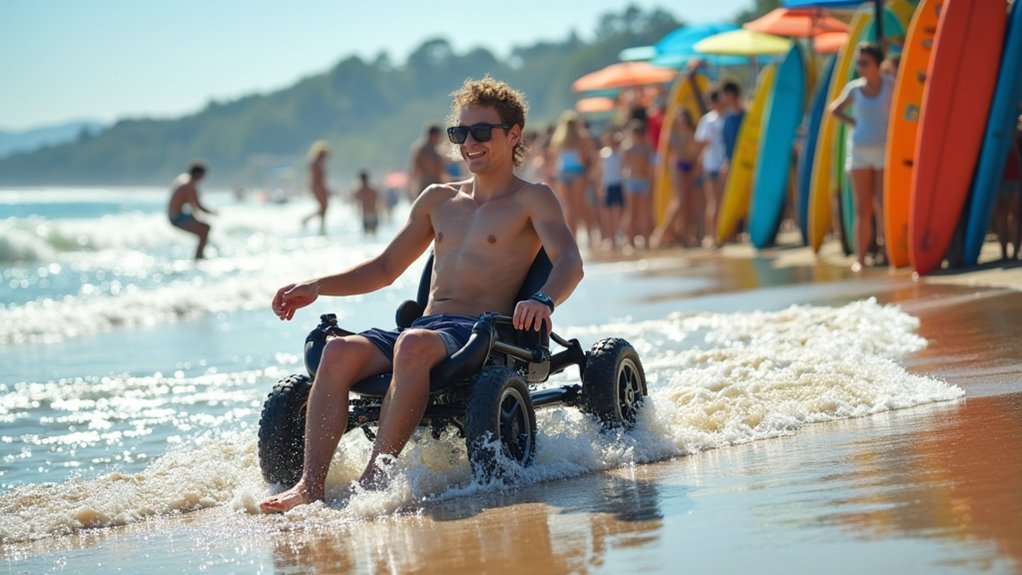
Beach changes demand specialized equipment that bridges your journey from land to waves.
All-terrain surf chairs with wide pneumatic tires carry you across sand while portable ramp systems eliminate accessibility barriers at various beach entry points.
Transfer aids like cushioned mats and board transfer systems help you move safely from your wheelchair to a surfboard with assistance from trained volunteers. AccesSurf provides Mobi Chairs that feature buoyant tires and floating armrests, allowing participants to transition smoothly into the water.
All-Terrain Surf Chairs
For individuals with mobility challenges, all-terrain surf chairs represent a revolutionary advancement in beach accessibility, enabling seamless changes from shore to surf without compromising independence or comfort.
These adaptive chairs come in various models like TerraWheels, Hippocampe, and EZ Roller—each offering specialized features from stainless steel #316L frames to floating pontoons. You’ll find chairs with weight capacities up to 300 pounds and quick-disassembly options for easy transport. The TerraWheels model features rear swivel wheels for enhanced maneuverability across challenging beach surfaces.
- Durable Construction – Marine-grade materials resist saltwater corrosion, with options including aluminum, PVC, and stainless steel frames.
- Custom Comfort – Adjustable backrests, headrests, and swing-away footrests adapt to your specific needs.
- Terrain Versatility – Specialized wheels (balloon, WheelEEZ) navigate sand, water, grass, and gravel with minimal effort.
Ramp Systems
While sand creates the iconic beach experience most people enjoy, it presents a significant barrier for wheelchair users and those with mobility challenges.
Modern ramp systems solve this problem with roll-out mats and modular pathways specifically designed for beach terrain.
You’ll find market-leading options like Mobi-Mat®, Access Trax, and ACCESSREC that provide ADA-compliant surfaces from parking areas to waterline.
These systems feature high-strength, UV-resistant materials with textured surfaces for slip resistance and drainage.
The beauty of these systems lies in their simplicity—they’re lightweight, easy to install without heavy machinery, and can be customized to match your beach’s unique layout.
When properly deployed, these ramps transform inaccessible shorelines into inclusive spaces where everyone can enjoy the surf experience.
Mobi-mat® offers a variety of wood-like and blue roll-up walkways in different widths, with prices from $569.00 for their most economical options.
Transfer Aids
Once surfers with mobility challenges reach the shoreline, they face another critical hurdle: transferring from land to water safely and comfortably.
Modern transfer aids bridge this gap with specialized equipment designed for seamless shore-to-surf transfers.
Beach wheelchairs like the Mobi can roll across sand and float in water, while custom handles attached to surfboards provide better grip for surfers with physical limitations.
You’ll find these aids are built with lightweight, durable materials that function in both wet and sandy environments.
For a truly empowering surf experience, look for:
- Adjustable assistive straps that help maintain proper positioning on the board
- Floatation devices that enhance stability during the ride
- Transportation devices with secure harnesses for safe water entry
These innovations continue to expand accessibility, allowing more diverse populations to experience the thrill of surfing.
The surfboard cart with wide wheels offers excellent mobility over sandy terrain, making it easier to transport equipment to the water’s edge.
Prone Surfing: Equipment and Techniques for Lying Down Riders

Prone surfing has evolved markedly with specialized equipment designed to enhance the experience for riders who prefer the lying-down position. You’ll find lightweight carbon construction enables better response and efficient pumping for greater control. Models like the F-One Rocket Surf are specifically built for speed and effortless paddling in both small and big wave conditions.
When selecting prone foil equipment, consider these performance elements:
| Aspect | Beginner Friendly | Advanced Performance |
|---|---|---|
| Foil AR | Lower (4-5) | Higher (6+) |
| Board | Flatter profile, balanced volume | Compression molded, high-density core |
| Mast | Shorter (70-75cm) | Longer (82-83cm) |
| Technique | Focus on stability | Master weight shifts for control |
To optimize your prone surfing, practice proper weight distribution along the rails and tail. Early takeoff is essential—look for designs reducing drag while promoting efficient planning to catch waves sooner and maintain consistent speed.
Standing Support Systems for Balance and Stability
Standing support systems revolutionize adaptive surfing by providing essential balance and stability aids for those who face mobility challenges yet prefer a vertical stance in the water.
These innovations transform the surfing experience through customized equipment like orthotic devices, specialized wetsuits, and board modifications.
When you’re ready to catch waves standing up, you’ll benefit from:
- Removable handles and adjustable leg straps that offer immediate support while maintaining your independence
- Voice-activated controls and smart sensors that provide real-time feedback on your body position
- Quick-release mechanisms and high-visibility components that prioritize your safety in the water
Training tools like balance assessments and adaptive clinics help you master these systems while building confidence and strength. The stand position allows surfers to ride while standing, with or without prosthetics, promoting individual adaptations based on personal needs.
Wetsuit Innovations Designed for Adaptive Surfers
Wetsuit innovations have revolutionized accessibility for adaptive surfers through easy-entry designs featuring additional zips and gusset modifications.
You’ll find these specialized wetsuits offer vital thermoregulation support systems that adjust thickness and enhance buoyancy to accommodate diverse physical needs.
These adaptations from collaborations like Finisterre and Bodyline promote independence and inclusivity, allowing you to enter and exit wetsuits with greater ease regardless of mobility challenges. The Finisterre Foundation’s impact shows how adaptive wetsuit projects can transform lives while removing barriers to ocean access for improved well-being.
Easy-Entry Designs
While traditional wetsuits can present considerable challenges for surfers with limited mobility, innovative easy-entry designs are revolutionizing the adaptive surf scene.
Top brands like O’Neill and Finisterre now offer wetsuits with alternative closures, wider openings, and adjustable panels specifically engineered for diverse body shapes and abilities.
These accessibility-focused innovations stem from real-world challenges faced by adaptive surfers, with three key features that make all the difference:
- Front-entry systems with magnetic closures or Velcro that enable independent dressing
- Expandable gussets at shoulders and torso that enhance range of motion
- Reinforced, quick-dry linings that prevent skin irritation while maintaining durability
The University of Oregon’s winning wetsuit design in the international #CREATE4AdaptiveSurfing competition will soon be manufactured by Reef South Africa.
You’ll find both custom modification services and off-the-rack options available, considerably reducing barriers to enjoying the ocean.
Thermoregulation Support Systems
For surfers with mobility limitations or sensory challenges, maintaining ideal body temperature becomes particularly essential during extended water sessions.
Today’s adaptive wetsuits feature advanced thermal insulation with high-density neoprene and specialized linings that retain core warmth without restricting movement.
You’ll find anatomically mapped designs with double-layered panels strategically placed to protect critical areas while temperature-regulating nanofibers adjust to your body heat dynamically.
Many suits incorporate non-abrasive linings that reduce sensory irritation and internal safety pockets for medical necessities.
The latest innovations include embedded sensors that monitor your core temperature and alert you to hypothermia risk—crucial if you have temperature sensitivity issues.
Manufacturers are increasingly using sustainable materials too, with plant-based neoprene alternatives that offer the same thermal properties while reducing environmental impact, such as Yulex R2 Front-Zip produced through Patagonia’s collaboration with Yulex.
Finding the Right Adaptive Surf Instructor and Program
Selecting a qualified adaptive surf instructor and program represents one of the most essential decisions you’ll make on your adaptive surfing journey.
Look for instructors with ISA certification specifically in adaptive surfing and surf rescue qualifications who demonstrate expertise in working with your specific needs.
When evaluating potential programs, consider:
- Safety protocols – Confirm they maintain thorough emergency response plans and first aid capabilities.
- Equipment adaptation – Verify they offer specialized boards and gear modifications suitable for your requirements.
- Community integration – Choose programs that promote inclusivity by connecting adaptive surfers with the broader surfing community.
The ISA’s certification program works to ensure adequate training for all instructors engaged in adaptive surf instruction and therapy, creating a safer learning environment.
Don’t hesitate to request participant feedback and ask about instructor qualifications before committing to confirm the program will effectively support your unique surfing goals.
The Therapeutic Benefits of Catching Waves
Surfing offers far more than just recreational enjoyment—it’s a powerful therapeutic modality with profound benefits for body, mind, and spirit. When you catch waves, you’ll experience improvements in core strength, cardiorespiratory endurance, and bone density while reducing body fat and increasing lean muscle mass. The tight embrace of wetsuits provides calming pressure for individuals with sensory processing needs.
| Benefit Area | Therapeutic Outcomes |
|---|---|
| Physical Health | Improved strength, flexibility, endurance |
| Mental Wellbeing | Reduced depression, anxiety, PTSD symptoms |
| Social Development | Enhanced communication, trust, community bonds |
Beyond physical transformation, surf therapy notably reduces depression, anxiety, and PTSD symptoms while building emotional resilience. You’ll develop essential coping skills through surfing’s unstructured nature and gain self-confidence with each successful ride. The inclusive environment fosters social integration and interpersonal skills that benefit participants of all abilities, from children with autism to veterans with PTSD.
Building Community Through Adaptive Surf Events and Organizations
Communities worldwide have embraced adaptive surfing as a powerful vehicle for inclusion, connection, and empowerment. Since 2015, the ISA has elevated the sport’s visibility through annual World Adaptive Surfing Championships, while organizations like AmpSurf and Surfability UK extend grassroots support globally.
You’ll find adaptive surf communities thriving through:
- Competitive events spanning 19 countries with nearly 100 athletes, creating platforms where diverse talents inspire others beyond the surfing world.
- Specialized instructor certification programs that guarantee proper coaching techniques while building a global network of supportive mentors.
- Inclusive surf camps and clinics that combine skill development with peer networking, equipment innovation, and mentorship opportunities.
These initiatives don’t just teach surfing—they’re creating sustained support systems where experienced surfers empower newcomers in a culture of sharing. The ISA’s comprehensive Para Surfing Rulebook ensures fair competition while providing clear guidelines for athletes of all abilities.
Frequently Asked Questions
What Are the Costs of Adaptive Surf Equipment?
You’ll spend $1,000-$3,000 for entry-level adaptive surfboards, potentially $5,000-$8,000 for specialized models. Add $300-$700 for adaptive wetsuits and $100-$400 for necessary accessories like harnesses and flotation devices.
How Can I Fund My Adaptive Surfing Journey?
You can fund your adaptive surfing journey through organizations like Challenged Athletes Foundation and High Fives Foundation, which offer grants for equipment, travel, and training. Apply directly through their websites for financial support.
Can Adaptive Surf Gear Be Used in All Water Conditions?
Adaptive surf gear can handle most water conditions, but you’ll need the right equipment for your needs. Waveskis work well in choppier water, while extreme conditions may require specialized gear and experienced assistance.
What Safety Certifications Should Adaptive Surf Instructors Have?
You’ll need ISA Adaptive Surfing Instructor Certification, Surf Rescue Certification with timed fitness tests, current First Aid and CPR training, and knowledge of disabilities and adaptive equipment to safely instruct surfers with disabilities.
How Do I Travel Internationally With Adaptive Surf Equipment?
You’ll need to contact airlines early about oversized equipment policies, pack gear in protective cases, bring documentation for specialized items, and arrange accessible transportation at your destination. Pre-book handling assistance when possible.
In Summary
You’re part of a revolutionary time in surf culture. Whether you’re using modified boards, accessibility equipment, or specialized wetsuits, adaptive surfing has broken barriers that once seemed impossible. Don’t wait to connect with instructors and join the growing community. The ocean doesn’t discriminate—and with today’s adaptive gear, you’ll discover the therapeutic joy of riding waves on your own terms.

Leave a Reply