

Budget-friendly handcycles start around $2,000, with options like the Top End Excelerator ($2,295) and Rio Dragonfly ($1,990) offering quality entry points. Consider whether you need a street model, trail model, or wheelchair attachment based on your terrain and mobility needs. Focus on adjustable components, proper positioning, and safety features when shopping. Used markets and funding programs—including insurance, grants, and nonprofit assistance—can greatly reduce your costs. The right adjustments will transform your riding experience.
Budget-Friendly Handcycles: Finding Your First Ride

Three excellent options stand out for newcomers to handcycling who don’t want to break the bank.
The Top End Excelerator at $2,295 offers an entry-level experience that’s perfect for social riding and easy transfers.
Affordable yet reliable, the Excelerator delivers essential performance for recreational riders seeking simplicity and accessibility.
If you’re looking to adapt your current setup, consider the Rio Dragonfly at $1,990, which attaches to your manual wheelchair for a versatile, cost-effective solution.
For younger riders, the HOC Zipper Kids Handcycle ($2,395) provides adjustable features that grow with your child while encouraging early participation in the sport.
When selecting budget-friendly handcycles, evaluate your mobility needs, intended terrain, and compatibility with existing equipment.
Many models offer customization options that enhance usability without inflating costs, allowing you to prioritize features that matter most to you.
Understanding Different Types of Entry-Level Handcycles
When you’re exploring entry-level handcycles, you’ll encounter both street models like the Top End Excelerator, designed for paved surfaces, and trail versions that handle rougher terrain.
You can choose between attachable options like the Rio Dragonfly, which connects to your existing wheelchair, or standalone models such as the Top End Force 3 that function as complete units.
Your lifestyle, storage space, and transfer preferences should guide whether you’ll benefit more from the versatility of an attachment or the dedicated performance of a standalone handcycle.
Street vs. Trail Models
The choice between street and trail handcycles depends largely on where you’ll be spending most of your time riding.
Street models like the Top End Excelerator offer 7-speed internal hubs perfect for smooth pavements and urban environments. They’re designed for social riding with an upright position that improves visibility—ideal for neighborhood exploration.
Trail models such as the Nuke Off Road Handcycle feature rear-wheel drive and adaptive grips specifically engineered for uneven terrain challenges.
- Street models prioritize smooth handling on paved surfaces
- Trail handcycles provide enhanced stability on rugged paths
- Entry-level options in both categories offer customizable features
- Your riding environment should determine your final choice
- Price points for both types start around $2,000, making them accessible for beginners
Attachments or Standalone
Choosing between attachment and standalone handcycles represents one of the most essential decisions you’ll make as a beginner handcyclist. Attachments like the Rio Dragonfly ($1,990) integrate with your existing wheelchair, offering flexibility without replacing your primary mobility device. Standalone models such as the Top End Excelerator ($2,295) provide dedicated handcycling experiences designed for ideal transfer and social riding.
| Feature | Attachments | Standalone |
|---|---|---|
| Price | Generally lower ($1,990+) | Higher investment ($2,295+) |
| Versatility | Works with existing wheelchair | Purpose-built for cycling |
| Storage | Compact, detachable | Requires more space |
| Best For | Users maintaining wheelchair use | Dedicated cycling enthusiasts |
When deciding, consider your mobility needs, riding terrain preferences, and budget constraints. Both options offer entry points into handcycling with distinct advantages for different lifestyles.
Top Affordable Handcycle Models Under $3,000
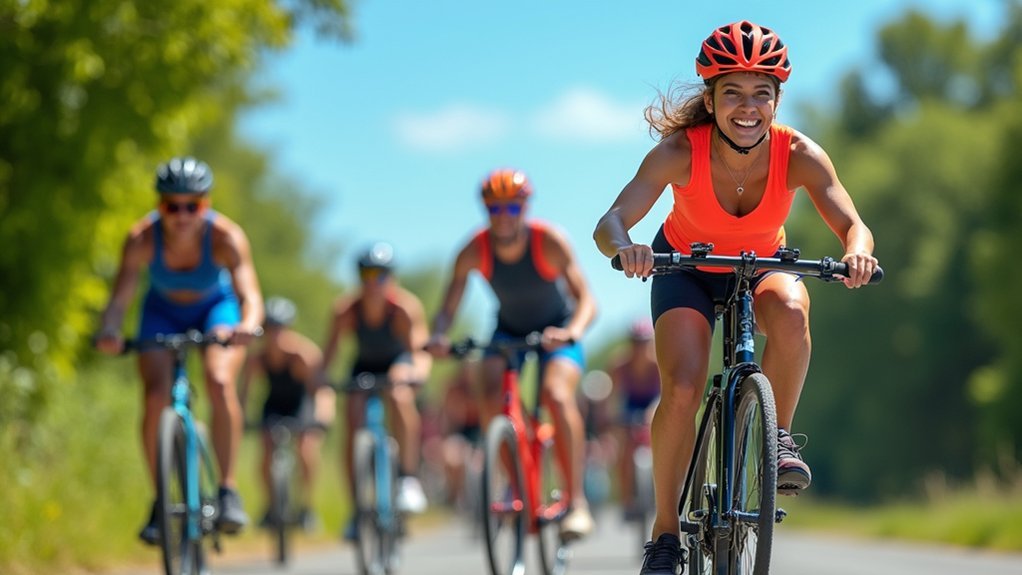
Why should adaptive cyclists compromise on quality when working with a limited budget? The market offers excellent options under $3,000 that don’t sacrifice performance.
The Top End Excelerator stands out at $2,295, featuring a 7-speed internal hub and coaster brake that makes transfers and social riding accessible to beginners.
- The Rio Dragonfly ($1,990) attaches to manual wheelchairs, promoting balanced shoulder muscle development.
- HOC Zipper Kids Handcycle ($2,395) adjusts to grow with children starting at 3 feet tall.
- Budget-friendly models accommodate various terrains and mobility needs.
- Affordable handcycles support different riding preferences while promoting cardiovascular health.
- These entry-level options enhance social interaction opportunities while maintaining quality construction.
You’ll find these models balance affordability with the features needed for an enjoyable first handcycling experience.
Key Features to Prioritize When Shopping on a Budget
When shopping for an affordable handcycle, you’ll want to focus on models with essential safety features like reliable braking systems and visibility flags that protect you without inflating costs.
Don’t overlook the used handcycle market, which offers significant savings on quality equipment from previous owners who’ve maintained their cycles well.
Purchasing certified pre-owned handcycles from reputable dealers can stretch your budget while still ensuring you receive a safe, functional adaptive cycle that meets your mobility needs.
Essential Safety Components
Safety should never be compromised, even if you’re shopping for a handcycle on a tight budget. A reliable braking system is your first priority—look for models with coaster brakes or disc brakes that provide consistent stopping power across different terrains.
Your handcycle should also include adjustable restraints and supportive seating to maintain proper positioning during rides.
- Choose frames made from lightweight yet durable materials to guarantee maneuverability without sacrificing strength.
- Prioritize adjustable components that allow you to customize the fit as your skills improve.
- Select terrain-appropriate tires that provide excellent traction for your regular riding conditions.
- Confirm the handcycle includes proper reflectors and lighting for visibility in all conditions.
- Look for secure seat belts and back support options that keep you stable through turns.
Used Market Opportunities
Exploring the used handcycle market presents one of the most viable pathways to affordable adaptive cycling. When shopping second-hand, prioritize models with adjustable features—seat height, crank length, and back angle—to guarantee proper fit for your specific mobility needs.
Focus on reputable brands like Top End, Maddiline, or Bike-On’s Quad Elite, which maintain better resale value while offering superior durability.
Thoroughly inspect critical components such as tires, brakes, and gear systems, as their condition directly impacts both safety and performance.
For specialized needs, verify that adaptive features like custom grips or power assist options are functioning properly.
Consider purchasing through dedicated adaptive equipment organizations rather than general marketplaces—they often provide warranties, fitting assistance, and valuable expertise that can transform a budget purchase into a long-term mobility solution.
Used Handcycle Markets: Where to Find Quality Pre-Owned Options
Finding a quality used handcycle doesn’t have to feel like searching for a needle in a haystack. With the right resources, you’ll discover affordable options that meet your needs. Specialized adaptive sports retailers often maintain trade-in programs offering refurbished handcycles at reduced prices.
Finding an affordable handcycle is challenging but achievable with the right resources and a bit of perseverance.
- Check online marketplaces like eBay and Facebook Marketplace, but always verify the seller’s reputation and equipment condition.
- Connect with local cycling clubs and disability organizations hosting equipment exchange events.
- Browse dedicated websites like Adaptive Sports USA for specialized second-hand listings.
- Attend adaptive sports expos where vendors and individuals frequently sell used equipment.
- Reach out to non-profits focused on adaptive cycling that may offer grants or assistance programs for acquiring used handcycles.
Essential Adjustments for Comfort and Performance
Once you’ve secured your budget-friendly handcycle, proper setup transforms it into a personalized machine that works with your body.
Start with positioning your back at roughly a 30-degree angle to create a comfortable, supportive riding position.
When making essential adjustments, align your footrest with the middle of your foot for optimal pedaling mechanics.
Set your crank distance to match your arm length, allowing for nearly full extension without locking your elbows during each rotation.
Keep an allen key handy for these adjustments, tightening bolts securely after finding your ideal position.
Don’t forget the seat belt—it should rest across the top of your thighs to prevent sliding and maintain stability throughout your ride.
These precise adjustments will greatly enhance both comfort and performance on your handcycle adventures.
Funding Resources and Grant Programs for Adaptive Equipment
While handcycles provide invaluable mobility and recreation, their cost can present a significant barrier for many potential riders. Fortunately, various funding opportunities exist to help make handcycling more accessible.
The freedom of handcycling shouldn’t be limited by financial constraints—explore funding options to make your ride possible.
- Athletes Helping Athletes offers specialized grants for children under 18, providing custom-fitted adaptive bikes (call 888/566-5221 or email aha@roadrunnersports.com)
- Nonprofit organizations and community programs frequently provide financial assistance specifically for adaptive equipment like handcycles.
- Your insurance may cover partial costs for handcycles as durable medical equipment—contact your provider to verify coverage.
- State and federal programs offer financial assistance for eligible individuals seeking adaptive equipment.
- Local disability advocacy groups can guide you through available funding options and application processes, connecting you with resources you might otherwise miss.
Frequently Asked Questions
Why Are Handcycles so Expensive?
Handcycles are expensive because they’re custom-built with premium materials for your specific needs. They feature specialized engineering, advanced components, and come from small manufacturers with limited production runs, increasing manufacturing costs.
What Is Hand Cycling?
Hand cycling is an adaptive sport where you’ll power a cycle using your arms instead of legs. It’s perfect if you have lower body mobility challenges but still want to enjoy cycling’s benefits and freedom.
How Do You Steer a Hand Cycle?
You steer a handcycle using the handlebars, turning them left or right to change direction. Lean your body into turns for better balance and control. Adjust your speed before curves for smoother handling.
What Is the Bike That You Pedal With Hands?
The bike you pedal with hands is called a handcycle. You’ll use your arms to power the cranks in front of you while steering with those same movements or a separate steering mechanism.
In Summary
Finding your first handcycle doesn’t have to break the bank. Focus on models that match your needs, consider pre-owned options, and look into funding assistance programs. Remember, it’s okay to start simple and upgrade later as your skills improve. With patience and research, you’ll discover an affordable handcycle that opens up new paths to independence, fitness, and adventure in your adaptive sports journey.


Leave a Reply