

Autism-friendly strength training creates a predictable, sensory-mindful environment with reduced lighting, minimal noise, and organized equipment. You’ll find success through visual schedules, adaptive equipment with textured grips, and progressive exercises that build motor skills at an individual pace. Trainers use clear visual supports and consistent routines to reduce anxiety while building confidence. Family involvement enhances motivation and reinforces skills outside sessions. These thoughtful adaptations transform physical training into an accessible, empowering experience for neurodivergent individuals.
Creating a Sensory-Friendly Strength Training Environment
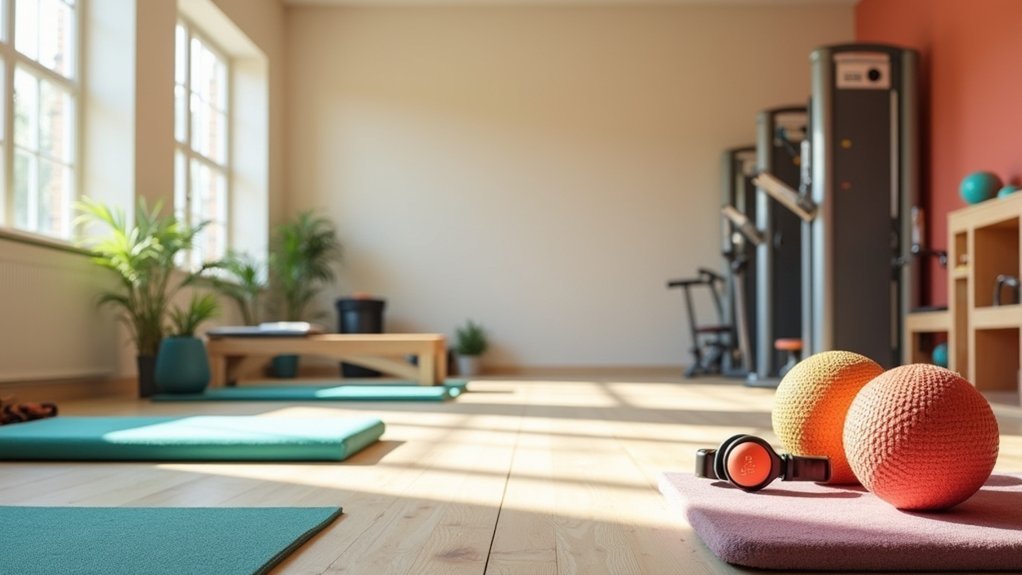
When designing a strength training environment for individuals with autism, sensory considerations must take priority. Incorporate soft lighting to reduce visual stimulation and install sound-absorbing materials to minimize echoing and loud noises that might trigger sensory overload.
Create a supportive environment by organizing equipment in predictable locations and establishing clear pathways throughout the space. Provide adaptive equipment with textured grips that accommodate different sensory preferences and motor abilities.
Implement a predictable routine using visual schedules to help participants anticipate each exercise step. Always deliver clear instructions using concise language and visual demonstrations.
Train staff to recognize signs of sensory discomfort and respond with appropriate modifications. This thoughtful approach transforms standard gyms into sensory-friendly spaces where autistic individuals can build strength successfully.
Adaptive Equipment for Successful Autism-Friendly Workouts
Selecting the right adaptive equipment forms the foundation of effective strength training programs for individuals with autism. Consider incorporating lighter weights and resistance bands that allow building strength gradually while minimizing injury risk. These tools accommodate varied abilities across the autism spectrum.
Create a sensory-friendly workout space with padded mats and noise-reducing headphones to address common sensitivities. Visual aids integrated into equipment enhance understanding and engagement, making instructions more accessible.
Creating sensory-conscious environments transforms strength training into an accessible experience for individuals across the autism spectrum.
Don’t overlook stability balls and balance boards to improve core strength and coordination, targeting common motor skills challenges.
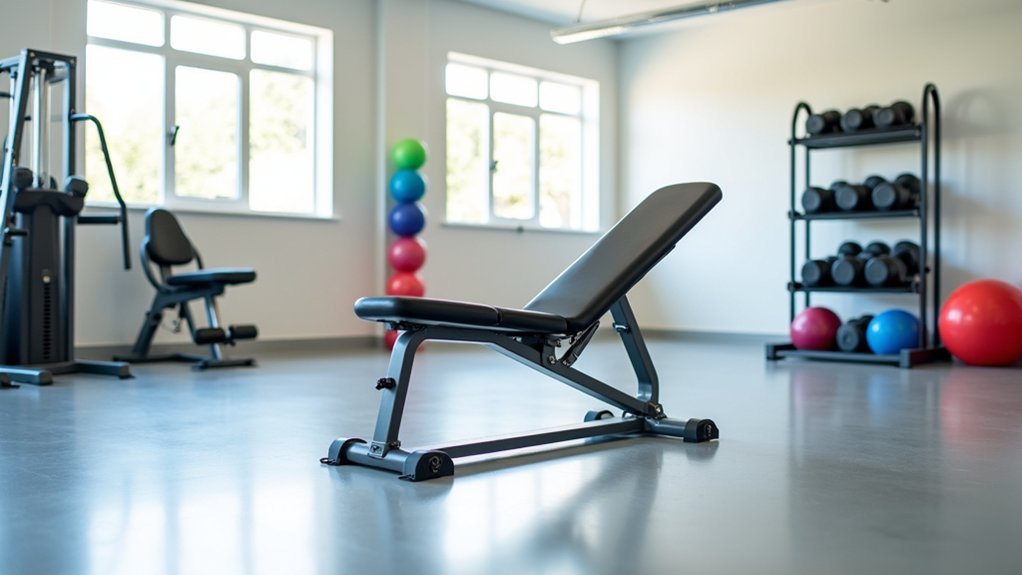
Look for customizable setups like adjustable benches and hydraulic machines that provide flexibility to match individual preferences and physical abilities. This personalized approach guarantees everyone can participate successfully in strength training.
Structuring Predictable Routines in Strength Sessions

Predictable structure serves as the cornerstone of effective strength training for individuals with autism. When you establish a consistent, predictable routine, you’re creating an environment where anxiety diminishes and engagement flourishes.
Visual schedules help reinforce each session’s structured format, allowing participants to anticipate what comes next. The regularity of these routines builds valuable muscle memory, enhancing skill development and performance over time.
Start with familiar exercises that create confidence, then gradually introduce new movements within the established framework. This methodical approach maintains the comfort of consistency while expanding capabilities.
Remember that environmental and timing consistency matters too—keeping sessions at the same location and time provides the sense of security necessary for individuals on the autism spectrum to fully engage with and benefit from strength training.
Building Motor Skills Through Progressive Strength Exercises
Progressive strength training offers a powerful pathway to improve motor skills for individuals with autism, who often struggle with coordination and physical control. When you implement strength exercises gradually, you’ll see improvements in both confidence and ability as participants master each technique.
| Exercise | Motor Skill Enhanced | Progression Method |
|---|---|---|
| Bear Crawls | Core stability | Increase distance |
| Medicine Ball Slams | Upper body coordination | Add weight gradually |
| Balance Squats | Lower body control | Remove support over time |
| Resistance Band Pulls | Cross-body coordination | Increase resistance |
Building motor skills through progressive strength exercises doesn’t just improve physical fitness—it enhances participation in social and recreational activities. You’ll notice that consistent strength training develops the fundamental movements needed for sports and daily activities, creating a foundation for lifelong physical confidence.
The Social Benefits of Group Strength Training for Autism

While individual fitness programs offer personalized attention, group strength training provides unique social advantages that extend far beyond physical development for autistic individuals.
You’ll find that these structured environments create natural opportunities to practice communication skills while working toward shared fitness goals.
- Group strength training creates a sense of belonging, reducing isolation as participants connect with others who share similar interests.
- The supportive community atmosphere promotes emotional well-being through positive interactions and accomplishments.
- Trainers and peers model appropriate social behaviors, helping participants develop their own social skills.
- Positive reinforcement from both instructors and fellow participants builds motivation and self-esteem through genuine social connections.
These benefits make group strength training a powerful tool for social development alongside physical fitness.
Visual Supports and Communication Tools for Effective Coaching
Visual schedules show your autistic athlete what exercises to expect, helping them navigate workouts with greater independence and reduced anxiety.
Communication cards enable non-verbal participants to express preferences, discomfort, or requests during strength training sessions without the pressure of verbal communication.
You’ll find modification cue systems particularly valuable when coaching autistic individuals, as consistent visual signals for form adjustments create predictable feedback patterns they can easily interpret and respond to.
Visual Schedules
Clear communication stands at the heart of successful strength training for individuals with autism, and effective visual schedules transform this process dramatically.
When you implement step-by-step visual guides, you’re providing predictable frameworks that reduce anxiety and enhance exercise comprehension. These visual supports create a structured environment where your clients can anticipate what comes next, improving engagement throughout the session.
- Color-coded exercise sequences that clearly separate different movement patterns
- Illustrated rest period indicators showing exact durations between sets
- Shift cues that prepare individuals for changes in equipment or location
- Progress trackers that visually document improvements and accomplishments
Communication Cards
Effective coaching relies heavily on communication cards that bridge the gap between verbal instructions and practical execution for individuals with autism. These visual supports illustrate specific exercises, proper form, and step-by-step processes, making complex exercise instructions more accessible to diverse learning styles.
You’ll find that communication cards reduce anxiety by providing clear visual cues that participants can quickly recognize and respond to. The symbols and images on these cards eliminate confusion and create a more supportive training environment.
When you incorporate these tools into your strength training sessions, you’ll notice markedly improved engagement and participation. The result? Better skill development and enhanced fitness levels as trainees gain confidence through visual guidance.
Communication cards aren’t just helpful additions—they’re essential components for creating truly autism-friendly strength training experiences.
Modification Cue Systems
When traditional coaching methods fall short, modification cue systems transform strength training for autistic individuals by offering customizable visual and communication frameworks.
You’ll find these systems create an environment where exercise instructions become accessible through multiple channels, enhancing motor skills development and retention.
- Visual supports like demonstration videos and picture schedules break complex movements into manageable steps
- Communication tools such as cue cards and social stories clarify expectations and reduce anxiety during workouts
- Clear, concise language paired with consistent visual cues reinforces learning and helps maintain focus
- Personalized visual frameworks foster independence by empowering individuals to understand and perform exercises confidently
Measuring Progress and Celebrating Strength Achievements
Since visual feedback plays a crucial role in motivation, tracking progress becomes an essential component of any successful strength training program for individuals with autism. You’ll want to implement regular assessments that showcase improvements in motor skills while providing positive reinforcement for each accomplishment.
| Progress Tracking Method | Celebration Approach |
|---|---|
| Visual charts/graphs | Verbal praise |
| Weight/rep records | Small rewards |
| Exercise completion logs | Group recognition |
| Form improvement videos | Achievement badges |
| Before/after assessments | Community support |
Don’t underestimate the power of celebrating achievements, both big and small. When you acknowledge increased repetitions or improved technique, you’re boosting self-esteem and motivation. Creating a supportive community where participants celebrate each other’s milestones enhances both physical development and social skills, making strength training truly meaningful.
Partnering With Families to Reinforce Strength Training Benefits
To build genuine support for strength training at home, you’ll need to equip families with simple, adaptable exercises that don’t require specialized equipment.
Providing video demonstrations or illustrated guides can help caregivers understand proper form and technique when working with their autistic child.
When you invest time in building caregiver capacity through hands-on training sessions, you create a consistent training environment that extends the benefits of strength training beyond your supervised sessions.
Home Workout Support
Although professional guidance is valuable, the most impactful strength training for autistic individuals often happens at home with family support.
By establishing consistent routines and using visual schedules, you’ll create a predictable environment that reduces anxiety and boosts participation. Family involvement enhances motivation while building stronger connections through shared physical activities.
- Create visual exercise cards with clear steps and expected repetitions
- Designate a specific workout space free from sensory distractions
- Establish consistent workout times that align with your family member’s energy patterns
- Incorporate special interests into exercise routines to increase engagement
Communication with trainers about your family member’s preferences guarantees a personalized experience.
With the right exercise resources and adaptive techniques, you’ll transform your home into an effective strength training environment that supports your autistic family member’s unique needs.
Building Caregiver Capacity
Successful strength training programs depend on empowered caregivers who can reinforce techniques and celebrate progress outside formal sessions.
When you involve families in the training process, you create a consistent support system that enhances physical fitness and builds self-esteem in autistic individuals.
Clear communication between trainers and caregivers guarantees everyone understands specific goals and progress.
You’ll find that offering educational workshops teaches caregivers adaptive techniques tailored to their family member’s unique needs. These resources enable them to continue effective training at home.
Including families in workout sessions transforms exercise into a meaningful social interaction opportunity.
This collaborative approach not only improves physical outcomes but also strengthens family bonds and creates a supportive community network.
Your investment in building caregiver capacity extends the benefits of strength training well beyond the gym.
Frequently Asked Questions
Is Weightlifting Good for Autistic People?
Yes, weightlifting is good for you if you’re autistic. You’ll develop stronger muscles, improve your coordination, boost your self-esteem, and reduce anxiety through structured, repetitive exercises that match your need for clear routines.
Why Do Autistic People Like the Gym?
You’ll find the gym offers predictability, measurable progress, and sensory stimulation that’s comforting. You can enjoy structured routines, visual feedback from your achievements, and opportunities for social interaction on your terms.
What Is the Strength Based Approach to Support Children With ASD?
The strength-based approach focuses on identifying and building upon your child’s unique abilities rather than deficits. You’ll emphasize their talents, interests, and preferences to develop confidence, motivation, and skills through positive, personalized interventions.
What Makes Something Autism Friendly?
Autism-friendly environments respect your sensory needs, provide clear communication with visual supports, maintain predictable routines, offer knowledgeable support from trained staff, and create inclusive social opportunities where you’ll feel comfortable and understood.
In Summary
You’ve now discovered what makes strength training truly autism-friendly. By creating sensory-appropriate spaces, using visual supports, establishing predictable routines, and celebrating every milestone, you’re fostering both physical and social development. Remember, the right adaptations transform strength training into more than just exercise—it becomes a confidence-building activity that enhances motor skills, reduces anxiety, and creates meaningful connections. Keep building on these strategies to support success in and beyond the gym.

Leave a Reply