

Bareback pads offer special needs riders enhanced sensory input and therapeutic connection through direct horse contact. You’ll benefit from improved balance, posture, and coordination while the treeless design accommodates various body types and movement patterns. The non-slip surface and supportive handles increase safety while allowing natural warmth transfer that relaxes tight muscles. For riders with sensory processing challenges, this close contact provides comforting feedback that traditional saddles can’t match. Discover how proper positioning transforms the riding experience.
Why Choose Bareback Pads for Special Needs Riders?
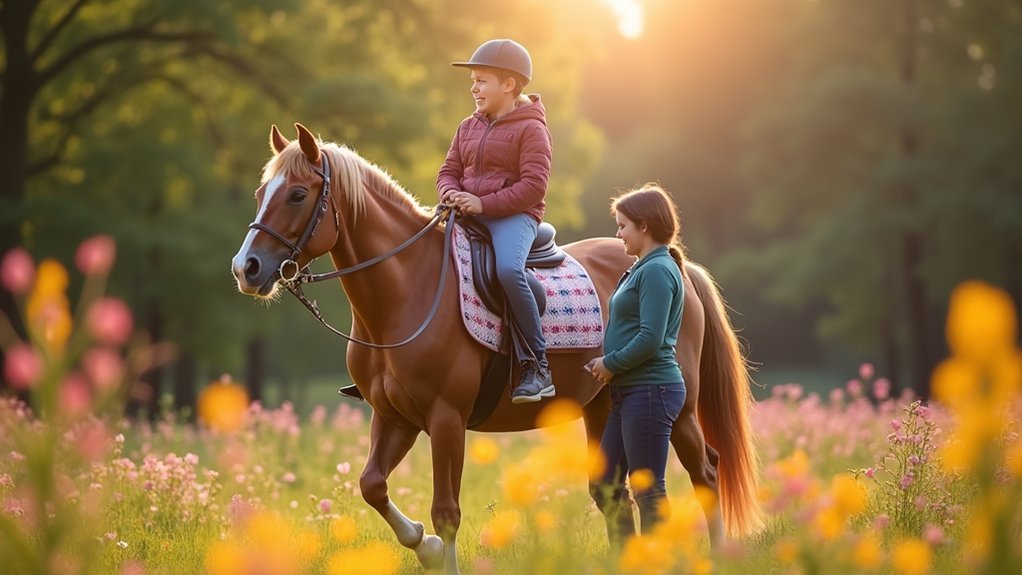
When therapeutic riding aims to maximize sensory input and physical development, bareback pads offer distinct advantages over traditional saddles. They create a closer connection between rider and horse, enhancing the ability to feel the animal’s movements—crucial for developing balance and coordination in special needs riders.
Unlike rigid saddles, bareback pads provide a treeless structure that adapts to different horse and rider combinations, making them versatile tools in therapeutic settings.
You’ll appreciate their safety features, including non-slip surfaces and balance handles that offer additional support for riders with mobility challenges.
The gentle warmth bareback pads provide can help relax tight muscles, particularly beneficial for riders with high muscle tone conditions.
Plus, their improved weight distribution increases comfort for your horse during therapeutic sessions.
The Therapeutic Connection Between Horse and Rider
Connection forms the foundation of therapeutic riding’s success, particularly when using bareback pads.
When you ride with a bareback pad, you’ll experience enhanced tactile feedback that lets you feel the horse’s movements directly, improving your ability to respond appropriately.
Unlike traditional saddles, these pads’ treeless design accommodates various body types while fostering closer physical connection.
Treeless designs embrace every body shape while drawing horse and rider into more intimate communion.
You’ll benefit from the horse’s natural warmth, which helps relax stiff muscles—especially valuable for riders with conditions like cerebral palsy.
The minimal setup time means you can enjoy more spontaneous therapeutic riding sessions, contributing positively to your emotional and physical well-being.
Additionally, bareback pads naturally promote correct sitting posture, essential for developing better body mechanics and muscle tone during therapy sessions.
Enhanced Sensory Input Through Direct Contact
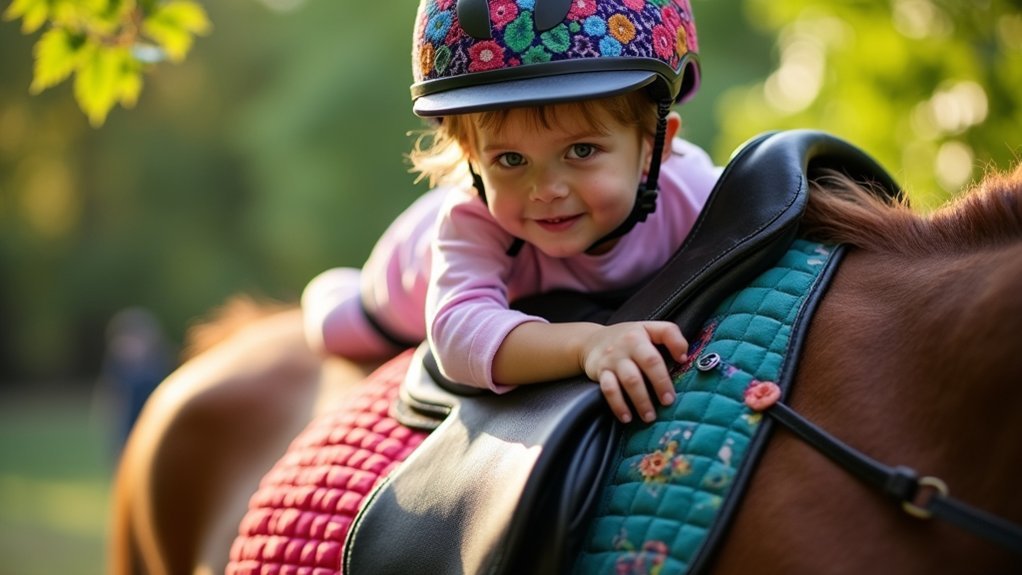
While traditional saddles create a barrier between horse and rider, bareback pads facilitate remarkably enhanced sensory experiences that can transform therapeutic riding sessions.
You’ll immediately notice how a bareback pad allows you to feel every subtle movement your horse makes, creating an intimate connection that’s impossible with conventional equipment.
This direct contact improves your ability to sense the horse’s gait and respond to their body language. For riders with special needs, this heightened feedback promotes better body awareness, balance, and postural control.
The flexible nature of a bareback pad also accommodates diverse movements, letting you adjust your position naturally.
The warmth and rhythmic motion transmitted through the bareback pad can provide comforting sensory input, particularly beneficial for those with sensory processing challenges.
Physical Benefits for Riders With Motor Challenges
Riding with bareback pads offers you remarkable core strength development as your body naturally balances with the horse’s movement.
The close contact and freedom of movement reinforce motor patterns through consistent, rhythmic motion that you’ll feel more directly than with a traditional saddle.
You’ll experience enhanced sensory integration as the warmth and natural movement of the horse connect with your body, helping to improve coordination and physical response during therapeutic riding sessions.
Core Strength Development
Muscles spring to life when special needs riders mount a horse with a bareback pad. Without the rigid structure of a traditional saddle, your rider’s body must engage core muscles continuously to maintain balance and proper positioning.
The treeless design creates an environment where abdominal and back muscles work in harmony to stabilize the rider. You’ll notice your special needs rider developing core strength naturally as they respond to the horse’s movement beneath them. This close contact provides essential proprioceptive feedback, helping riders with motor challenges improve their body awareness.
Regular sessions with bareback pads encourage active participation in maintaining posture, leading to improved muscle tone and coordination over time.
The freedom of movement allows riders to focus specifically on strengthening their core, creating physical benefits that extend well beyond the riding arena.
Motor Pattern Reinforcement
For special needs riders confronting motor challenges, bareback pads create an ideal environment for reinforcing healthy movement patterns. You’ll notice your rider feels the horse’s movements more directly, which enhances proprioception and coordination development.
Without a rigid saddle structure, the bareback pad allows freedom of movement that’s particularly beneficial for riders with muscle spasticity or rigidity. This natural positioning helps their bodies learn and reinforce proper motor patterns through repetition.
| Benefits of Bareback Pads | For Motor Function | Daily Impact |
|---|---|---|
| Improved balance | Better proprioception | Enhanced stability |
| Direct movement feedback | Muscle memory development | Smoother movements |
| Core engagement | Repetitive pattern training | Functional strength |
The repetitive, rhythmic motion experienced with a bareback pad contributes greatly to muscle memory formation, which your riders can transfer to everyday activities and functional abilities.
Sensory Integration Benefits
When riders with motor challenges use bareback pads, they experience a wealth of sensory integration benefits that traditional saddles simply can’t provide. The direct contact with the horse’s movement creates a powerful sensory experience that promotes better body awareness and coordination.
Using a bareback pad offers three key advantages:
- Enhanced sensory feedback – You’ll feel every movement of the horse’s muscles, helping your brain process and integrate multiple sensory inputs simultaneously.
- Improved core engagement – Without the structure of a saddle, your postural muscles work harder, developing natural strength and stability.
- Greater freedom of movement – The flexible bareback pad accommodates limited range of motion and reduces restrictions for riders with spasticity.
You’ll also benefit from the natural warmth of the horse, which can help relax tense muscles and create a more comfortable riding experience.
Safety Considerations for Different Disability Types
When selecting bareback pads for riders with sensory processing disorders, you’ll want features that provide appropriate tactile feedback without overwhelming the nervous system.
For those with mobility challenges, look for pads with strategically placed handles and supportive surfaces that help maintain proper positioning while allowing maximum connection with the horse’s movement.
Fall prevention must be your top priority—always pair appropriate safety gear with thorough training for sidewalkers and spotters who can respond quickly if the pad shifts unexpectedly during the session.
Sensory Processing Support
Although conventional saddles provide structure, bareback pads offer unique sensory processing benefits for special needs riders that can transform their therapeutic riding experience.
When you choose a bareback pad, you’re providing direct contact with the horse, which enhances body awareness and spatial orientation for riders with sensory processing challenges.
This closer connection delivers three key benefits:
- Enhanced proprioception – The bareback pad’s minimal barrier allows riders to feel the horse’s movement and warmth, providing valuable sensory input.
- Improved posture adaptation – Without rigid structures, riders with varying muscle tone (like those with cerebral palsy) can find more natural positioning.
- Emotional regulation – The direct connection to the horse’s movement and breathing can have a calming effect, helping riders process sensory information more effectively.
Mobility Assistance Features
Selecting the right bareback pad for riders with mobility challenges requires careful consideration of safety features that address specific disability needs.
For riders with cerebral palsy, you’ll find that bareback pads allow the horse’s warmth to help stretch stiff muscles while providing a non-slippery surface for enhanced stability.
The treeless structure accommodates various body types and muscle tone differences, ensuring proper support regardless of your rider’s specific mobility limitations. You can secure most bareback pads with regular girths, markedly reducing slipping risks—a vital factor for maintaining stability throughout therapeutic sessions.
For riders who struggle with balance, these pads create a closer connection to the horse, improving confidence while offering better support than traditional saddles.
This direct contact often transforms the riding experience, making therapeutic goals more achievable.
Fall Prevention Systems
Because safety remains paramount in therapeutic riding, thorough fall prevention systems must be tailored to each rider’s specific disability. Your choice of a bareback pad creates a more secure connection between rider and horse, reducing slip risks while distributing weight evenly.
For effective fall prevention when using bareback pads:
- Match horse temperament to rider needs – riders with high muscle tone benefit from calmer horses with predictable, slower gaits.
- Confirm proper support team – utilize trained side walkers and leaders who can provide immediate assistance if balance is compromised.
- Monitor posture continuously – certified instructors should regularly assess your rider’s alignment and make immediate adjustments to the bareback pad position.
You’ll find that combining these specialized equipment choices with trained personnel creates a thorough safety system that accommodates varying levels of mobility and muscle tone.
Selecting the Right Bareback Pad for Therapeutic Riding
The success of therapeutic riding sessions often hinges on choosing appropriate equipment that meets the unique needs of special riders. When selecting a bareback pad, prioritize options with non-slippery surfaces and balance handles that enhance stability and safety.
Look for pads featuring a thicker seat (around 35 mm) made from suede or cell rubber to provide essential comfort and support. The pad should include a middle gap designed to promote correct sitting posture—crucial for riders with varying muscle tone levels.
Choose pads with regular girth straps to prevent slipping, particularly important for riders with mobility challenges. Avoid designs with stirrup attachments, as these can create dependency and increase safety risks.
The right bareback pad guarantees both security and therapeutic benefit throughout each riding session.
Key Features That Support Special Needs Riders
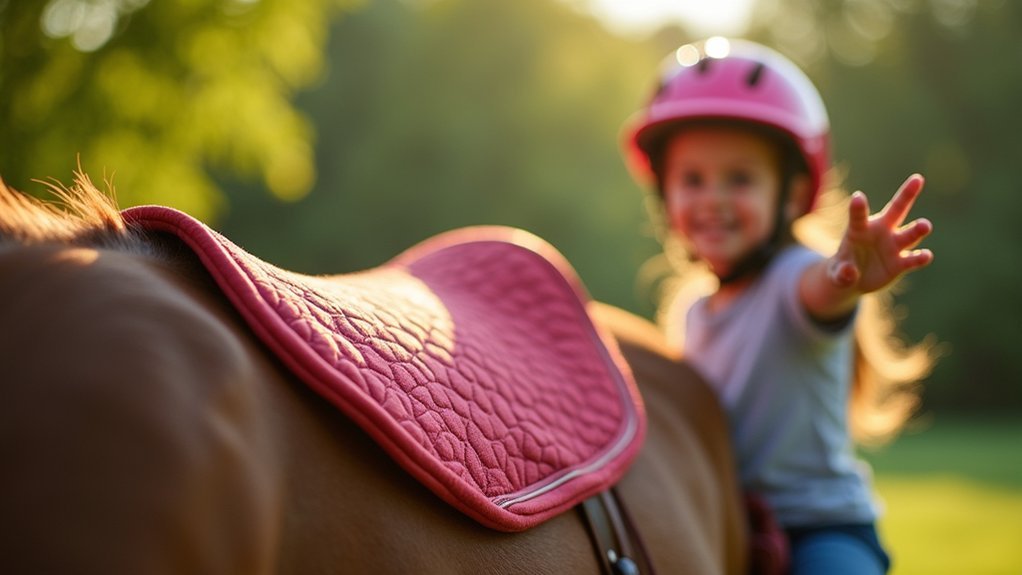
Successful therapeutic riding experiences depend heavily on equipment that addresses the specific challenges faced by special needs riders.
When choosing a bareback pad for therapeutic sessions, look for these essential features:
- Non-slip surface – The pad provides stability and comfort while creating a closer connection to the horse, helping riders with balance difficulties maintain proper position.
- Treeless design – Without rigid structure, the bareback pad accommodates various body types and allows natural movement, particularly beneficial for riders with cerebral palsy or varying muscle tone.
- Safety elements – Regular girth straps prevent dangerous slipping, while optional balance handles offer additional security for riders who need extra support during their riding experience.
The middle gap design in many bareback pads also encourages correct sitting posture, addressing the specific postural needs of special riders.
Creating Security Without Restrictive Equipment
Bareback pads offer your special needs rider freedom to move naturally while maintaining a secure position without feeling confined by traditional saddle structures.
You’ll notice how the close contact enhances their sensory experience, allowing them to feel the horse’s movements more directly and respond with improved body awareness.
This sensory connection often leads to better communication between rider and horse, creating a therapeutic experience that builds confidence while supporting physical development.
Movement Freedom Benefits
For special needs riders, movement freedom represents one of the most significant advantages of bareback pads, offering security without the confining nature of traditional saddles.
When riding bareback with these specialized pads, you’ll experience enhanced therapeutic benefits while maintaining safety.
The freedom of movement provides three key advantages:
- Greater physical connection – You’ll feel the horse’s movements more directly, improving your balance and body awareness.
- Accommodation for different body types – The treeless design adapts to your unique physical needs without creating uncomfortable pressure points.
- Enhanced mobility – Particularly beneficial if you have conditions like cerebral palsy, as the non-restrictive design allows your body to move naturally with the horse.
This improved movement freedom reduces physical strain while maximizing the therapeutic benefits of your riding sessions.
Sensory Connection Advantages
Tactile awareness flourishes when special needs riders use bareback pads, creating a secure riding experience without the constraints of bulky equipment.
You’ll notice your rider develops greater body awareness as they feel the horse’s movements more intimately through the minimal barrier of the bareback pad.
The non-slip surface increases stability while reducing anxiety about falling, helping riders with sensory sensitivities feel confident and safe.
Without a traditional saddle’s bulk, the treeless design accommodates different body types while promoting closer physical connection to the horse.
Quick mounting and dismounting becomes easier with the lightweight bareback pad design, making the entire experience less intimidating.
Your rider can maintain a more natural posture, enhancing comfort and allowing them to move freely while maintaining essential security.
Positioning and Postural Support Options
When considering therapeutic riding equipment, proper positioning and postural support represent critical factors for special needs riders. Bareback pads offer several structural advantages that promote correct alignment and stability during riding sessions.
The treeless design of these pads accommodates different body types while ensuring proper weight distribution.
You’ll find that many pads include specialized features that directly address postural needs:
- Middle gap structures that naturally guide riders into correct sitting positions
- Grab straps that provide additional stability points for maintaining balance
- Secure girth systems that prevent slipping while supporting consistent positioning
You’ll appreciate how these pads allow riders to feel the horse’s movements more intimately, enhancing proprioceptive feedback that improves balance and postural control over time.
Temperature Regulation and Comfort Factors
Beyond proper positioning, temperature regulation and sensory comfort greatly impact a special needs rider’s therapeutic experience.
When you choose a bareback pad, you’re providing direct contact with the horse, allowing natural body heat transfer that keeps riders comfortable during cooler sessions without overheating.
The treeless design promotes air circulation, particularly valuable during warmer weather when temperature regulation becomes essential for riders with sensory sensitivities.
Thicker padding distributes pressure evenly, preventing uncomfortable hot spots during extended therapeutic rides.
You’ll appreciate how non-slip surfaces enhance stability without generating excess heat or sweat, maintaining comfort throughout the session.
This close-contact experience helps special needs riders adapt more intuitively to temperature changes and movement, creating a more responsive and comfortable therapeutic environment than traditional saddles can provide.
Accessibility for Riders With Limited Mobility
Riders with limited mobility face unique challenges that bareback pads directly address through their streamlined design and versatile functionality.
You’ll experience enhanced tactile feedback from the closer horse connection, helping you feel movements more intuitively when traditional saddles might limit sensation.
The preparation process becomes considerably easier with bareback pads:
- Quicker setup time with minimal tack requirements
- Lighter weight for caregivers to manage during mounting assistance
- Available support features like balance handles for improved stability
The treeless design of bareback pads accommodates various horse shapes, providing flexibility that benefits special needs programs where multiple riders may use the same horse.
This adaptability guarantees you’ll find appropriate support regardless of your specific mobility limitations.
Instructor Techniques for Supporting Bareback Pad Use
Three essential techniques elevate the effectiveness of bareback pad sessions for special needs riders. First, conduct thorough capability assessments before introducing the bareback pad, ensuring each rider’s physical needs are understood. Second, implement a structured support team with designated side walkers and leaders who can respond quickly to balance shifts. Third, maintain constant communication with the rider’s medical team to adapt techniques as needed.
| Support Level | Technique | When to Use |
|---|---|---|
| Beginning | Triple support (2 side walkers + leader) | New riders, severe balance issues |
| Intermediate | Double support (1 side walker + leader) | Developing core strength |
| Advanced | Leader only | Good trunk control, working on independence |
| Independent | Supervised freedom | Experienced riders with minimal support needs |
You’ll need to continuously monitor body mechanics and adjust padding to enhance therapeutic benefits while maintaining safety.
Maintenance and Hygiene for Shared Equipment
The meticulous maintenance of bareback pads guarantees both safety and longevity when equipment serves multiple special needs riders. You’ll need to establish a consistent cleaning routine using tools like brushes or Marseille soap to prevent cross-contamination between therapy sessions.
Equipment care isn’t just about maintenance—it’s about protecting your riders’ health, safety, and therapy experience.
Before each ride, always inspect your equipment for:
- Worn areas that could cause discomfort or injury
- Proper drying to prevent mold and bacterial growth
- Structural integrity of all attachment points and padding
Consider placing additional blankets beneath the pad to extend its life and improve hygiene. These blankets act as a protective barrier while enhancing rider comfort.
Regular maintenance isn’t just about cleanliness—it’s a critical safety measure that protects your special needs riders and preserves your therapeutic equipment investment.
Frequently Asked Questions
Are Bareback Pads Suitable for Riders With Sensory Processing Disorders?
Yes, bareback pads are often suitable for riders with sensory processing disorders. You’ll feel closer to your horse, which can provide beneficial sensory input while the pad’s minimal structure won’t overwhelm your sensory system.
How Do Bareback Pads Affect a Horse’s Behavior With Special Needs Riders?
Bareback pads help calm horses by evenly distributing your weight and allowing closer contact. Your horse will feel your movements more directly, often responding with increased sensitivity to your cues and greater patience.
Can Bareback Pads Be Used With Mounting Lifts or Ramps?
Yes, you can use bareback pads with mounting lifts and ramps. They’re thin enough to accommodate these transfer devices while providing stability for riders who need assistance mounting from alternative positions.
What Age Is Appropriate to Start Using Bareback Pads?
You can introduce bareback pads as early as 3-5 years old, once a child can sit independently with some balance. Start with adult supervision and shorter sessions to build their confidence and skills gradually.
Do Insurance Policies Cover Bareback Pad Use in Therapeutic Programs?
Insurance policies vary, but many cover bareback pad use in therapeutic programs. You’ll need to check your specific policy details or contact your provider to confirm coverage for this equipment.
In Summary
You’ll find bareback pads offer an invaluable therapeutic option for special needs riders, providing enhanced sensory connection and physical benefits while addressing safety needs. They’re easier to manage, more comfortable in various temperatures, and improve accessibility. With proper instructor support and maintenance protocols, these pads can transform your therapeutic riding program, creating meaningful connections between horse and rider while accommodating diverse physical and sensory requirements.

Leave a Reply