

Dance therapy offers powerful benefits for children with autism by focusing on nonverbal expression through movement. You’ll see improvements in social communication, emotional regulation, and body awareness without relying on verbal skills. Techniques like mirroring and rhythmic synchronization help your child build meaningful connections with peers and therapists. Research confirms it reduces anxiety while enhancing social skills, creating breakthroughs where traditional therapies fall short. Discover how movement can become your child’s unique voice for expressing emotions and building relationships.
Understanding Dance Movement Therapy and Its Therapeutic Foundations
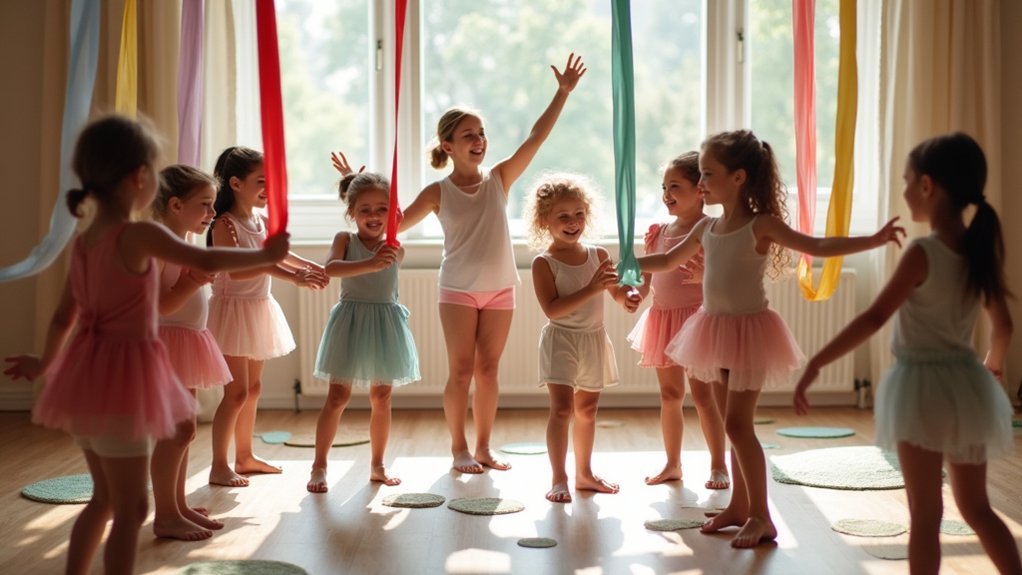
While many therapeutic approaches for autism focus primarily on verbal communication, Dance Movement Therapy (DMT) offers a powerful alternative through movement-based expression. This therapeutic approach creates a foundation where individuals with autism spectrum disorder can safely navigate emotional expression without relying on words.
DMT’s power lies in its emphasis on nonverbal communication and body awareness. You’ll find techniques like mirroring particularly effective, as they build rapport and enhance social interactions. Research confirms DMT delivers significant improvements in social communication and emotional well-being for autistic individuals.
What makes DMT uniquely valuable is how it provides a structured yet creative environment where participants can explore emotions through movement. This approach fosters autonomy while reducing anxiety symptoms, offering holistic benefits beyond traditional therapies.
Key Benefits of Dance Therapy for Children With Autism Spectrum Disorder
Dance therapy offers your child with autism a powerful breakthrough in nonverbal expression, allowing them to communicate emotions that might otherwise remain locked inside.
You’ll notice how movement creates pathways for connection when words fail, giving your child an alternative language that bypasses verbal barriers.
Through shared rhythms and creative expression, your child can build meaningful social bonds with peers and therapists, often connecting in ways that traditional therapeutic approaches can’t achieve.
Nonverbal Expression Breakthrough
For children with autism spectrum disorder, finding ways to communicate their feelings and needs often presents considerable challenges.
Dance therapy offers a powerful alternative to verbal communication, allowing your child to express complex emotions through movement when words fail them.
Through techniques like mirroring and empathic reflection, you’ll notice improvements in your child’s social skills and body awareness. This movement therapy creates a therapeutic relationship that enhances their ability to understand social cues and connect with their environment.
Studies show dance therapy considerably reduces anxiety and depression symptoms while promoting emotional regulation.
You’ll see your child’s self-esteem flourish as they discover new avenues for nonverbal expression. This breakthrough in communication extends beyond the dance space, contributing to their overall wellbeing and helping them interact more confidently in daily life.
Social Connection Through Movement
Through carefully structured group activities, children with autism discover powerful ways to connect with peers beyond verbal communication. Dance therapy creates shared experiences that naturally break social isolation, enabling them to express emotions and needs through movement when words feel challenging.
You’ll notice your child developing stronger social communication skills as they engage in mirroring and synchronized movements, which improve body awareness and understanding of social cues. This nonverbal exchange fosters cooperation and relationship-building with peers.
Research confirms dance therapy’s positive benefits extend beyond movement—significantly reducing anxiety and depression while increasing social engagement.
Many parents report improved family dynamics as their children gain emotional stability through this therapeutic approach, translating to meaningful interactions both in therapy sessions and everyday life.
Evidence-Based Research Supporting Dance Therapy’s Effectiveness
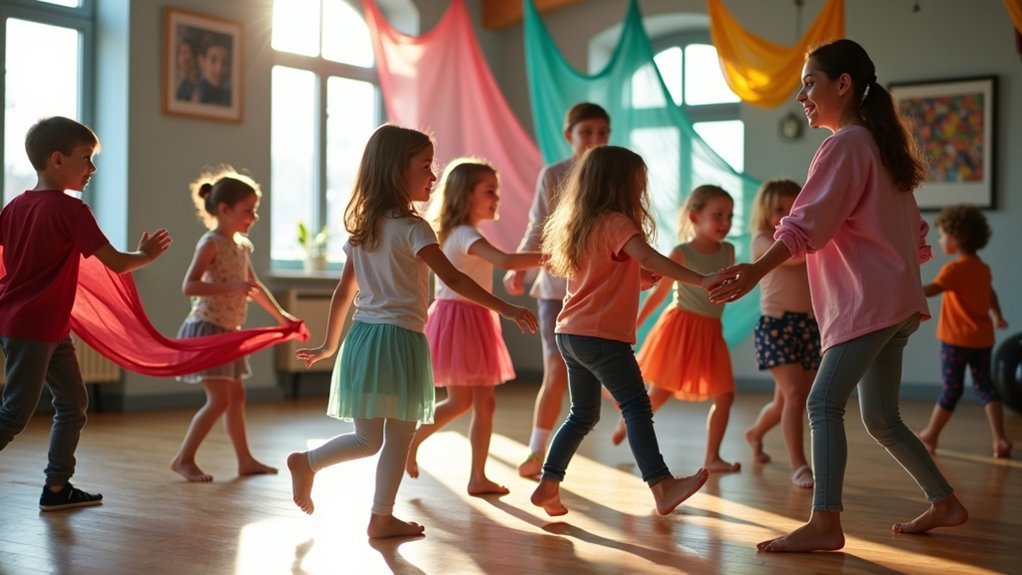
While skepticism once surrounded alternative interventions for autism, compelling scientific evidence now validates dance therapy’s effectiveness for children with ASD. Research published in “Frontiers in Psychology” demonstrates that dance movement therapy (DMT) notably improves social communication and emotional well-being in children with autism spectrum disorder, with measurable clinical outcomes.
You’ll find that meta-analyses support these findings, showing DMT reduces symptoms of depression and anxiety while enhancing quality of life.
What makes this intervention particularly valuable is its unique nonverbal communication approach, allowing children with ASD to express emotions in ways traditional therapies can’t match. Studies consistently reveal cognitive skill improvements following structured dance programs.
The evidence is particularly strong when dance and music therapies are combined, creating a synergistic effect that markedly reduces autism symptoms and builds essential social connections.
Practical Techniques and Approaches in Dance Movement Interventions
As dance movement therapy continues to gain recognition in autism intervention, several foundational techniques have emerged with consistent success. DMT employs mirroring and attunement to enhance social awareness and build rapport, creating pathways for emotional expression.
You’ll find props like scarves and balls particularly effective in motivating children and addressing sensory processing challenges through non-verbal communication. Body awareness techniques and expanded movement vocabulary help children articulate needs they can’t express verbally, improving self-regulation.
Group dance sessions create shared experiences that combat isolation while developing cooperative movement skills. These approaches have demonstrated clinically significant improvements in social communication, helping children form genuine connections.
Building Social Connections Through Rhythmic Expression and Movement
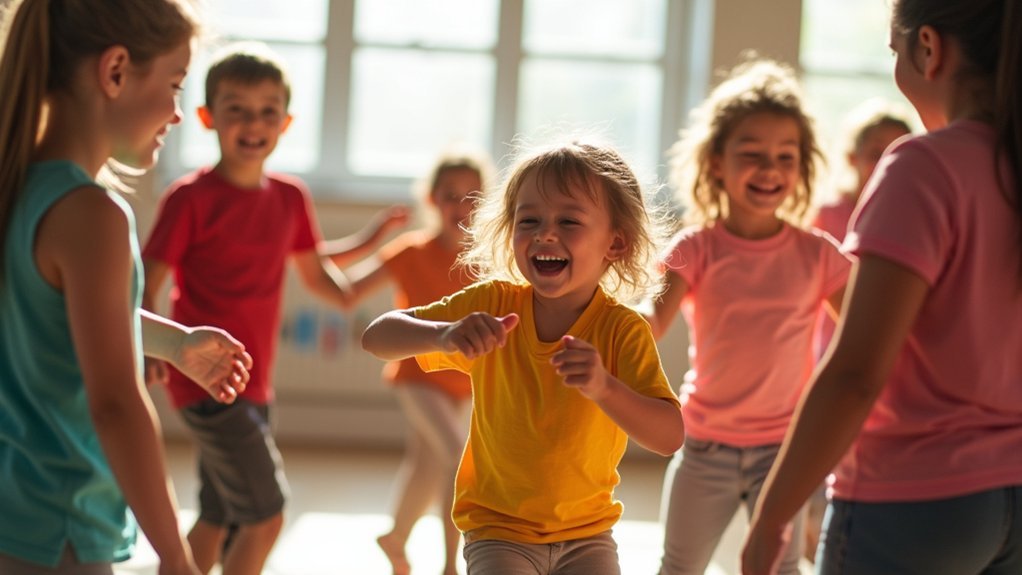
When children with autism engage in rhythmic movement together, they create pathways for social connection that often surpass traditional therapeutic approaches.
Dance movement therapy (DMT) offers powerful non-verbal communication tools for those with autism spectrum disorder (ASD), allowing emotional expression without linguistic barriers.
Group dance therapy sessions develop essential social skills through:
- Mirroring and synchronized movements – enhancing recognition of social cues and naturally increasing eye contact
- Shared rhythmic expression – fostering cooperation and interpersonal engagement among participants
- Collective movement experiences – building emotional well-being through meaningful connections with peers
You’ll notice significant improvements in your child’s social connections as they participate in these structured movement activities, gradually reducing isolation while developing the confidence to engage with others in more spontaneous ways.
Parent Perspectives and Integration With Comprehensive Treatment Plans
Parents who participate in dance therapy alongside their children often discover unexpected benefits extending far beyond the studio.
You’ll notice improved understanding of your child’s non-verbal communication cues, strengthening your family connections through movement-based interactions.
Programs like Ballet for All Kids provide children with autism spectrum disorder a sense of achievement that boosts their mood and develops social skills.
You’ll likely experience decreased stress and reduced feelings of isolation as community engagement with other families creates valuable support networks.
When integrated with occupational therapy and psychological support, dance therapy forms a thorough treatment plan addressing the complex needs of your child.
The financial benefits are significant too—healthcare utilization typically decreases as children require fewer visits to school nurses, generating substantial cost savings over time.
Frequently Asked Questions
What Are the Benefits of Dance Therapy for Autism?
Dance therapy helps you express emotions non-verbally, reduces anxiety and depression, improves motor skills, enhances social interaction through mirroring techniques, and strengthens family connections by improving understanding of non-verbal cues.
What Is Dance Movement Therapy for Autistic Children?
Dance movement therapy for autistic children is a therapeutic approach where you’ll use body movements to help your child communicate emotions, develop social skills, and improve sensory processing without relying on verbal expression.
What Is the Autism Movement Therapy Method?
The autism movement therapy method is a structured approach where you’ll use dance, rhythm, and music to help autistic individuals develop communication skills, body awareness, and emotional expression through non-verbal techniques in a supportive environment.
What Are the Benefits of Dance Movement Therapy?
Dance movement therapy helps you express emotions without words, improves your physical coordination, enhances social skills through mirroring techniques, reduces anxiety and depression symptoms, and fosters better communication. It’s especially beneficial if you’re nonverbal.
In Summary
You’ve seen how dance therapy offers powerful benefits for individuals with autism. By embracing rhythmic movement, you’re providing more than just exercise—you’re creating pathways for communication, emotional expression, and social connection. Whether you’re a parent, therapist, or educator, incorporating these movement-based approaches can complement traditional interventions and help reveal new potential in those you support on the autism spectrum.


Leave a Reply