

The best fishing gear for stroke recovery includes ergonomic one-handed rods, push-button electric reels, adaptive rod holders, easy-open tackle boxes, all-terrain fishing chairs, therapeutic grip attachments, voice-activated accessories, lightweight fishing lines, and buoyant nets with extended handles. You’ll benefit from adaptive features that require minimal dexterity and strength while promoting independence. These specialized tools can greatly enhance your rehabilitation journey while reconnecting you with a beloved outdoor activity.
Top 10 Fishing Gear for Stroke Recovery
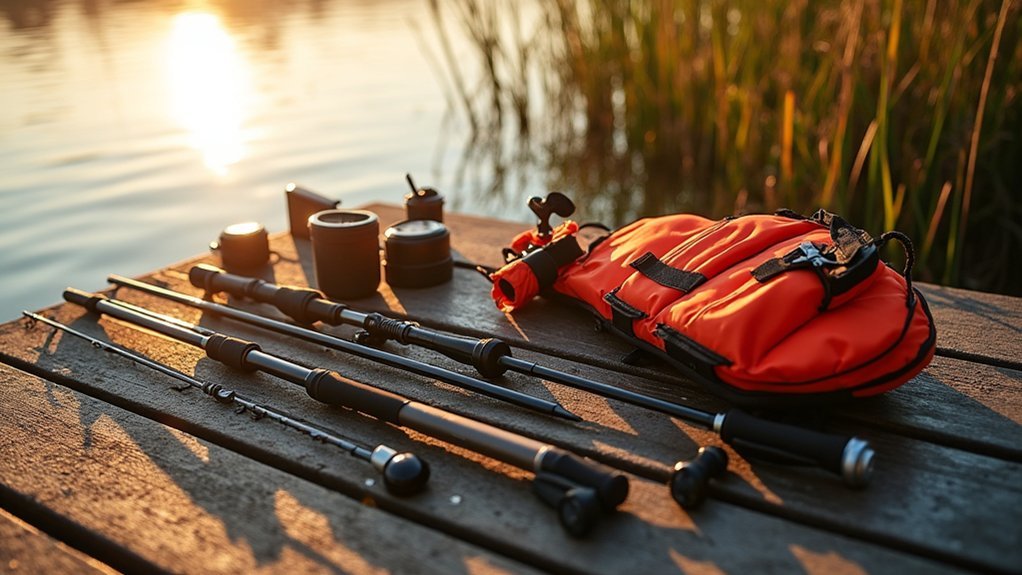
Finding the right equipment can transform fishing from a challenging activity to an enjoyable and therapeutic experience after a stroke.
Adaptive fishing sets offer stability for one-handed fishing, while strong arm supports help control movements during casting and reeling. Consider investing in a Ty-all fishing pole designed specifically to reduce strain on impaired limbs.
Rod holders enable hands-free fishing, and specialized line management tools simplify handling. Motorized retrieval systems automate the physically demanding reeling process. For improved grip, adaptive reel handles are essential. These tools not only provide independence but also contribute to neuroplasticity promotion through repeated practice of fishing movements.
Wheelchair-accessible gear guarantees independence regardless of mobility issues.
Don’t overlook safety—specialized life jackets provide extra support, and balance assistance devices reduce fall risks.
Finally, customized rods tailored to your specific needs will optimize your fishing experience during recovery.
Ergonomic One-Handed Fishing Rods for Limited Mobility
Ergonomic one-handed fishing rods feature telescopic handles that you’ll find easy to adjust for your specific mobility needs after stroke recovery.
You’ll appreciate the palm-friendly grip materials that reduce hand fatigue and provide better control, especially important when your grip strength may be compromised.
Anti-slip trigger holders allow you to cast and reel with confidence, keeping your rod secure while you’re managing everything with just one hand. The innovative Rexfly Casting System provides adaptive fishing solutions specifically designed for one-armed anglers, making it easier to enjoy fishing during your rehabilitation journey.
Telescopic Handle Designs
While traditional fishing equipment can be challenging to use after a stroke, telescopic rods with ergonomic handles offer a practical solution for anglers with limited mobility.
These rods combine portability with accessibility, allowing you to adjust the length based on your comfort and casting needs.
You’ll appreciate how easily these rods collapse for transport and storage—ideal when dealing with mobility issues. The ergonomic grips reduce strain on your hands and wrists, enabling longer fishing sessions without fatigue. Creating a hopeful atmosphere similar to the event in Nice can be therapeutic during your recovery journey.
Most designs feature lightweight materials that maintain durability without adding unnecessary weight.
What makes telescopic handles particularly valuable during stroke recovery is their simplicity. You can assemble and disassemble them with minimal dexterity, and they’re typically more affordable than conventional rods, making them a cost-effective addition to your adaptive fishing gear.
Palm-Friendly Grip Materials
The materials used in fishing rod grips can greatly impact your recovery journey after a stroke. Advanced polymer compounds offer tackier, softer surfaces that reduce hand strain during extended use, outperforming traditional materials for users with limited mobility.
While cork provides excellent sensitivity and lightweight feel, it tends to degrade over time. EVA foam delivers reliable cushioning but may lack the tactile feedback needed for detecting bites. True Grip’s patented ergonomic system is specifically designed to alleviate strain on shoulders, arms and wrists during use.
For ideal recovery support, look for rods featuring custom-shaped grips with textured surfaces that enhance security without requiring excessive gripping strength.
Consider hybrid grips that combine materials for balanced comfort and sensitivity. Enlarged diameter handles distribute pressure evenly across your palm, preventing fatigue in weaker areas while allowing you to enjoy fishing as part of your rehabilitation process.
Anti-Slip Trigger Holders
Innovative anti-slip trigger holders represent a game-changing advancement for stroke survivors looking to return to fishing. These specialized holders provide security and stability while requiring minimal finger strength—perfect if you’re dealing with limited dexterity after a stroke. These tools can be considered a type of adaptive equipment that helps stroke survivors overcome obstacles while returning to activities they enjoy.
| Feature | Benefit | Recovery Impact |
|---|---|---|
| Non-slip surface | Prevents accidental drops | Builds confidence |
| Ergonomic design | Reduces hand fatigue | Extends fishing time |
| Shock absorption | Minimizes strain | Protects healing muscles |
The best trigger holders offer adjustable positions to accommodate your unique needs and fishing style. They’re typically easy to install without special tools, allowing you to focus on enjoying your time on the water rather than struggling with equipment. These adaptive aids contribute greatly to motor skill rehabilitation while providing the emotional well-being benefits that come with returning to a beloved hobby.
Electric Fishing Reels With Push-Button Operation
Push-button electric fishing reels represent a game-changing solution for stroke survivors seeking to return to a beloved pastime. These battery-powered devices automate the retrieval process, allowing you to operate your equipment with just one hand—perfect if you’re dealing with limited mobility on one side.
Electric fishing reels open doors back to the water for stroke survivors, offering one-handed operation when mobility is compromised.
You’ll appreciate the simple controls that require minimal dexterity to activate. Many models feature adjustable speed settings and cordless designs for greater convenience. Brands like M-Pow-R and FISH WINCH® EZ offer lightweight options specifically designed with accessibility in mind. M-Pow-R Fishing LLC has made significant advancements by transitioning from lead acid to Lithium iron phosphate batteries in 2021, greatly enhancing portability and extending usage duration.
Beyond just enabling fishing, these reels provide therapeutic benefits. You’ll exercise motor skills, engage cognitively with nature, and potentially reconnect with your fishing community.
While you might still need assistance with casting, these reels greatly increase your independence on the water.
Adaptive Rod Holders and Stabilizing Mounts
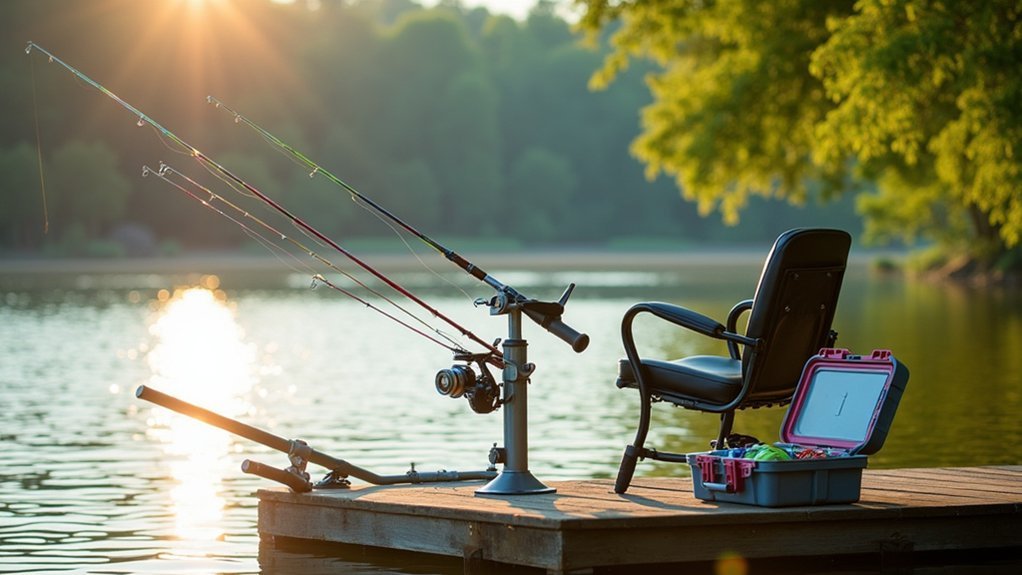
Adaptive rod holders and stabilizing mounts complement electric reels by addressing another major challenge for stroke survivors—maintaining control and stability while fishing.
These devices secure your rod to a wheelchair, boat, or chair, allowing you to fish independently even with limited dexterity or one-handed operation.
You’ll find various options including universal mounting systems, chest harnesses, and arm braces that reduce fatigue while providing essential stability.
Stationary holders offer security while adjustable rests let you position your rod at comfortable angles.
For one-handed fishing, specialized systems enable complete control without assistance.
Some adaptive holders can slide under wheelchair cushions or attach to the side of seat frames, providing convenient mounting options for wheelchair users.
Beyond practical functionality, these adaptive devices deliver therapeutic benefits during recovery by building confidence and enhancing your overall fishing experience.
Many manufacturers offer customization kits to adapt standard equipment to your specific mobility needs.
Accessible Tackle Boxes With Easy-Open Compartments
When managing fishing gear after a stroke, accessible tackle boxes with easy-open compartments become essential tools for maintaining independence on the water.
Look for one-handed latch systems that open effortlessly, reducing strain and frustration during retrieval.
Effortless one-handed latches eliminate unnecessary struggle, keeping your focus on the catch rather than the container.
Choose boxes with customizable dividers that accommodate your specific needs and can be adjusted as your dexterity improves. The highly rated models like the Two-Tray and Three-Tray XL tackle boxes consistently receive 5.0-star ratings for their user-friendly designs. Transparent lids eliminate unnecessary movement by letting you see contents without opening, while dual-access designs minimize repositioning.
Waterproof construction protects your gear while ensuring latches continue operating smoothly.
Consider compact, ergonomic sizes (like 3600 or 3700 models) that don’t require excessive lifting or awkward handling.
These thoughtful features transform tackle management from a potential challenge into a seamless part of your fishing experience, letting you focus on enjoying the activity rather than struggling with equipment.
Lightweight Fishing Lines and Pre-Tied Rigs
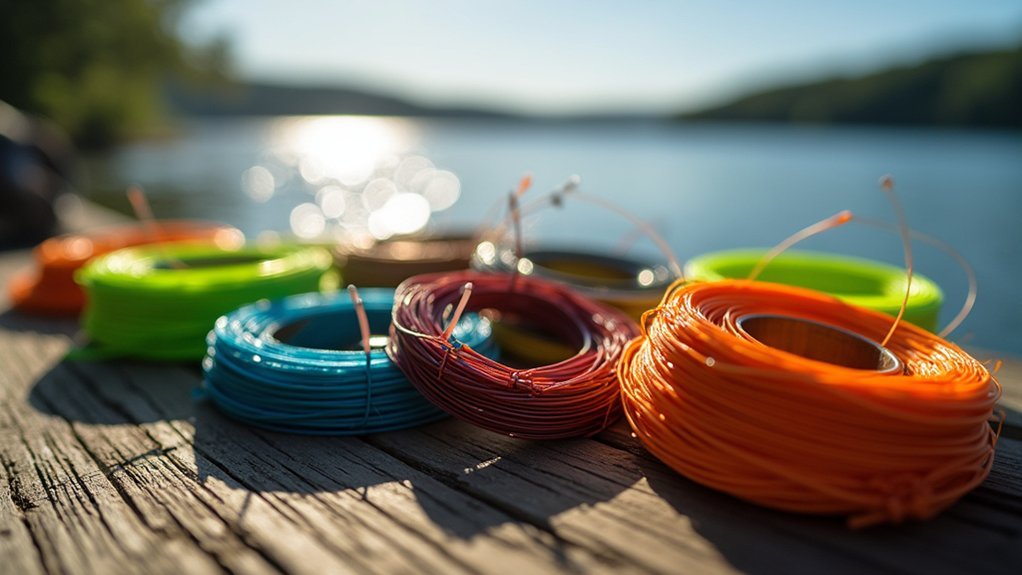
Monofilament fishing lines offer you excellent knot strength and abrasion resistance, making them easier to handle during stroke recovery when dexterity might be limited.
You’ll find their slight stretch provides forgiveness while setting hooks, reducing the risk of dropped rods or missed catches. Their low cost makes them an economical choice during rehabilitation when expenses may be a concern.
Pre-tied rigs with snap attachments eliminate the frustration of tying knots, allowing you to change lures or rigs quickly despite potential hand weakness or coordination challenges.
Monofilament Line Benefits
Fishing enthusiasts recovering from stroke can benefit greatly from lightweight monofilament fishing lines due to their forgiving nature and ease of handling. The line’s natural flexibility makes casting easier with limited dexterity while its stretch factor (up to 25%) absorbs sudden pulls, reducing strain on recovering muscles. Knot-friendly properties of monofilament make it an excellent choice for those with limited hand strength and coordination issues.
| Feature | Benefit | Rehabilitation Value |
|---|---|---|
| Stretch | Absorbs sudden jerks | Reduces muscle strain |
| Flexibility | Easier to handle | Supports limited dexterity |
| Larger diameter | Enhanced durability | Fewer frustrating breaks |
| Invisibility underwater | Better catch rates | Builds confidence |
| Shock strength | Handles big fish | Motivates continued therapy |
Pre-tied monofilament rigs further simplify the fishing experience, allowing you to focus on rebuilding motor skills rather than struggling with complex knots and setups.
Snap-Ready Tackle Solutions
Although monofilament lines offer significant benefits, snap-ready tackle solutions provide even more adaptive options for stroke survivors. Lightweight lines reduce arm and hand strain while improving sensitivity to detect subtle bites. Their thinner diameter and reduced stretch allow you to cast more precisely and set hooks effectively without excessive fatigue.
Pre-tied rigs eliminate the need for intricate knot-tying, making fishing more accessible when dexterity is limited. You’ll spend less time fumbling with tackle and more time enjoying the water. Choosing a line with low memory characteristics helps prevent tangling issues that can be especially frustrating for those with limited mobility.
Quick-change and snap swivels let you switch between lures effortlessly, while loop-to-loop connections simplify line changes. Consider pairing these with ergonomic handles or adaptive grips to further customize your setup.
These solutions maintain fishing independence while accommodating your specific recovery needs.
All-Terrain Fishing Chairs With Safety Features
The versatile design of all-terrain fishing chairs provides stroke survivors with newfound freedom to navigate challenging outdoor environments.
With sturdy construction featuring 600D Oxford fabric and aluminum alloy frames, these chairs support up to 250kg while maintaining stability on uneven ground.
You’ll appreciate the safety features like harness-style seat belts and four-point mudguard legs that prevent tipping on varied terrain, ensuring excellent support during use.
Many models offer liftable seats for easier transfers—crucial during recovery. Some electric-powered versions eliminate the need for upper body strength, allowing you to access designated park trails previously off-limits.
Beyond accessibility, these chairs contribute to your recovery journey by facilitating physical therapy through fishing activities while boosting mental health.
Choose between lightweight, portable options or sturdier models based on your specific rehabilitation needs.
Therapeutic Grip Attachments for Fishing Equipment
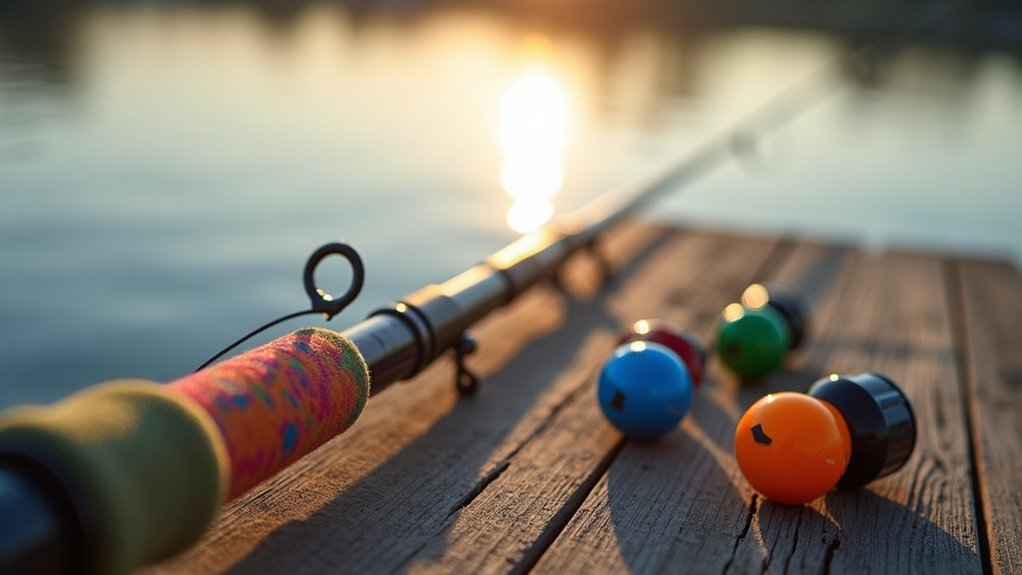
You’ll find pressure-relieving foam wraps specifically designed to cushion your grip while distributing pressure evenly across your hands during extended fishing sessions.
One-handed trigger grips let you cast and reel with minimal finger strength, featuring ergonomic designs that work with your post-stroke mobility limitations.
These specialized attachments can be easily integrated with standard fishing rods, creating custom solutions that adapt to your recovery progress and specific needs. The AH11 model provides a secure hands-free option with an adapted cuff that fits around your forearm, allowing total rod control without needing grip strength.
Pressure-Relieving Foam Wraps
Stroke survivors seeking to return to fishing can benefit considerably from pressure-relieving foam wraps that transform standard fishing equipment into adaptive therapeutic tools.
These versatile wraps provide essential support and stability for weakened hands and arms while reducing fatigue during extended fishing sessions. With over 80% of individuals experiencing arm and hand weakness after a stroke, these adaptive aids are crucial for recreational rehabilitation.
You’ll find various foam materials suited for different needs. EVA foam offers lightweight firmness ideal for rod handles, while soft foam creates wider grips that are easier to manage. EPDM provides exceptional durability similar to Hypalon but remains legal for use in the USA.
Beyond improving your fishing experience, these wraps contribute to your rehabilitation by helping restore grip strength and dexterity.
They’ll make your therapy more engaging while fostering independence and a sense of accomplishment as you regain control over your favorite recreational activity.
One-Handed Trigger Grips
For anglers recovering from stroke, one-handed trigger grips represent a revolutionary adaptation that transforms standard fishing equipment into accessible therapeutic tools.
These ergonomically designed attachments provide secure fastening with adjustable tension, allowing you to customize resistance based on your hand strength.
Compatible with spinning rods, casting rods, and even fly fishing gear, these versatile grips enhance your control while reducing fatigue during extended fishing sessions.
You’ll appreciate how they work with either hand, making them ideal regardless of which side was affected by your stroke. Like other products from Active Hands, these grips are designed to promote independence for users with hand function disabilities.
Beyond recreation, these grips deliver significant therapeutic benefits – improving dexterity, building hand strength, and enhancing coordination.
Many users report increased confidence as they regain independence on the water, making fishing both enjoyable and an effective part of rehabilitation.
Voice-Activated Fishing Accessories for Independent Use
While regaining independence remains a primary goal for many stroke survivors, voice-activated fishing accessories have revolutionized the angling experience for those with limited mobility or dexterity.
These innovative systems allow you to set hooks, adjust line tension, and reel in catches using simple voice commands.
Modern smart fishing rods integrate sensors that respond to your vocal instructions, eliminating the need for complex manual manipulations.
Many come with companion apps offering real-time support and tutorials specifically designed for adaptive techniques.
Voice-controlled wearables further enhance your independent fishing experience by providing hands-free control over your gear.
The therapeutic benefits extend beyond physical assistance—these technologies stimulate neuroplasticity and cognitive function while you enjoy the calming effects of fishing.
You’ll find greater confidence knowing you can pursue this rewarding hobby without constantly requiring physical help.
These products may not be covered by insurance, creating financial barriers for some stroke survivors interested in adaptive fishing equipment.
Buoyant Fishing Nets With Extended Handles
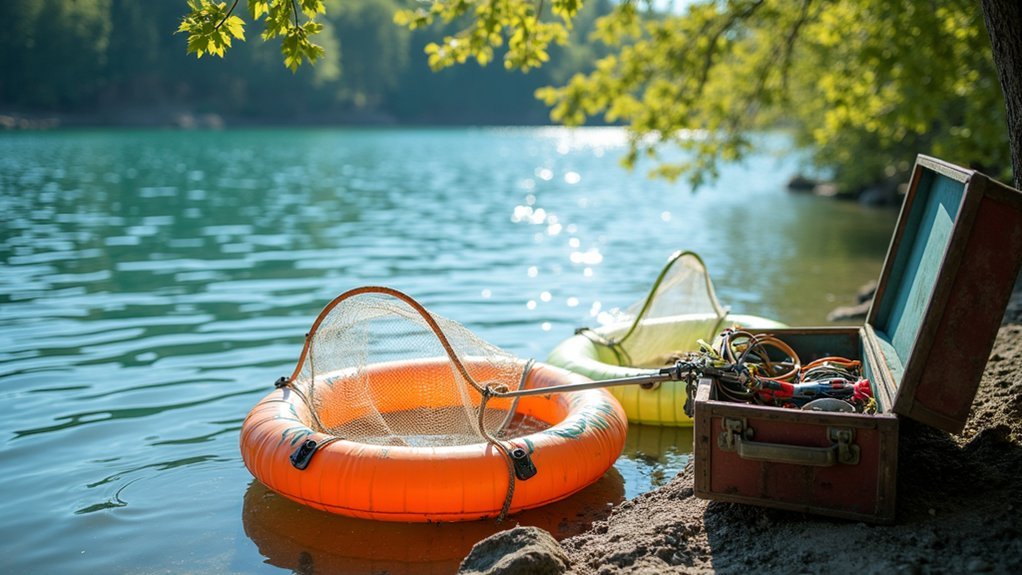
Designed specifically for anglers with limited mobility, buoyant fishing nets with extended handles offer remarkable advantages during your stroke recovery journey.
These nets feature EVA foam and polypropylene materials that provide excellent buoyancy, reducing drag and strain while making retrieval considerably easier.
EVA foam and polypropylene create exceptional buoyancy, dramatically reducing drag and making fish retrieval effortless during your recovery.
You’ll appreciate the telescoping handles with quick-connect mechanisms that adjust to your reach capabilities. The carbon fiber and aluminum construction keeps weight down while maintaining durability.
Ergonomic rubber grips prevent slipping and accommodate weaker grip strength.
The internal Y-bar construction guarantees stability when landing fish, while quick-release pins let you customize handle length to your specific needs.
These thoughtful design innovations mean you’ll experience less fatigue and greater independence on the water, allowing you to enjoy fishing despite mobility challenges.
Many models extend from a compact 1.75m to 3m in length, making them ideal for fishing from high banks or areas with marginal vegetation where additional reach is necessary.
Frequently Asked Questions
Can Medicare or Insurance Cover Adaptive Fishing Equipment Costs?
Medicare rarely covers adaptive fishing equipment unless it qualifies as medically necessary DME. Your insurance might provide partial coverage with a doctor’s prescription and prior authorization, but you’ll likely need to pay out-of-pocket.
How Long Before Stroke Survivors Can Safely Fish Independently?
You’ll typically need 6-12 months before fishing independently after a stroke, depending on your recovery progress. Start with supported outings and gradually increase independence as your motor skills and balance improve.
Are There Fishing Clubs Specifically for Stroke Survivors?
Yes, you’ll find fishing clubs specifically for stroke survivors through organizations like Retreat & Refresh Stroke Camp. These clubs offer trained volunteers, adaptive equipment, and supportive environments where you can enjoy fishing with peers.
What Weather Conditions Should Stroke Survivors Avoid When Fishing?
You should avoid fishing during heavy rain (slippery surfaces), extreme temperatures, strong winds, and thunderstorms. Check weather forecasts beforehand, use sun protection when it’s sunny, and stay hydrated regardless of conditions.
Can Fishing Therapy Complement Traditional Physical Rehabilitation Programs?
Yes, fishing therapy can complement your traditional rehabilitation. It offers relaxation, reduces stress, provides gentle physical activity, and enhances mental well-being while giving you purposeful engagement that’s beneficial for holistic stroke recovery.
In Summary
You’ve now discovered the best fishing gear to support your stroke recovery journey. These adaptive tools don’t just make fishing possible—they transform it into effective therapy. Whether you’re working on motor skills, coordination, or building confidence, these specialized equipment options let you enjoy the water again while advancing your rehabilitation goals. Remember, your recovery path can absolutely include the outdoor activities you love.


Leave a Reply