

Disabled anglers can enjoy fishing with innovative hands-free solutions like chest harness systems that provide custom rod support and wheelchair mounting holders for secure placement. Electric reels and button-operated casting technologies enable one-handed operation, while body-worn rod holders distribute energy across your body for better control. All-terrain mobility equipment helps you access prime fishing spots with specialized wheels and frames. These adaptive technologies let you fish independently while maximizing your time on the water.
Chest Harness Systems: Custom Rod Support for One-Handed Anglers
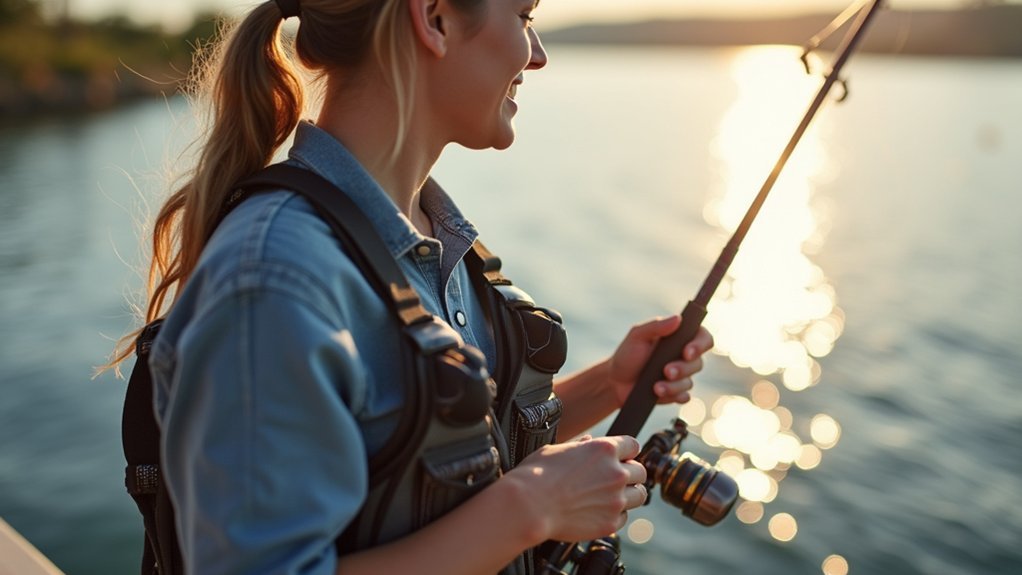
While traditional fishing requires two hands to manage a rod effectively, chest harness systems have revolutionized the sport for one-handed anglers. These ambidextrous supports allow you to fish independently regardless of which hand you use, providing stability while handling even large catches.
Chest harness systems empower one-handed anglers with independence and stability, revolutionizing traditional fishing techniques.
You’ll find that these harnesses offer adjustable fits for different body types, with durable construction that withstands various fishing environments. The systems typically include customized rods adapted for one-handed use, enabling you to cast and retrieve fish efficiently.
Companies like Rexfly specialize in this adaptive equipment, incorporating ergonomic designs and innovative materials for maximum comfort during extended fishing sessions. The Rexfly Chest Harness comes standard with both their Adaptive Spinning Rod and Adaptive Casting Rod options, creating a complete system for one-armed fishing.
With a chest harness, you can confidently participate in diverse fishing styles—from fly fishing to bait casting—across lakes and rivers, considerably reducing physical strain.
Wheelchair and Boat Mounting Solutions for Secure Rod Placement
For anglers with mobility challenges, specialized mounting solutions transform wheelchairs and boats into effective fishing platforms.
Adjustable hinged holders offer customizable height and distance from your body, with base plates that slide under seat cushions for easy installation.
Clamp-on holders fit most tubular wheelchair bars (7/8″ to 1 1/8″ diameter) and secure poles while allowing one-handed reel operation. They’re also compatible with lawn and beach chairs.
For those with limited arm movement, spring-action designs automatically set hooks when fish bite. These systems maintain tension and work seamlessly with electric reels for truly hands-free fishing.
Boat mounting options adapt to various structures, docks, and piers, offering consistent performance in changing water conditions.
Add-on accessories like camera stands and multiple rod adapters further customize your setup to match your specific needs. The innovative products are designed by disabled individuals, ensuring practical solutions that address real-world fishing challenges.
Electric Reels and Button-Operated Casting Technologies
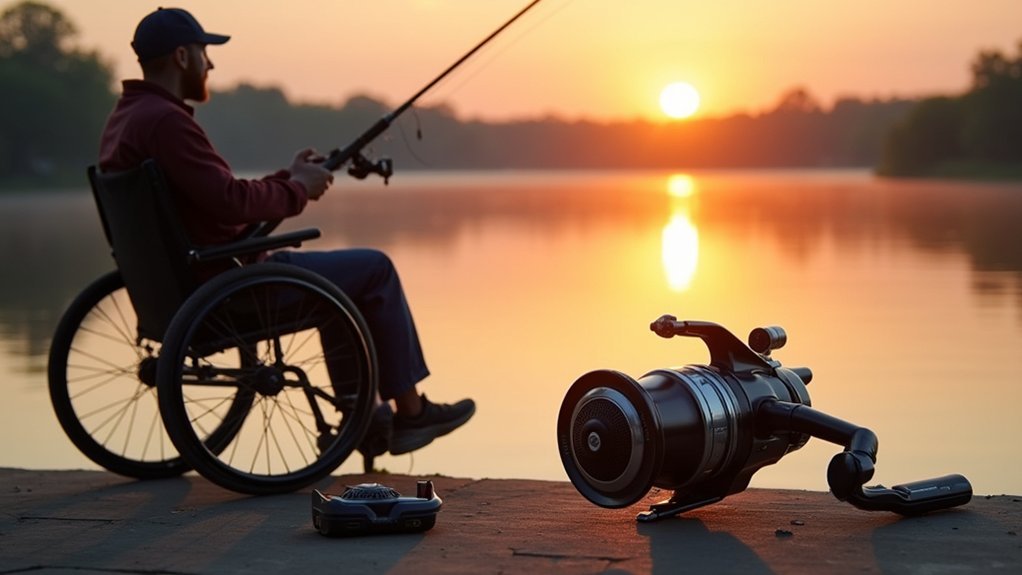
Electric reels and button-operated casting systems represent game-changing technology for disabled anglers seeking independence on the water. Options like the lightweight FISH WINCH® EZ convert standard reels into electric ones with one-handed operation, weighing just 6.4oz with a 9V lithium battery. Particularly suited for those with limited hand mobility, this device can transform Daiwa US80XD and US120XD reels into fully functional electric fishing reels.
You’ll find powerful models like the 452-PTH that handle larger fish in both fresh and saltwater environments. Many feature soft-touch buttons and two-speed controls for precise operation without requiring manual strength or dexterity.
Adaptive kits from brands such as M-Pow-R and Shimano offer specialized solutions that mount easily on various reel types.
With quiet motors, ergonomic designs, and long-lasting batteries, these technologies enable you to cast and retrieve independently, regardless of mobility limitations.
Body-Worn Rod Holders and Stabilizing Accessories
Body-worn rod holders and stabilizing accessories have revolutionized fishing accessibility by allowing anglers with mobility challenges to enjoy the sport independently.
Products like the Barracuda Rod Holder distribute energy across your shoulders, back, and legs, enabling effective one-arm fishing with greater control.
If you have limited finger strength, the Strong Arm 2 Fishing Aid secures the rod to your arm for hands-free fishing. It’s even versatile enough for golf. The Side Winder model is specifically designed for those with arm mobility issues and can handle fish up to 30 pounds.
These holders are typically crafted from durable materials like leather and stainless steel, adjustable to fit different arm sizes and rod types.
For wheelchair users, accessories like the Dorado clamp onto your chair, while spring-loaded rod tubes allow easy position adjustments.
These solutions enhance your independence while providing the comfort and stability needed for successful fishing adventures.
All-Terrain Mobility Equipment for Accessing Prime Fishing Spots
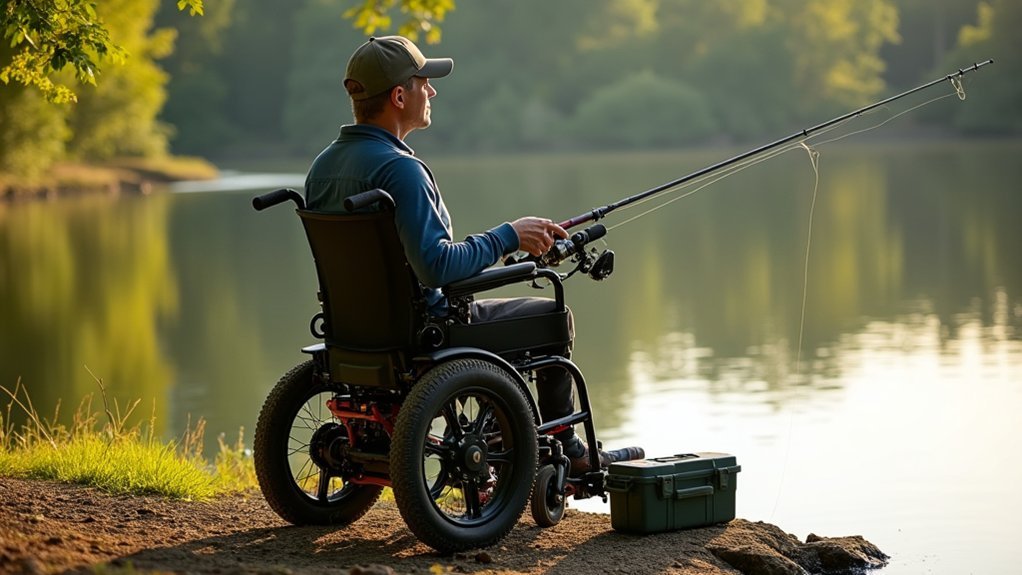
Accessing prime fishing spots often presents significant challenges for anglers with mobility limitations, but specialized all-terrain mobility equipment has transformed this landscape entirely.
You’ll find manual and motorized options designed specifically for outdoor adventures, from tracked chairs that conquer steep inclines to beach wheelchairs with wide tires for sandy terrain. The Action Trackchair features patented tilt design that allows anglers to customize their seat angle for optimal casting positions.
These devices feature corrosion-resistant frames, specialized wheels or tracks that prevent sinking, and adjustable seating for comfortable casting positions.
Many accommodate fishing-specific accessories and rod mounts. Look into Alternative Mobility Permits (AMPs) that may grant you access to otherwise restricted fishing areas.
Popular models like the Action Trackchair AXIS and TerrainHopper offer robust solutions that enhance your independence while reducing fatigue, allowing you to reach remote spots previously inaccessible.
Frequently Asked Questions
How Long Does It Take to Learn Adaptive Fishing Techniques?
You’ll typically learn adaptive fishing techniques in several weeks to months. Your learning timeline depends on your prior experience, the complexity of methods, and whether you’ve got access to mentors or technology-based resources.
Are Adaptive Fishing Equipment Modifications Covered by Insurance?
Some insurance policies may cover your adaptive fishing equipment, but you’ll need to check specific policy details. Consider specialized coverage options and maintain documentation for any claims related to your equipment.
Can Children With Disabilities Use These Adaptive Fishing Solutions?
Yes, children with disabilities can use adaptive fishing equipment. You’ll find many devices are customizable for smaller sizes, including electric reels, rod holders, and grip aids specifically designed for young anglers with various needs.
What Weather Conditions Affect Adaptive Fishing Equipment Performance?
Weather conditions that affect your adaptive fishing equipment include extreme temperatures, heavy rain, strong winds, and high humidity. These can impact durability, electronics functionality, and overall performance of your gear during fishing activities.
How Do I Find Local Fishing Guides Experienced With Disabled Anglers?
You’ll find guides experienced with disabled anglers by contacting fishing organizations like Fishing Has No Boundaries, checking reviews online, asking at local tackle shops, and networking in disability fishing forums or social media groups.
In Summary
Whether you’re dealing with mobility challenges or limited dexterity, don’t let disability keep you from the water. You’ll find these hands-free fishing solutions offer independence and the thrill of landing your catch on your own terms. With today’s adaptive equipment, you’re not just accommodated—you’re empowered. The only limit to your fishing adventures now is your imagination, not your disability.


Leave a Reply