

Games can be powerful tools for managing social anxiety. Cooperative games like Pandemic create shared goals without competitive pressure. Strategic options like Ticket to Ride offer enjoyable interaction with minimal confrontation. Role-playing games let you express yourself through character personas, reducing social stakes. Codenames and Dixit promote teamwork without constant conversation pressure. Many titles even offer digital versions to practice social dynamics from your comfort zone. The right game might become your bridge to more confident social interactions.
What Games Help Players With Social Anxiety?

While maneuvering social situations can be challenging for those with anxiety, certain games offer a perfect blend of structure and interaction that helps ease social discomfort. When you play board games like Codenames, you’ll experience teamwork without the pressure of maintaining conversation, creating a comfortable social environment.
Dixit encourages creative thinking through storytelling, helping you engage meaningfully without traditional social stress. Ticket to Ride features simple mechanics that let you enjoy company while minimizing constant interaction.
Games like Werewolf provide structured communication opportunities through social deduction elements.
The beauty of these games is their gradual effect – regular participation builds confidence and improves social skills over time, making everyday interactions less intimidating. These carefully designed experiences provide a supportive gateway to developing stronger social connections.
Understanding How Games Create Safe Social Spaces
Because board games operate within defined rules and expected behaviors, they naturally create psychological safety for those with social anxiety. You’re entering a structured environment where interactions revolve around gameplay rather than unprompted conversation, removing the pressure to generate small talk.
Games like Codenames and Werewolf foster teamwork through friendly competition, encouraging you to communicate while focusing on shared objectives. These mechanics require active listening and creative responses, helping you develop communication skills in a low-stakes setting.
As you regularly participate in board games, you’re gradually exposing yourself to social situations, building confidence with each session. The shared experiences create natural connections among players, establishing friendships and community bonds that can greatly reduce your social anxiety over time.
Cooperative Games That Reduce Social Pressure
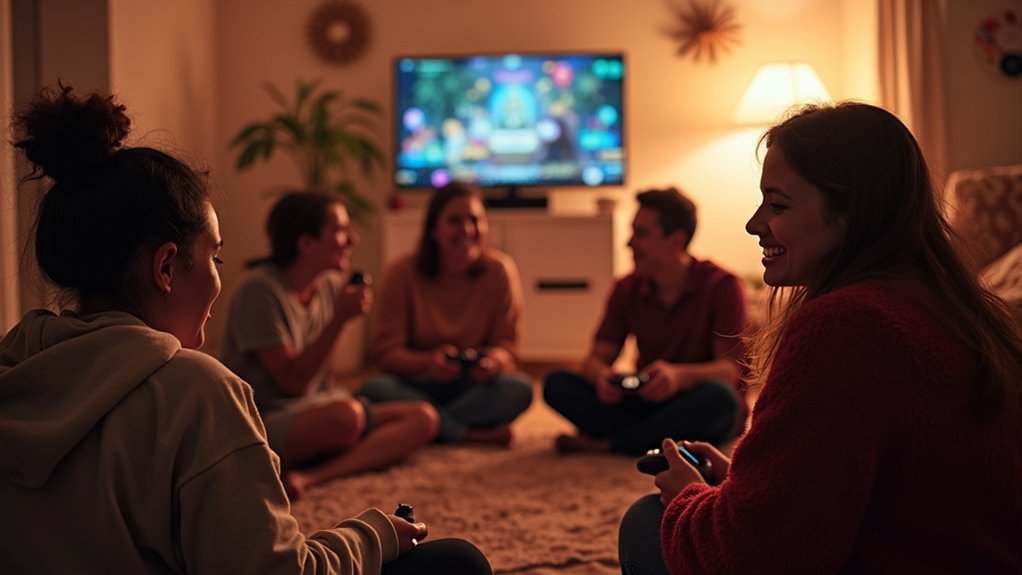
Cooperative games offer you an effective pathway to social interaction by creating shared goals that shift attention away from individual performance to team achievements.
You’ll find comfort in games requiring limited verbal communication, where your contributions can be meaningful without constant conversation.
Assigned roles in these games provide clear guidelines for participation, giving you a structured way to engage without the pressure of figuring out social dynamics on your own.
Shared Goals, Not Spotlight
For those struggling with social anxiety, games that emphasize teamwork over individual performance can create a transformative experience. When you participate in cooperative games like Codenames or Pandemic, you’re working toward common objectives rather than competing against others.
The beauty of these games lies in how they distribute social pressure across the group. You’re never solely responsible for success or failure, which creates a safe space to practice communication without feeling exposed.
As you collectively solve problems, you’ll build connections naturally without forced interaction. This collaborative environment helps you gradually build confidence in social settings.
The shared victories and challenges foster a sense of belonging that can extend beyond game night. Over time, you might find yourself more comfortable stepping outside your comfort zone in other social situations.
Limited Verbal Requirements
Many people with social anxiety find relief in games that don’t demand constant conversation.
Games like Codenames and Dixit offer limited verbal requirements while still creating meaningful social connections. These games allow you to participate without the pressure of maintaining dialogue throughout.
Ticket to Ride exemplifies this balance perfectly, focusing on strategy rather than social interaction.
You can engage with others while keeping verbal communication minimal and purposeful.
Games with structured mechanics, such as Werewolf, provide clear frameworks for communication, making social interactions more predictable and less intimidating.
The collaborative nature of these games creates a supportive environment where you can practice social skills at your own pace.
Fixed Role Assignments
Fixed role assignments in games offer another powerful avenue for those with social anxiety to engage comfortably with others.
In cooperative games like Pandemic and Forbidden Island, you’ll receive a specific character with unique abilities that contribute to the team’s success. This structure eliminates the pressure of figuring out your place in social dynamics.
When you have a designated role, you can focus on your particular tasks rather than worrying about open-ended interactions. You become an essential part of the group automatically, which boosts confidence and reduces feelings of inadequacy.
The beauty of fixed role assignments is that they create a framework where collaboration happens naturally without the fear of judgment. You’re valued for your contribution to the collective effort, making socializing feel purposeful rather than intimidating.
Strategic Games With Limited Direct Interaction

Strategic games that limit direct interaction provide an ideal entry point for those with social anxiety. These games allow you to engage with others while maintaining comfortable boundaries and focusing primarily on your own objectives.
Consider these anxiety-friendly strategic games:
- *Ticket to Ride* lets you build train routes while minimizing pressure from direct player confrontation.
- *Carcassonne* enables landscape building with subtle competitive elements that don’t require constant social engagement.
- *7 Wonders* emphasizes resource management without demanding verbal communication.
- *Azul* centers on personal tile placement goals, allowing natural interaction to develop organically.
- *Pandemic* promotes teamwork through collective problem-solving rather than individual confrontation.
These strategic games create enjoyable social experiences where you can participate fully without feeling overwhelmed by social expectations or constant interpersonal negotiation.
Role-Playing Games for Gradual Confidence Building
Role-playing games offer you a protective barrier through character personas, allowing you to engage socially without direct personal vulnerability.
You’ll find that expressing yourself through a character reduces the stakes of interaction while still practicing essential communication skills.
The turn-based format and clear expectations within RPGs create a predictable social environment where you can build confidence at your own pace.
Character Shields Anxious Players
Many individuals struggling with social anxiety find sanctuary behind the armor of a fictional character in role-playing games like Dungeons and Dragons. When playing board games with RPG elements, you’re not speaking as yourself but as your character, creating a protective buffer that reduces social pressure.
This character shield works because:
- You can express yourself through a persona separate from your real identity.
- The structured rules provide clear expectations, reducing uncertainty.
- You practice social skills in a consequence-free environment.
- Collaborative storytelling builds connection without direct personal vulnerability.
- Regular play strengthens relationships through shared experiences.
This protective layer doesn’t just mask anxiety—it actually helps you develop confidence that gradually transfers to real-world interactions, making RPGs valuable tools for social growth.
Structured Interactions Reduce Pressure
Unlike spontaneous social situations that often trigger anxiety, role-playing games provide a structured framework where interactions follow predictable patterns and clear rules. You’ll find that RPGs like Dungeons & Dragons help build confidence through gradually increasing social engagement at your own pace.
| Anxiety Reducer | How It Works | Benefit |
|---|---|---|
| Turn-based dialogue | Everyone gets a chance to speak | Eliminates interruption anxiety |
| Character roles | Clear expectations for interaction | Reduces uncertainty |
| Game mechanics | Rules guide social exchanges | Provides conversational scaffolding |
| Collaborative tasks | Team problem-solving | Creates natural conversation flow |
| Consistent meetings | Regular social practice | Builds lasting relationships |
The beauty of RPGs lies in their ability to transform potentially overwhelming social situations into manageable, enjoyable experiences where you can practice communication skills within a supportive group setting.
Card Games Designed for Comfortable Communication
How often have you found yourself wanting to connect with others but feeling trapped by the pressure of maintaining conversation?
Card games offer an elegant solution, creating structure around social interactions while keeping the focus on play rather than personal disclosure.
Several card games specifically excel at fostering comfortable communication:
- Codenames encourages teamwork in a low-pressure environment
- Dixit promotes creative thinking through storytelling mechanics
- Exploding Kittens uses humor to minimize social interaction pressure
- Cards Against Humanity breaks the ice through shared laughter
- Uno provides accessible gameplay requiring minimal dialogue
These games create natural conversation points without forcing prolonged eye contact or extended personal discussions.
You’ll find yourself connecting with others through the shared experience of play rather than struggling to maintain awkward small talk.
Digital Adaptations for Easing Into In-Person Play
While tabletop games provide excellent social frameworks, their digital counterparts offer a gentler pathway for those with social anxiety. Platforms like Tabletop Simulator and Board Game Arena host numerous games where you can please click to join sessions that develop communication skills without face-to-face pressure.
Digital versions of Codenames and Dixit enable social interaction from home, featuring chat functions that promote collaboration and community building. These low-stakes environments allow you to practice social dynamics while focusing on gameplay rather than social expectations.
The beauty of this approach is its gradual nature. As you become comfortable with game mechanics and build confidence through online sessions, you’ll find yourself better prepared for in-person gatherings.
This step-by-step exposure can transform gaming from anxiety-inducing to genuinely enjoyable.
Creating Inclusive Gaming Environments
Although many gamers focus on rules and strategies, the environment you establish carries equal importance for players with social anxiety. Creating a space where everyone feels welcome helps develop social skills naturally through gameplay rather than forced interaction.
To build an inclusive gaming environment:
Creating spaces where everyone belongs empowers anxious players to connect through gaming rather than despite it.
- Select team-based games like Codenames or Dixit that encourage communication without pressure
- Offer various game options to accommodate different anxiety levels and preferences
- Foster a relaxed atmosphere where players can participate at their own pace
- Incorporate brief group discussions about gameplay to strengthen connections
- Utilize online platforms when in-person gatherings feel overwhelming
Remember that inclusive environments aren’t just about accessibility—they’re about creating opportunities for everyone to engage comfortably while gradually building confidence in their social skills through shared gaming experiences.
Turn-Based Games That Allow Processing Time
Turn-based games give you valuable downtime between turns, creating essential breathing room when social situations feel overwhelming.
You’ll find space to gather your thoughts as other players take their turns, removing the pressure to respond immediately that often triggers anxiety.
This built-in thinking time offers a low-stakes way to practice social engagement while maintaining the mental bandwidth to process interactions at your own pace.
Downtime Eases Pressure
For individuals struggling with social anxiety, the natural pauses built into turn-based games can transform what might otherwise be a stressful experience into an enjoyable social activity.
The structured downtime between turns on the board allows you to gather your thoughts without feeling rushed or put on the spot.
When you play games like Ticket to Ride or Catan, you’ll benefit from:
- Time to process information and plan your strategy
- Freedom to engage in conversation at your own pace
- Opportunities to observe social dynamics without constant participation
- Natural breaks that prevent social overwhelm
- Moments to regulate anxiety if it begins to rise
This breathing room creates a comfortable rhythm where social interaction feels more manageable, giving you control over when and how you engage with others.
Space Between Interactions
The carefully designed pacing of turn-based games offers a mental sanctuary for those with social anxiety. When you play titles like “Ticket to Ride” or “Codenames,” you’ll appreciate the breathing room between turns that allows you to process social information without feeling rushed.
Unlike continuous conversation, these games create natural pauses where you can gather your thoughts and prepare your next move. You’re focusing on strategy rather than maintaining constant social engagement, which greatly reduces anxiety.
The turn structure encourages deliberate communication when you’re ready, not when you’re pressured. This intentional spacing helps you practice social skills gradually, building confidence through repeated, manageable exposures.
The reflection time between interactions lets you reset mentally, making each social exchange more comfortable and enjoyable.
Low-Stakes Thinking Time
When you struggle with social anxiety, games that provide ample thinking time can be your gateway to more comfortable interactions. Turn-based games like Ticket to Ride and Codenames might become your favorite games because they create a structured environment where you can process thoughts without pressure.
These games offer several anxiety-reducing benefits:
- Clear rules and objectives shift focus from social performance to strategy
- Time between turns allows you to collect thoughts before responding
- Conversations happen naturally at your own pace
- No rushed decisions means less overwhelming social pressure
- Collaborative elements let you practice communication in a supportive setting
The beauty of turn-based gameplay lies in its patient rhythm—you get the space to think, react, and engage without feeling rushed, making social interaction feel manageable rather than intimidating.
Party Games With Clear Structure and Rules
Maneuvering social gatherings becomes considerably easier when you’re engaged in party games with clear structure and rules. Games like Codenames provide defined roles and objectives that minimize the pressure of open-ended interactions while helping improve communication skills through teamwork.
Dixit encourages storytelling within a framework, fostering creativity and active listening in a low-pressure environment. If continuous conversation feels overwhelming, Ticket to Ride offers straightforward mechanics that don’t require constant social engagement.
For those ready to challenge themselves further, Werewolf incorporates social deduction with clear guidelines, promoting teamwork while providing structured context for interaction.
The beauty of these games lies in their ability to help you gradually build confidence through repeated engagement. As you play more often, you’ll likely find yourself developing social skills that extend beyond game night.
Frequently Asked Questions
What Helps People With Social Anxiety?
Gradual exposure to social situations helps you overcome anxiety. You’ll benefit from structured activities that encourage communication, shared experiences that build connections, and relaxed environments where you can practice social skills without pressure.
What Is a Good Game for Anxiety?
You’ll find Codenames perfect for anxiety as it builds teamwork without idle chatter. Dixit encourages storytelling in a relaxed setting, while Ticket to Ride lets you participate without constant social interaction.
What Sports Help With Social Anxiety?
You’ll find relief in both team and individual sports. Basketball and soccer build community, while swimming and running boost confidence. Martial arts improve discipline, and recreational leagues provide structured social interaction with anxiety-reducing endorphin benefits.
Does DND Help With Social Anxiety?
Yes, D&D can help with your social anxiety. You’ll practice social interaction in a structured environment, develop communication skills through collaborative storytelling, and build confidence by expressing yourself through characters in a supportive community setting.
In Summary
Games provide valuable spaces to practice social skills without overwhelming pressure. You’ll benefit most from games that match your comfort level—whether it’s cooperative adventures, turn-based strategy, or structured party games. Start with digital versions if needed, then gradually try in-person gaming. Remember, the gaming community includes many who share your experiences. Take small steps, celebrate progress, and enjoy connecting through play on your terms.




Leave a Reply