
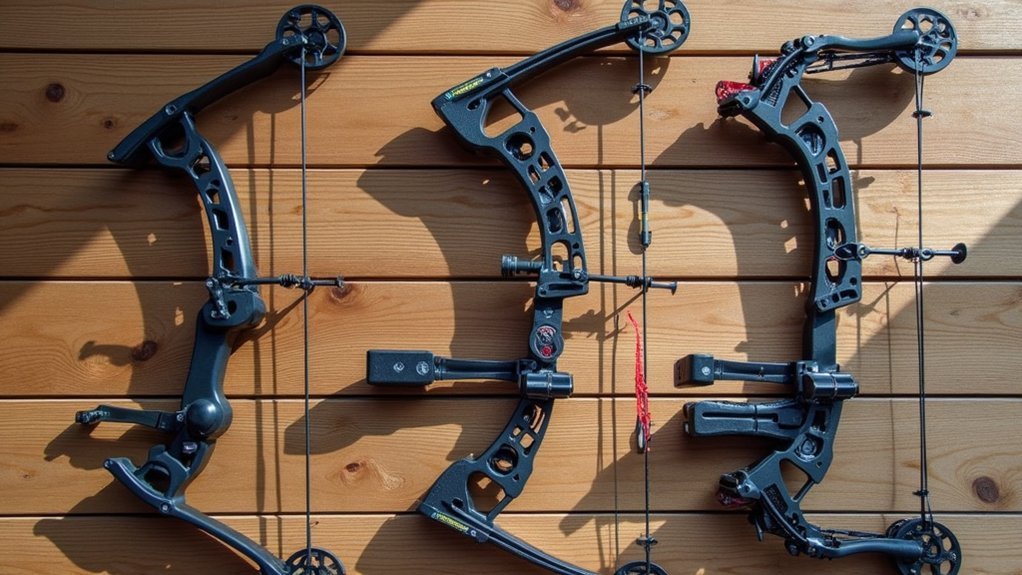
The top modified bows for disabled archers include the Pullin Archery device, Draw-Loc system, and lightweight bows with soft cams. You’ll find these options offer adaptive release mechanisms for limited hand dexterity, wheelchair-compatible mounting, and customizable draw weights between 35-50 lbs. Each system provides enhanced stability features while maintaining competition compliance. The right adaptive equipment guarantees comfort and accuracy regardless of your physical capabilities – discover which solution best matches your specific needs.
Adaptive Release Mechanisms for Limited Hand Mobility

While traditional archery requires significant hand dexterity, adaptive release mechanisms have revolutionized the sport for archers with limited hand mobility. Innovations like the Pullin Archery device and Draw-Loc system allow you to draw and hold your bow independently, despite physical limitations.
If you can’t use your hands for release, consider a mouth tab—a fabric strip attached to the bowstring that you can bite to trigger the shot.
For more customized solutions, release aids can be mounted on blocks connected to a shoulder brace, allowing alternative activation methods.
Many archers with limited arm movement find elbow straps more effective than shoulder braces.
These adaptive equipment options guarantee you can compete fairly and effectively alongside peers, regardless of your physical challenges.
Wheelchair-Compatible Bow Systems With Enhanced Stability Features
When you’re shooting from a wheelchair, stability becomes paramount to your archery success. Wheelchair-compatible bow systems now feature integrated bow support mechanisms that position the bow ideally in front of you, reducing arm strain while enhancing accuracy.
Stability isn’t just helpful—it’s essential for wheelchair archers seeking consistent performance and reduced fatigue.
The market offers adaptive equipment specifically designed for archers with limited mobility, including the Pullin Archery device and Draw-Loc systems that can be mounted directly to your wheelchair.
Many archers find lightweight aluminum shooting stools provide exceptional stability during competitions.
Look for modified bows with adjustable components that accommodate your specific needs while ensuring compliance regulations are met.
The best systems feature enhanced support without excessive back and side height restrictions.
These stability features allow you to focus on your shot sequence rather than struggling with equipment, making archery truly accessible regardless of mobility limitations.
Custom Draw-Weight Options for Varying Upper Body Strength

Since upper body strength varies greatly among disabled archers, manufacturers now offer highly customizable draw-weight options that can be tailored to your specific capabilities.
When selecting modified bows, you’ll find that draw weight flexibility between 35-50 lbs provides ideal performance while accommodating your strength limitations.
- Adaptive equipment featuring round wheel eccentrics or soft cams considerably reduces drawing stress, making your archery experience more comfortable and sustainable.
- Light mass weight bows (2.5-3.0 lbs) minimize physical strain during extended shooting sessions while maintaining accuracy.
- Draw-Loc systems allow you to hold at full draw without continuous muscle exertion, perfect if you’re dealing with limited upper body strength.
These custom solutions guarantee that archery equipment remains accessible regardless of your physical capabilities.
Frequently Asked Questions
Can Disabled People Do Archery?
Yes, you can absolutely do archery if you’re disabled. Adaptive equipment like lightweight bows, custom grips, and release aids make the sport accessible, allowing you to participate alongside non-disabled archers.
What Bows Do Professional Archers Use?
Professional archers typically use high-end compound bows like Mathews Triax and Hoyt RX-5. You’ll find they prefer bows with adjustable draw weights, carbon fiber components, and specialized stabilizers for peak performance and accuracy.
What Equipment Is Used in Paralympic Archery?
Paralympic archers use customized equipment including specialized bows, release aids like mouth tabs and elbow straps, and regulation-compliant wheelchairs. You’ll need a classification card certifying your disability level to compete fairly in Paralympic events.
What Equipment Is Used in Archery?
You’ll need a bow (recurve, compound, or crossbow), arrows, quiver, arm guard, finger tab, release aid, sight, stabilizer, and bowstring. Additional accessories include arrow rests, bow cases, and targets.
In Summary
You’ve now discovered how modified bows can transform archery into an accessible sport regardless of your abilities. Whether you need adaptive release mechanisms, wheelchair-compatible systems, or custom draw weights, these innovations guarantee you’re not left out of the experience. With the right equipment tailored to your specific needs, you’ll find your perfect shot and join the growing community of disabled archers hitting their targets.


Leave a Reply