
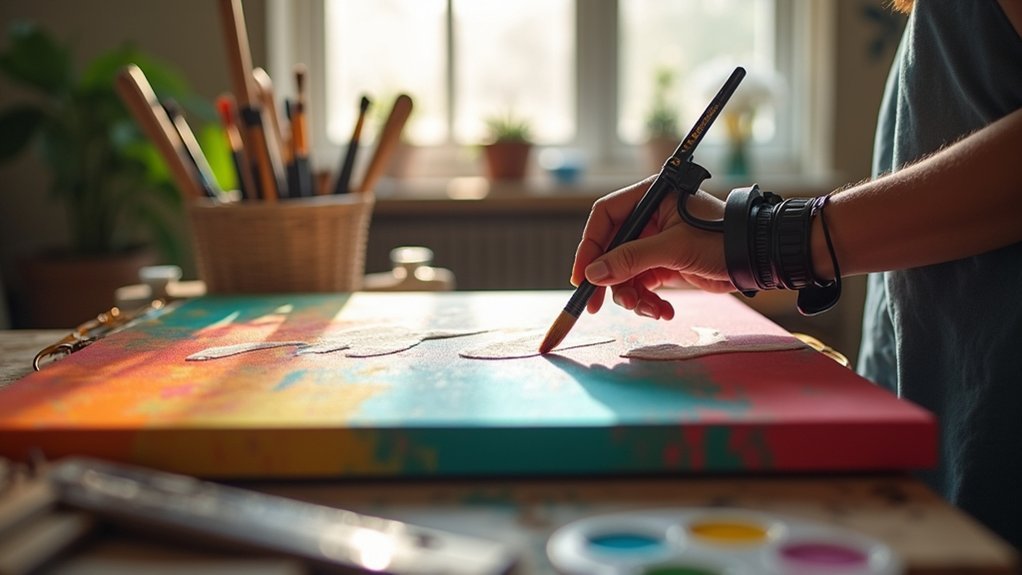
Artists with limited mobility can still enjoy palm painting through specialized techniques. Try watercolor pouring on a vertical easel, use brushes with thickened handles, or explore negative space approaches that focus on shapes rather than details. Finger painting, sponges, and stencils eliminate the need for fine motor control while still creating beautiful results. Position your work at eye level and take regular breaks. These adaptations transform limitations into unique artistic opportunities.
Watercolor Pouring Techniques for Palm Art
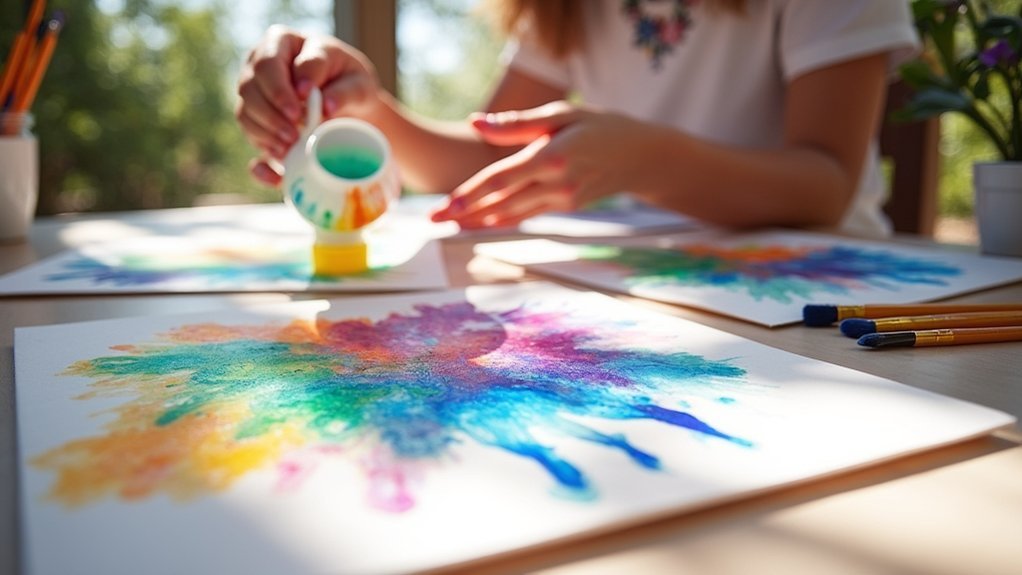
The art of watercolor pouring offers a liberating approach for artists with limited mobility. By positioning your paper vertically on an adjustable easel, you’ll reduce hand strain while allowing gravity to become your creative partner.
Focus on fluid motions and controlled pouring rather than detailed brushwork. Tilt and rotate your paper to direct paint flow, creating dynamic effects with minimal physical effort.
Try using the grid method to stabilize your work and prevent unnecessary movements. Consider applying the technique of drawing from center outwards when adding palm leaf details for a more natural appearance.
Keep your workspace ergonomically arranged with proper seating and support. Select lightweight materials and a simplified color palette—primary colors or monochromatic schemes work well for reducing mixing complexity.
Practice controlling paint flow by leveraging gravity and using minimal movements. With patience, you’ll develop techniques that accommodate your mobility while achieving beautiful results.
Adaptive Brushes and Tools for Palm Tree Painting
You’ll find several adaptive brush options that make palm tree painting accessible despite mobility challenges.
Consider modifying standard brushes with thicker handles using clay or grip aids, which enhance comfort while maintaining control for detailed frond work.
Fan and rake brushes with ergonomic extensions can help you create beautiful palm foliage without straining your hands or wrists. Using a fan brush technique allows you to easily create the distinctive star pattern of palm fronds with minimal wrist movement.
Adaptive Brushes and Tools for Palm Tree Painting
Creating beautiful palm tree artwork doesn’t require perfect mobility when you’re equipped with the right adaptive tools. Modified brushes with thickened handles using Model Magic clay can dramatically improve grip stability, while adaptable grips designed for various brush sizes enhance both comfort and control during painting sessions.
- Transform your experience with fan brushes secured to your hand using rubber bands, making those sweeping palm frond strokes achievable despite mobility challenges.
- Reclaim your artistic freedom by using stippling techniques with round brushes for detailed trunk work that requires minimal movement.
- Unleash your creativity through stamper tools that create patterns without requiring precise brushwork, opening new possibilities for your palm tree scenes. The rake brush offers another accessible option with its grouped bristles that naturally create curved lines with minimal hand pressure.
Ergonomic Grip Solutions
When mobility challenges limit your artistic expression, ergonomic grip solutions can transform your palm tree painting experience. These specialized handles reduce fatigue while improving your control, allowing for both detailed fronds and broad trunk strokes.
Look for brushes with durable, comfortable grips that support multiple hand positions. Brands like Proform offer quality options that accommodate various wrist angles. The Hobby Holder’s unique Ergonomic Grip provides enhanced support specifically designed for detailed miniature work.
For additional support, assistive devices such as Easy Writer Clips and finger rings can enhance stability without requiring strong grip strength.
Consider egg-shaped handles or brushes with ABS plastic grips that provide natural holding positions. These ergonomic features make your painting strokes smoother and more effortless, letting you focus on creating beautiful palm trees rather than struggling with tool manipulation.
You’ll experience less strain and greater artistic freedom despite mobility limitations.
Brush Extension Options
Brush extension options expand the possibilities for palm tree painting beyond standard tools. When your mobility limits your reach, specialized tools can bridge the gap between your artistic vision and physical capabilities. Brush extenders attach to standard brushes, allowing you to maintain distance from your canvas while achieving the perfect palm frond strokes.
- Freedom to create – With brush holders that secure tools in place, you’ll experience the joy of painting without struggling to maintain your grip.
- Confidence in every stroke – Tabletop easels provide stability, reducing the physical effort needed to create beautiful palm landscapes.
- Independence in expression – Adaptive handles modified with clay or rubber bands transform ordinary brushes into comfortable, accessible instruments for your unique artistic voice. The fan brush technique creates spontaneous-looking leaves when using the side or tip, requiring less precise movements for those with limited dexterity.
Ergonomic Positioning for Comfortable Palm Art Sessions
Creating an ergonomic art station can transform your palm painting experience when mobility is limited.
You’ll want to position your easel at eye level and maintain an arm’s length distance to prevent unnecessary strain on your back and shoulders.
Consider using adjustable equipment that accommodates both sitting and standing positions, ensuring your workspace remains accessible regardless of your mobility needs.
For limited mobility artists, maintaining a comfortable grip while palm painting can help reduce wrist and forearm problems that commonly develop during extended art sessions.
Ergonomic Positioning Subheadings
Proper ergonomic positioning serves as the foundation for successful palm painting, especially for artists with limited mobility.
You’ll want to create a workspace that minimizes strain while maximizing comfort and creative freedom. Adjust your seating so your feet rest flat on the floor, and position your easel at eye level to prevent neck strain. Focus on maintaining a healthy spine posture rather than just sitting up straight to improve your overall comfort during painting sessions.
- Support Your Body – Using ergonomic chairs with proper back support doesn’t just prevent pain—it empowers you to express yourself freely without physical limitations holding you back.
- Create Your Command Center – Arranging all supplies within easy reach transforms your workspace into a domain where your creativity flows unimpeded by physical constraints.
- Honor Your Unique Needs – Adapting tools with larger grips or using mounting devices celebrates your individual approach to art-making rather than forcing conformity.
Easy-Access Art Stations
How you organize your art supplies can dramatically impact your palm painting experience, especially when mobility limitations come into play.
Look for stations with strategically placed apron hooks, pot holders, and flat storage shelves that accommodate papers up to A1 size.
Choose art stations that mount at wheelchair-accessible heights with utensil holders and rail systems for suspended storage. These features reduce the need for stretching or bending while keeping supplies visible.
Dedicated compartments for separating wet and dry materials will streamline your workflow and prevent messes. The Easy Access Art Station features a sturdy construction that ensures stability during creative sessions without unwanted movement.
Don’t overlook safety elements like non-slip holders for paint tubs and easy-clean surfaces.
The best stations include display clips for hanging finished artwork, supporting your creative journey while minimizing physical strain through ergonomic design that adapts to your specific mobility needs.
Simplified Palm Tree Designs for Reduced Hand Strain
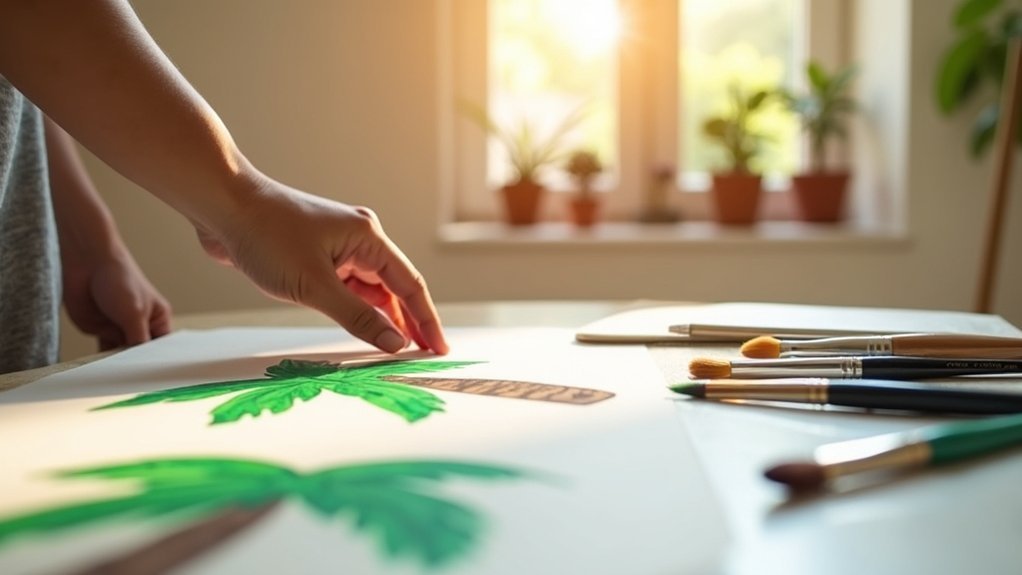
When you live with limited mobility, painting palm trees doesn’t have to cause discomfort or strain. You can create beautiful tropical scenes by mixing burnt umber with mars black for the trunk and using an angle brush for texture with curved strokes.
For leaves, fan brushes allow easier application with less pressure, especially when paint is thinned with water. Adding toothpick texture details can create realistic palm trunk patterns without requiring fine motor control.
- Relief for Tired Hands: Use larger brushes and sponges instead of small brushes to apply paint more broadly, giving your fingers a much-needed break.
- Freedom in Expression: Light, gentle strokes create beautiful curved palm leaves without requiring precise control or steady hands.
- Confidence in Creating: Working on smaller canvases with adapted tools like palette knives builds artistic independence despite physical limitations.
Remember to maintain comfortable posture and take regular breaks to preserve your energy.
Multi-Sensory Palm Crafting With Limited Mobility
Painting palm trees becomes a richer experience when you engage multiple senses, not just sight. By incorporating puffy paint or hot glue, you’ll create tactile elements that bring your creations to life through touch.
These sensory additions are particularly valuable if you have visual impairments. Explore different textures like sandpaper for tree trunks or fabric for palm fronds.
These materials don’t just enhance your artistic expression—they provide therapeutic benefits, stimulating cognitive function and emotional expression.
If you’re dealing with mobility challenges, consider joining adaptive art programs where trained facilitators demonstrate specialized tools. Using weighted add-ons for your brushes and painting tools can significantly improve stability while creating palm designs. Many workshops offer collaborative spaces where you’ll learn techniques tailored to your specific needs.
These group settings also provide valuable social interaction while you develop skills using adaptive tools designed for your comfort.
Palm Silhouette Techniques Using Negative Space

Discovering the power of negative space can transform your palm tree artwork into striking silhouettes while minimizing physical strain.
By painting around your subject rather than detailing every frond, you’ll create visually impactful pieces with less physical effort. Painting the blue sky around a palm tree creates more visual appeal with less precision required. Watercolors and acrylics work excellently with masking fluid to protect areas while you build up contrasting backgrounds.
- Simplify your approach – Feel the liberation of focusing on shapes rather than details, reducing joint strain while creating powerful visuals.
- Create depth through layers – Experience satisfaction as simple glazing techniques bring dimension to your work without intricate brushwork.
- Embrace contrast – Enjoy the dramatic impact of dark backgrounds against bright skies, creating emotional sunset scenes with minimal physical exertion.
Position your work at comfortable angles using ergonomic tools to further reduce mobility challenges.
No-Brush Palm Painting Methods
Beyond silhouettes lies a world of brush-free creativity that opens artistic possibilities for those with limited hand dexterity. You’ll find that direct hand techniques eliminate the need for fine motor control while still producing beautiful palm imagery. Adding pouring medium to paints makes them flow more easily and creates sweeping effects when manipulated by hand.
| Technique | Best For | Required Materials |
|---|---|---|
| Finger/Palm Stamping | Defined shapes | Acrylic or washable paint |
| Sponge Applications | Textured effects | Cut foam, water-based paints |
| Hand Spreading | Abstract designs | Protective hand coverings |
Try using your palm as a paint spreader for dynamic textures or employ sponges cut into frond shapes for more controlled patterns. For precise work without brushes, palm-shaped stencils let you dab paint with fingers to create clean edges. Alternatively, grip tools like foam rollers in your closed palm to build broader strokes with minimal finger movement.
Creating Textured Palm Art Using Alternative Applications
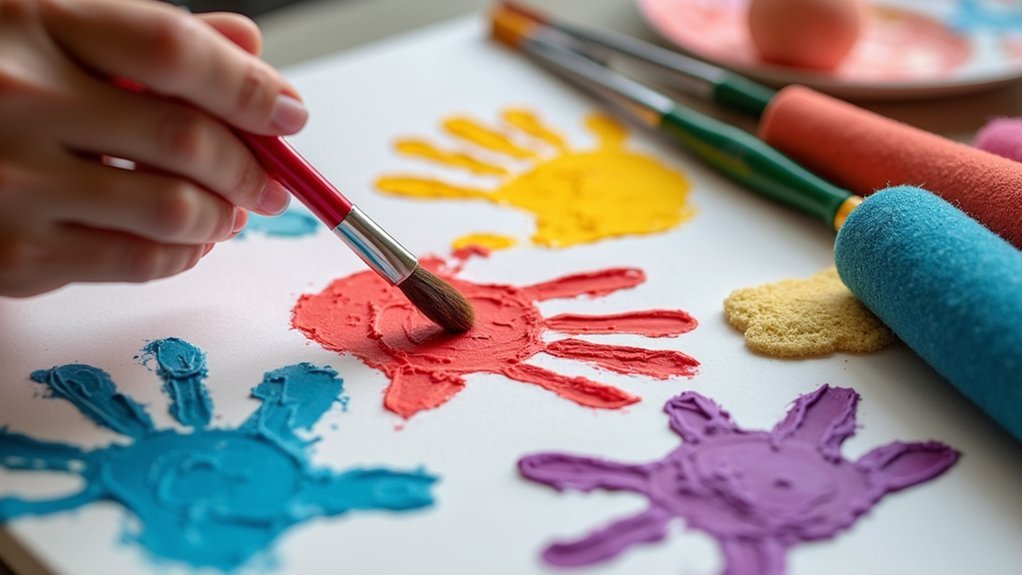
Textured palm art comes alive through alternative methods that don’t require traditional brush dexterity or fine motor skills. Using ready-made texture paste, ergonomic grip tools, and pre-textured materials can considerably reduce physical demands while creating stunning dimensional effects.
Texture brings dimension to palm art, bypassing dexterity barriers through adaptive tools and ready-made materials.
- Employ layering techniques with joint compound or lightweight texture paste applied with plastic scrapers to build depth without straining your hands or wrists.
- Utilize slip-resistant surfaces and assistive devices like clamps to keep your canvas secure, allowing you to focus on artistic expression rather than stability.
- Focus on simple motifs with vibrant colors that emphasize texture over intricate details, creating visually striking palm art while conserving energy and reducing physical exertion. Playing soft background music during your artistic sessions can help maintain a relaxed atmosphere and reduce tension in your hands while creating.
Frequently Asked Questions
Can Palm Painting Benefit Those With Cognitive Limitations?
Yes, palm painting can enhance your cognitive function by stimulating both sides of your brain, improving problem-solving skills, and boosting memory retention. It’s also therapeutic, reducing stress while providing a sense of accomplishment.
How Long Does It Take to Learn Adaptive Palm Painting Techniques?
Learning adaptive palm painting varies based on your mobility level and prior experience. You’ll likely see progress within weeks with consistent practice, but full comfort may take 2-3 months. Everyone’s journey differs considerably.
Are Palm Painting Techniques Suitable for Children With Mobility Challenges?
Yes, palm painting techniques are suitable for children with mobility challenges. You’ll find adaptive tools, templates, and large brush strokes make it accessible while providing educational benefits and sensory engagement they’ll enjoy.
Can Medication Timing Affect Success With Palm Painting Sessions?
Yes, your medication timing directly impacts your palm painting success. You’ll achieve better results when you schedule sessions during peak medication effectiveness, reducing pain and optimizing mobility for your creative expression.
What Palm Painting Methods Work Best for Temporary Mobility Limitations?
For your temporary mobility limitations, you’ll find success using foam brushes, pour painting techniques, and adaptive tools with larger grips. Position your canvas at comfortable heights and try simplified stamping methods for easier expression.
In Summary
You’ve got multiple options to create beautiful palm art despite mobility challenges. Whether you’re trying watercolor pouring, using adaptive tools, or exploring no-brush techniques, don’t let limitations stop your creativity. Position yourself comfortably, simplify designs when needed, and experiment with texture and negative space. Remember, it’s about finding what works for your specific needs while still enjoying the artistic process.

Leave a Reply