

Wheelchair-friendly crafts that accommodate limited mobility include tabletop mosaics, adaptive painting, nature collages, sensory clay projects, magnetic crafting systems, no-sew fabric art, digital artmaking, one-handed jewelry making, group activities, and photography. You’ll need an accessible space with adjustable-height tables, proper lighting, and supplies within reach. Adaptive tools with ergonomic grips can reduce hand fatigue while promoting independence. The right setup transforms crafting from a challenge into an opportunity for creative expression and personal fulfillment.
Creating a Wheelchair-Accessible Crafting Space
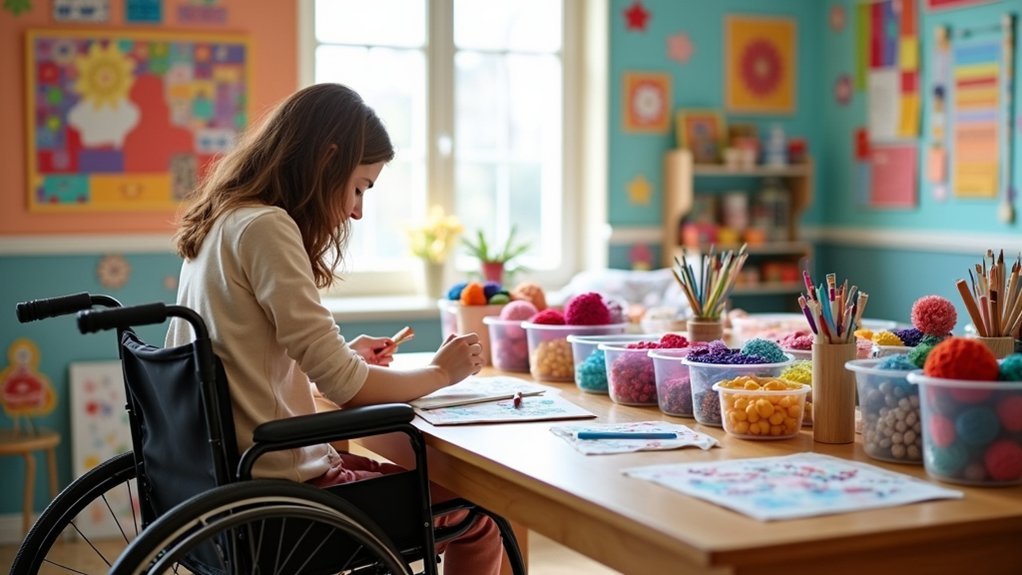
Five key elements transform an ordinary crafting area into a wheelchair-accessible creative haven.
First, guarantee your crafting space is open and uncluttered, allowing easy wheelchair movement around tables and storage units.
Install adjustable-height tables that accommodate various seating positions, maximizing comfort during extended crafting sessions.
Proper lighting is essential—incorporate bright overhead fixtures and adjustable task lamps to eliminate shadows and reduce eye strain.
Position frequently used materials within arm’s reach to minimize stretching and promote independence. This thoughtful arrangement empowers crafters to focus on creativity rather than accessibility challenges.
Finally, incorporate adaptive tools with ergonomic grips and larger handles to make precision work more manageable. These specialized instruments reduce hand fatigue and make crafting techniques accessible regardless of grip strength or dexterity limitations.
Tabletop Mosaics: Beautiful Art From Accessible Materials
Tabletop mosaics open a world of artistic expression through accessible materials like pre-cut tiles, colored paper, or adhesive-backed elements that you’ll find easier to position.
You can adapt traditional mosaic techniques by using larger pieces, template guides, or specialized tools that accommodate different dexterity levels and mobility ranges.
Set up your workspace with all supplies within arm’s reach on a stable, height-appropriate surface that gives you plenty of room to arrange your beautiful creation.
Choosing Mosaic Materials
Selecting the right materials makes all the difference when creating wheelchair-friendly tabletop mosaics. For those with limited dexterity, lightweight options like foam shapes, glass gems, and pre-cut tiles offer easier handling and arrangement without requiring fine motor skills.
Consider using adhesive-backed mosaic materials, such as stickers or pre-glued tiles, to simplify the application process and eliminate the need for extra tools. Choose large, colorful pieces that create striking designs while minimizing precise placement requirements.
The mosaic base matters too—opt for sturdy wooden boards or lightweight plastic trays that secure easily on lap trays or tables.
Don’t overlook the sensory benefits of incorporating textured stones or fabric pieces, which add both visual appeal and tactile stimulation during your creative process.
Accessible Design Techniques
Creating beautiful tabletop mosaics becomes more accessible when you master a few key design techniques. For those with limited hand mobility, the right approach makes all the difference in your crafting experience.
| Technique | Benefit | Tool Recommendation | Difficulty Level |
|---|---|---|---|
| Grid Pattern Layout | Provides structure for beginners | Erasable markers on template | Easy |
| Textured Applicators | Enhances grip and control | Foam-handled tweezers | Moderate |
| Group Assembly | Encourages collaboration | Multi-height work table | Easy |
| Section-by-Section Method | Prevents fatigue | Compartmented trays | Moderate |
Position yourself at a large, stable surface that accommodates your wheelchair comfortably. This minimizes strain on your neck and back while working. Consider starting with pre-cut materials that don’t require additional manipulation, allowing you to focus on design rather than preparation. These accessible design techniques transform mosaic-making into an enjoyable activity regardless of mobility limitations.
Workspace Setup Tips
Four essential elements transform any tabletop into an accessible mosaic workshop for wheelchair users.
First, verify your workspace setup is at the ideal height of 28-30 inches from the floor, allowing comfortable access without straining.
Second, select a stable, flat surface that accommodates various materials while providing ample room for creativity.
Organization is vital—arrange your supplies in clear, labeled containers within easy reach to minimize stretching or bending during your creative process.
Finally, incorporate adaptive tools like ergonomic scissors and wide-grip tweezers to enhance dexterity when handling delicate mosaic pieces.
For added flexibility, consider using a wheelchair-specific lap tray that provides a stable crafting surface you can adjust for comfort.
With these thoughtful adaptations, you’ll create a functional workspace that supports your artistic expression.
Adaptive Painting Techniques for Limited Hand Mobility
Discover how mouth-stick brush techniques can transform your artistic expression by allowing precise control of paint application while seated in your wheelchair.
Vertical canvas setups position your work at eye level, eliminating awkward reaching and enabling you to paint with greater comfort and less fatigue.
You’ll find that adaptive tool enhancements, such as extended handles or ergonomic grips, can make painting tools more responsive to your unique abilities and expand your creative possibilities.
Mouth-Stick Brush Techniques
While traditional painting techniques often require dexterity in the hands and fingers, mouth-stick brush techniques offer an empowering alternative for wheelchair users with limited hand mobility.
These specialized mouth-stick brushes attach securely to ergonomic mouth pieces that you’ll control through head movements, opening a world of creative activities despite physical limitations.
To get started, position your canvas at eye level using an adjustable easel or slant board designed for wheelchair access.
You’ll find that regular practice enhances your coordination and control as you learn to create both abstract and detailed designs.
The key is finding comfortable mouth sticks that won’t cause strain during extended painting sessions.
As you develop your skills, you’ll discover a fulfilling artistic outlet that not only expresses your creativity but also improves fine motor abilities.
Vertical Canvas Setups
Since traditional horizontal art surfaces can present considerable challenges for wheelchair users, vertical canvas setups offer a transformative approach to adaptive painting. You’ll find these arrangements considerably reduce strain while allowing comfortable access from your wheelchair.
Consider investing in an adjustable easel that can be modified for your preferred height and angle. This ergonomic positioning enhances your painting experience and supports longer creative sessions.
Complement your setup with adaptive tools like long-handled brushes and ergonomic grips to improve control and minimize fatigue.
For maximum efficiency, attach your palette directly to the easel or position it within easy reach. This simple adjustment streamlines your artistic activities by eliminating unnecessary movements.
Beyond practical benefits, vertical canvas setups provide a therapeutic outlet that stimulates creativity—proving that accessibility and artistic expression can beautifully coexist.
Adaptive Tool Enhancements
For artists with limited hand mobility, standard painting supplies can present significant barriers to creative expression.
Fortunately, adaptive tools can transform your artistic experience. Consider upgrading to larger brushes with textured grips that enhance control and comfort while reducing fine motor skill demands.
Spring-action scissors simplify cutting tasks, while sponges and stamps offer vibrant artistic possibilities without requiring precise application. Triangular crayons and chunky paintbrushes provide easier gripping options that accommodate dexterity challenges.
Don’t forget to optimize your workspace with slant boards or easels that position your canvas at comfortable angles, especially important for wheelchair users during extended painting sessions.
These ergonomic adjustments minimize strain while maximizing your creative potential. With the right adaptive tools, you’ll find painting becomes less about overcoming physical limitations and more about expressing your unique artistic vision.
Nature-Inspired Collages Using Pre-Cut Elements
Because accessibility meets creativity in nature-inspired collages, you’ll find this craft particularly rewarding for wheelchair users. With pre-cut elements like leaves, flowers, and grass, you can express yourself artistically without needing precise handling skills or complex tools.
Adhesive-backed materials simplify the process—just peel and stick shapes onto your canvas. You’ll enjoy sensory exploration through various textures and colors while creating beautiful seasonal art.
Consider organizing group crafting sessions where everyone can share materials and ideas. These collaborative activities foster community connections while celebrating nature’s beauty.
You can easily theme your collages according to seasons, creating vibrant spring flower arrangements or autumn leaf displays without scissors or intricate cutting.
This approach makes artistic expression accessible regardless of dexterity limitations—proving creativity has no boundaries.
Sensory Clay Projects Without Complex Tools

You’ll discover freedom in clay art with simple texture stamping using household items like bottle caps, keys, or textured fabric pressed into soft clay.
Self-hardening clay eliminates the need for kiln firing, allowing you to create lasting sensory projects that dry overnight on any flat surface.
Tabletop rolling methods keep everything within reach as you work on a lap tray or wheelchair-accessible table, using a short rolling pin to flatten clay without extensive arm movement.
Easy Texture Stamping Techniques
While many craft projects require complex equipment, texture stamping with sensory clay offers a wonderfully accessible alternative for wheelchair users.
Simply roll out lightweight, air-dry clay and press everyday objects against the surface to create unique patterns and textures. This hands-on art activity provides valuable tactile stimulation while encouraging creative expression.
Try using items you already have: textured fabrics, leaves, sponges, or even household utensils. For easier handling, consider adaptive tools with ergonomic handles that accommodate different grip strengths and abilities.
The beauty of this technique is its simplicity—no complex tools needed!
Once your textured creations dry, you can paint them or leave them natural. Either way, you’ll enjoy both the process and the finished piece that reflects your personal artistic vision.
Self-Hardening Clay Creations
Self-hardening clay opens up a world of creative possibilities for wheelchair users seeking accessible craft options. This versatile medium requires no kiln or baking, making it ideal for crafters with limited mobility who want to express themselves artistically.
You’ll find these activities particularly accessible as the clay can be manipulated with varying levels of dexterity or with adaptive tools. The tactile nature of self-hardening clay provides valuable sensory stimulation while promoting emotional well-being through creative engagement.
After your creation dries, enhance it with paint or decorative elements according to your abilities. The lightweight, non-toxic properties of most self-hardening clay brands guarantee a safe experience for all participants.
From simple pinch pots to textured ornaments, these projects offer both artistic satisfaction and therapeutic benefits without complex equipment.
Tabletop Rolling Methods
Tabletop rolling methods offer an excellent way to extend your clay experience with minimal equipment and maximum accessibility.
Using an ergonomic rolling pin with specially designed handles reduces hand fatigue while giving you better control over your clay projects.
Place a non-stick mat on your table to prevent clay from sticking, making it easier to manipulate materials without frustration.
You’ll find pre-cut templates particularly helpful for creating consistent shapes without requiring precise hand movements.
Consider incorporating adaptive tools into your crafting routine.
Wide-grip rolling pins and foam rollers accommodate different dexterity levels, ensuring you can work independently regardless of mobility challenges.
These tabletop rolling methods eliminate the need for complex tools while still allowing full creative expression through sensory clay projects that you can complete comfortably from your wheelchair.
One-Handed Jewelry Making With Modified Equipment
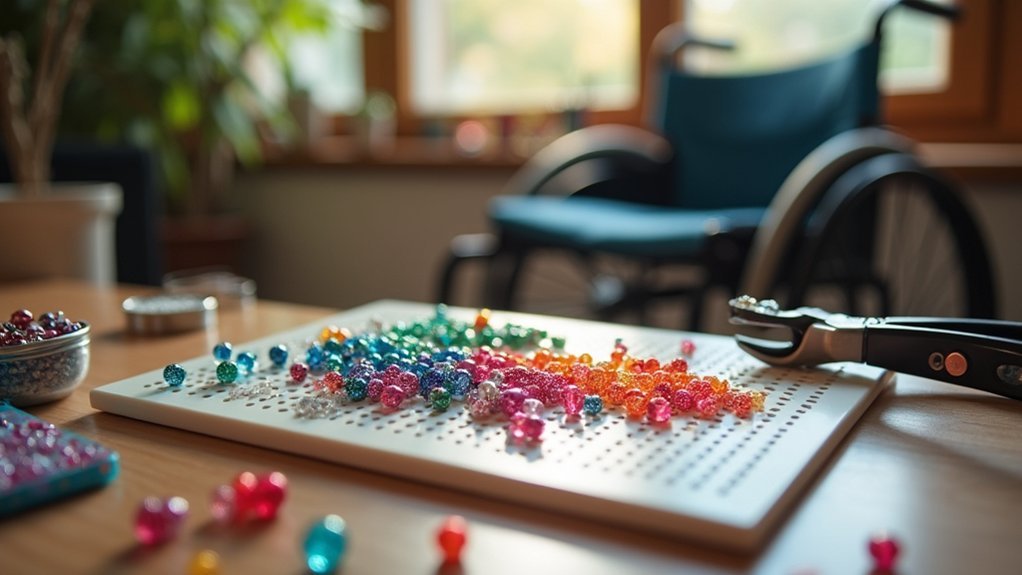
Creating beautiful jewelry doesn’t require two hands when you have the right adaptive equipment. With specially designed one-handed jewelry making tools, you’ll find that crafting becomes accessible and enjoyable again.
Adaptive tools transform jewelry-making from a two-handed challenge into an accessible art form for everyone.
Use ergonomic pliers with larger grips and pre-strung beads with elastic cord to simplify assembly while maintaining creative freedom.
For maximum efficiency, try these adaptations:
- Magnetic clasps instead of traditional fasteners for easier wearing
- Bead organizers with modified larger openings for simple selection
- Tabletop trays with raised edges to prevent beads from rolling away
These adapted tools transform the jewelry-making process, allowing you to focus on your designs rather than struggling with materials.
The stability provided by specialized equipment means you’ll spend less time managing components and more time expressing your creativity.
Magnetic Crafting Systems for Independent Creation
While jewelry making offers one avenue for creative expression, magnetic crafting systems open up an entirely new domain of possibilities for wheelchair users.
These innovative systems use magnets to hold materials securely in place, eliminating the need for fine motor skills that might be challenging if you have limited mobility.
You’ll find magnetic boards, strips, and tiles that let you arrange components effortlessly, fostering both creativity and independence.
Many kits are specifically designed with wheelchair accessibility in mind, featuring adjustable heights and angles for ideal comfort.
Whether you’re working with fabric, paper, or foam, these magnetic components accommodate diverse projects from simple collages to complex designs.
They’re not just tools—they’re gateways to self-expression and emotional well-being, allowing you to craft confidently despite mobility limitations.
No-Sew Fabric Art Projects for Various Ability Levels
Fabric art doesn’t require threading a needle or mastering complex stitches to create stunning designs. If you have limited dexterity, no-sew fabric art projects offer accessible ways to express creativity while bypassing traditional sewing challenges.
Using fabric glue or iron-on adhesives, you’ll create beautiful pieces without frustration.
Try these wheelchair-accessible fabric projects:
- Fabric collage wall hangings using pre-cut shapes and various textures
- No-sew t-shirt bags that transform old clothing into functional items
- Felt designs with adhesive backing that can be arranged and rearranged
The diverse textures and vibrant colors available in fabric stores provide sensory engagement while creating personalized art.
These projects build confidence through simple assembly techniques, ensuring everyone can participate regardless of mobility limitations.
Adaptive Photography and Digital Artmaking
Beyond fabric arts, the digital world opens expansive creative opportunities for wheelchair users through adaptive photography and digital artmaking.
You’ll find specialized equipment like tripod mounts and remote shutter releases that let you capture images without extensive movement or dexterity.
Digital artmaking applications offer accessibility features including voice commands and touch-free controls tailored to your specific needs.
Many programs provide customizable interfaces where you can adjust tool sizes and layouts for easier navigation, especially if you have limited hand function.
Consider using stylus pens and tablets for greater precision and control compared to traditional methods.
Don’t forget to connect with online photography and art communities where you can share your work, receive feedback, and participate in collaborative projects—fostering a sense of belonging while developing your creative skills.
Group Crafting Activities for Mixed Mobility Participants
Creating an inclusive environment where everyone can participate meaningfully stands at the heart of successful group crafting activities for mixed mobility participants.
When designing craft projects that help people connect across ability levels, consider setting up various stations tailored to different capabilities.
- Utilize adaptive tools like wheelchair lap trays and ergonomic supplies to guarantee comfort and accessibility for wheelchair users.
- Incorporate larger collaborative canvases where participants can contribute according to their mobility range and creative strengths.
- Design project workflows with specific tasks that accommodate varying abilities, fostering teamwork and mutual support.
These approaches transform group crafting into more than just creative expression—they build community, boost emotional wellbeing, and create a sense of shared accomplishment that transcends physical limitations.
Frequently Asked Questions
What Are Easy Crafts for Disabled Hands?
You’ll enjoy tape painting, fairy glow jars, and rock painting using adaptive tools with ergonomic grips. Try pre-cut materials and adhesive papers for easier crafting that accommodates your dexterity needs while expressing creativity.
Can Dementia Patients Do Crafts?
Yes, you’ll find that dementia patients can absolutely do crafts. They benefit from simple, sensory-rich activities that you can adapt to their abilities, providing emotional comfort and cognitive stimulation through creative expression.
What Are Creative Activities for Adults With Learning Disabilities?
You’ll find that sensory art, collages, and adaptive painting work well for adults with learning disabilities. They’ll boost your fine motor skills, enhance social connections, and provide tactile experiences that support emotional well-being.
What Are the Best Crafts for Seniors?
You’ll enjoy creating autumn paper plate wreaths, sock snowmen, and geometric tape paintings. DIY stress balls improve hand strength while group crafting activities boost your mood and foster social connections. These crafts accommodate various ability levels.
In Summary
You’ve now discovered ten accessible craft options that don’t let limited mobility define your creativity. Whether you’re adapting your space, exploring sensory clay, or creating digital art, these projects offer meaningful creative expression without frustration. Remember, it’s not about what you can’t do—it’s about finding new ways to express yourself. Don’t hesitate to modify any technique to suit your unique abilities and interests.


Leave a Reply