

Trampolines provide powerful sensory integration benefits for individuals with disabilities through rhythmic bouncing that activates neural pathways between the vestibular system and brain. You’ll experience enhanced body awareness and improved motor skills with each jump through proprioceptive feedback. Bouncing helps organize sensory information, strengthens balance, and reduces anxiety while improving focus. For many with sensory processing challenges, consistent trampoline therapy leads to measurable improvements in attention span and emotional regulation. The following sections explain the transformative science behind these benefits.
The Science Behind Sensory Integration and Trampolining

While trampolines are often viewed as simply recreational equipment, they’re actually powerful tools for sensory integration therapy. When you bounce, you’re activating critical neural pathways that connect your vestibular system to your brain, providing consistent sensory input to help regulate responses.
The rhythmic bouncing activities deliver powerful proprioceptive input, which enhances body awareness and improves motor skills. This input acts like a reset button for your nervous system, allowing better processing of environmental stimuli.
Research shows that over 80% of individuals with sensory processing challenges demonstrate significant improvements through structured trampoline therapy.
Your brain receives controlled, repetitive feedback during trampolining that facilitates sensory integration in a way few other activities can match. This predictable stimulus helps organize sensory information, making it easier to respond appropriately to your environment.
Vestibular Processing Benefits of Bouncing Activities
When you bounce on a trampoline, your body engages in a powerful sensory reset that challenges and strengthens your vestibular system.
You’ll notice improvements in your balance as your brain processes the constant shifts in gravity and acceleration during each jump.
These movement experiences create neural pathways that help your body better understand its position in space, making everyday activities like walking, sitting, and playing more coordinated and effortless.
Balance Through Movement
Because the vestibular system serves as our internal GPS, trampoline activities offer powerful benefits for those struggling with sensory processing challenges.
When you’re bouncing, your brain receives vital vestibular input that helps improve balance and coordination through rhythmic movement.
You’ll notice that children who regularly use a trampoline develop better spatial awareness as their brains process this sensory feedback more effectively.
The up-and-down motion provides the vestibular stimulation needed to regulate sensory systems, particularly calming for those who are oversensitive to such input.
Each jump delivers significant proprioceptive feedback, enhancing your body awareness and motor control.
Studies confirm that consistent trampoline use strengthens these foundational skills, which translate directly to improved performance in daily activities and overall physical development.
Gravity-Defying Sensory Reset
The remarkable sensation of weightlessness during trampoline activity offers much more than just a fun experience—it provides a powerful sensory reset for the nervous system.
When you’re bouncing, your brain receives concentrated vestibular input that helps organize sensory information more effectively.
This rhythmic physical activity creates predictable sensory regulation opportunities as your body processes changes in body position and movement.
You’ll notice improved motor skills developing through consistent trampoline sessions, as each bounce delivers strong proprioceptive feedback about where your body exists in space.
For those with sensory integration challenges, this controlled vestibular input works wonders for coordination and spatial awareness.
The repetitive up-and-down motion acts as a calming mechanism, allowing your nervous system to reset while simultaneously strengthening connections that enhance motor planning abilities.
Proprioceptive Input: How Trampolines Build Body Awareness

As children bounce rhythmically on a trampoline, their bodies receive powerful proprioceptive feedback that transforms their understanding of where they exist in space. This sensory diet component delivers deep pressure input that organizes their sensory processing systems, particularly beneficial for children with autism or sensory challenges.
You’ll notice improved motor skills as your child’s muscles and joints engage in repetitive bouncing motions. This activity strengthens muscle memory while building body awareness that translates to everyday movements. The proprioceptive input from trampolining helps your child recognize their physical capabilities and limitations.
Regular trampoline sessions contribute to emotional control and reduced anxiety by regulating the nervous system. As your child develops confidence in their movements, you’ll see these benefits extend beyond physical improvements to enhanced social interactions and self-assurance.
Creating Safe Trampoline Environments for Different Abilities
You’ll need to prioritize trampolines with robust safety features like quality netting and padding that accommodate users of all abilities while minimizing injury risks.
Consider incorporating adaptive support systems such as stability handles, transfer benches, or specialized harnesses that provide additional security for individuals with balance or mobility challenges.
Setting up a distraction-free zone with shock-absorbing mats on level ground creates an ideal environment where everyone can safely experience the sensory benefits of bouncing.
Safety Features Matter
Creating safe trampoline environments requires careful attention to specialized safety features, especially when accommodating individuals with different abilities.
You’ll want to invest in high-quality trampolines with reinforced netting and padded edges to prevent injuries. Establishing a controlled environment with level ground and shock-absorbing mats creates an additional safety buffer.
- Select trampolines with appropriate weight limits and sturdy frames
- Install complete enclosure netting with no gaps or openings
- Guarantee padding covers all springs, hooks, and hard edges
- Create low-stimulation areas around the trampoline setup
- Position trampolines away from walls, furniture, and other obstacles
Remember that supervision by trained staff is essential, particularly in therapeutic settings.
Implementing clear safety rules tailored to each person’s capabilities will foster confidence while maximizing the benefits of this sensory-rich activity.
Adaptive Support Systems
When designing trampoline environments for diverse abilities, adaptive support systems transform standard equipment into inclusive sensory opportunities.
You’ll find that a properly adapted trampoline provides both physical challenge and security, with customized safety features addressing specific sensory needs.
Consider installing additional handrails or stability bars that offer independence while bouncing. These modifications don’t compromise the valuable sensory stimulation but enhance confidence for users developing motor skills.
Position your trampoline in a distraction-free zone to help individuals focus on the physical sensations without overwhelming input.
Trained staff or caregivers should remain present to offer adaptive support tailored to each person’s abilities. They can adjust activities to provide the right balance of challenge and success, ensuring everyone benefits from the therapeutic bouncing experience while maintaining safety protocols.
Therapeutic Jumping Techniques for Sensory Regulation

Three key mechanisms make therapeutic trampoline jumping an effective sensory regulation tool.
First, the consistent, repetitive motion helps balance sensory channels in your brain.
Second, each bounce delivers proprioceptive feedback, enhancing your body awareness and motor skills.
Third, controlled jumping stimulates your vestibular system, improving balance and emotional well-being.
- Customize bounce heights to match your personal sensory processing needs
- Incorporate arm movements to enhance motor planning coordination
- Establish regular jumping sessions as part of your sensory diet
- Gradually increase complexity as your confidence grows
- Use rhythmic bouncing to promote focus and reduce anxiety
You’ll find that these therapeutic techniques can be tailored to your comfort level, making trampoline therapy an accessible intervention for various sensory processing challenges.
Measuring Progress: Sensory Milestones Through Trampoline Therapy
Measuring progress in trampoline therapy transforms abstract sensory improvements into concrete, observable milestones.
You’ll notice your child’s sensory processing advances through their increased ability to handle the vestibular input during bouncing sessions. Over 80% of participants demonstrate enhanced motor skills after consistent therapeutic trampoline sessions, with improvements in balance and coordination being particularly evident.
For children with autism, progress markers include longer attention spans, reduced anxiety, and better body awareness during activities.
You can track sensory integration development by observing how your child responds to the structured environment—noting improvements in their ability to regulate responses to movement and position changes.
These measurable outcomes allow therapists to adjust sessions accordingly, ensuring each bounce contributes meaningfully to your child’s sensory development journey.
Combining Trampolines With Other Sensory Equipment for Maximum Benefit
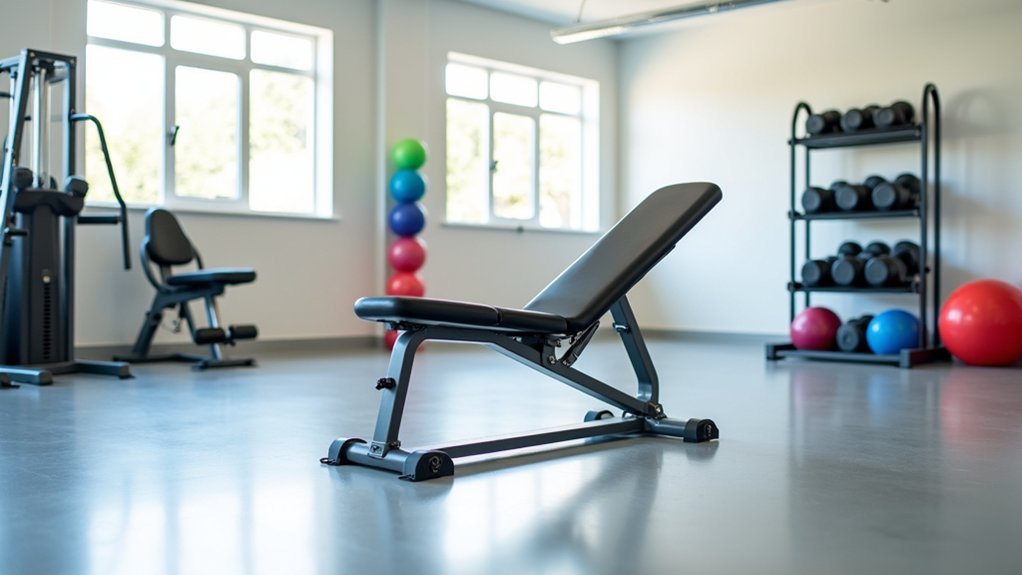
Creating a thorough sensory environment involves strategically pairing trampolines with complementary equipment to maximize therapeutic outcomes. When you combine trampoline sessions with weighted blankets or sensory swings, you’ll enhance proprioceptive input for individuals with diverse needs.
Adding music or visual tracking elements transforms bouncing into a multi-sensory experience that engages multiple processing systems simultaneously.
- Pair trampolines with gym balls to improve coordination and balance
- Alternate between trampoline use and other sensory tools during structured sessions
- Add weighted items to increase resistance and deepen proprioceptive feedback
- Incorporate visual tracking activities to enhance visual-motor integration
- Use musical cues to rhythm-match bouncing patterns for auditory processing
This all-encompassing approach addresses individual needs more effectively than trampolines alone, creating a complete sensory integration experience that develops motor skills through varied therapeutic inputs.
Frequently Asked Questions
What Are the Sensory Benefits of a Trampoline?
You’ll gain vestibular input for better balance, proprioceptive feedback for body awareness, and sensory activation that calms processing challenges. You’re also releasing endorphins that reduce anxiety while improving focus and attention.
Why Is Trampolining Good for Autism?
Trampolining helps your child with autism through vestibular stimulation, proprioceptive feedback, and endorphin release. You’ll notice improved body awareness, emotional regulation, motor skills, and social interaction in a fun, structured environment.
How Does a Trampoline Help a Child’s Development?
Trampolines help your child’s development by providing vestibular input that improves balance and coordination. They’ll gain better body awareness, motor skills, and emotional regulation through the rhythmic bouncing that releases mood-boosting endorphins.
Is Jumping on a Trampoline Vestibular or Proprioceptive?
Jumping on a trampoline provides both vestibular and proprioceptive input. You’re getting vestibular stimulation through the up-and-down motion while your joints receive proprioceptive feedback with each bounce you make.
In Summary
You’ve discovered how trampolines offer powerful sensory integration benefits for those with disabilities. By incorporating regular bouncing into your routine, you’ll support vestibular processing, enhance proprioception, and improve sensory regulation. Remember to create safe environments tailored to specific needs, track progress through observable milestones, and combine trampolines with complementary sensory equipment. You’re not just providing fun—you’re building critical neurological pathways that support development and independence.


Leave a Reply