

Board games offer powerful cognitive rehabilitation for stroke recovery. You’ll benefit from memory match games with high-contrast cards, strategy games with oversized pieces, and word builders like Scrabble for language skills. Visual scanning games improve spatial awareness, while cooperative options reduce pressure. Consider Chess, Catan, Connect 4, Ticket to Ride, and Battleship with accessibility modifications. Regular gameplay stimulates memory, attention, and problem-solving while combating isolation. The right games become valuable tools in your recovery journey.
10 Board Games That Boost Stroke Recovery
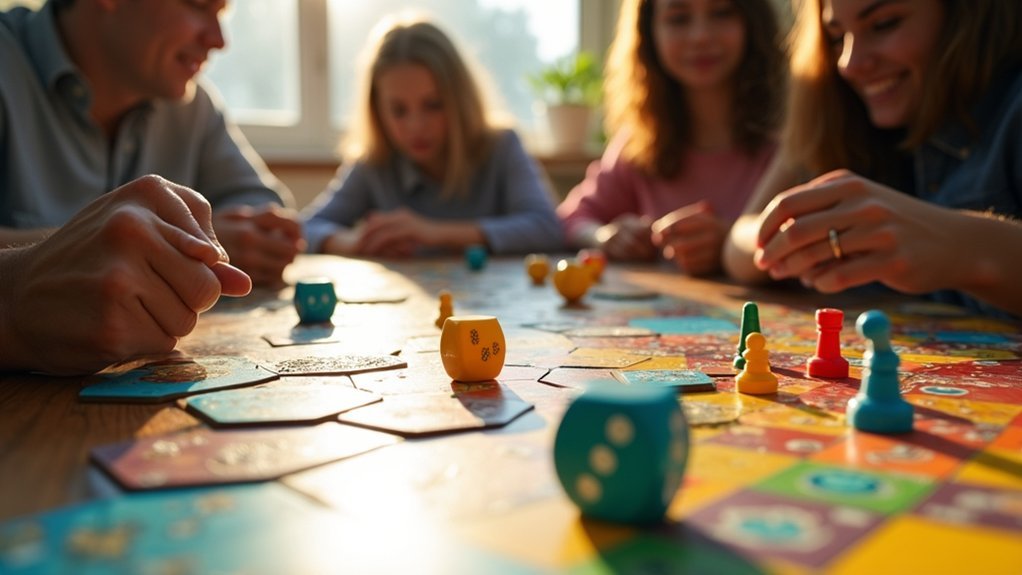
When recovering from a stroke, seemingly simple activities can become powerful rehabilitation tools. Board games offer an engaging way to rebuild cognitive skills while making rehabilitation enjoyable. Games like Scrabble strengthen language abilities, while jigsaw puzzles improve spatial awareness and fine motor control—both essential for stroke recovery.
You’ll find that regular gameplay stimulates memory, attention, and problem-solving functions that may have been affected by your stroke.
Beyond cognitive benefits, these games create opportunities for social interaction, which helps combat isolation and depression common during recovery.
Don’t worry if traditional games seem challenging—many can be adapted with larger pieces or modified rules to accommodate different abilities.
Research shows that consistent engagement with board games can lead to measurable improvements in cognitive function and potentially faster recovery outcomes.
Memory Match: Simple Card Games for Cognitive Rehabilitation
You’ll enhance your Memory Match experience by using high-contrast, large-print cards with personally meaningful images like family photos or favorite vacation spots.
Consider partnering with a caregiver who can adjust difficulty levels as you progress, perhaps starting with just 6-8 cards and gradually increasing.
Your partner can also provide gentle prompts when needed, turning rehabilitation into quality social time that strengthens relationships while building cognitive skills.
Visual Enhancement Tips
How can you maximize Memory Match games for stroke recovery? By optimizing visual elements, you’ll transform this simple game into a powerful tool for rebuilding cognitive abilities and visual memory. Memory games become more effective when tailored to your specific needs.
- Choose high-contrast cards with bold colors to reduce visual strain and make images easier to distinguish, especially if you experience visual processing challenges.
- Incorporate personally meaningful images like family photos or favorite places to strengthen emotional connections and enhance memory retention.
- Gradually increase complexity by adding more cards as your problem-solving skills improve, creating an adaptive challenge.
- Use larger cards with simplified imagery if you experience visual deficits, making the game accessible while still exercising your recovering brain.
Partner-Play Modification Ideas
Memory Match games transform into powerful rehabilitation tools through collaborative play with a partner or caregiver. You can easily modify this classic concentration game by having your partner assist in recalling card locations, creating a supportive environment that enhances both cognitive function and social interaction.
Try using personalized cards featuring familiar photos or interests to make the experience more meaningful. Start with fewer pairs if you’re finding the standard game challenging, then gradually increase the difficulty as your memory skills improve.
The beauty of partner-play Memory Match is how it naturally encourages communication while exercising short-term memory. Your partner can provide hints when needed or celebrate successful matches, turning rehabilitation into an enjoyable shared activity that benefits cognitive recovery and emotional well-being simultaneously.
Strategy Games With Modified Pieces for Dexterity Challenges
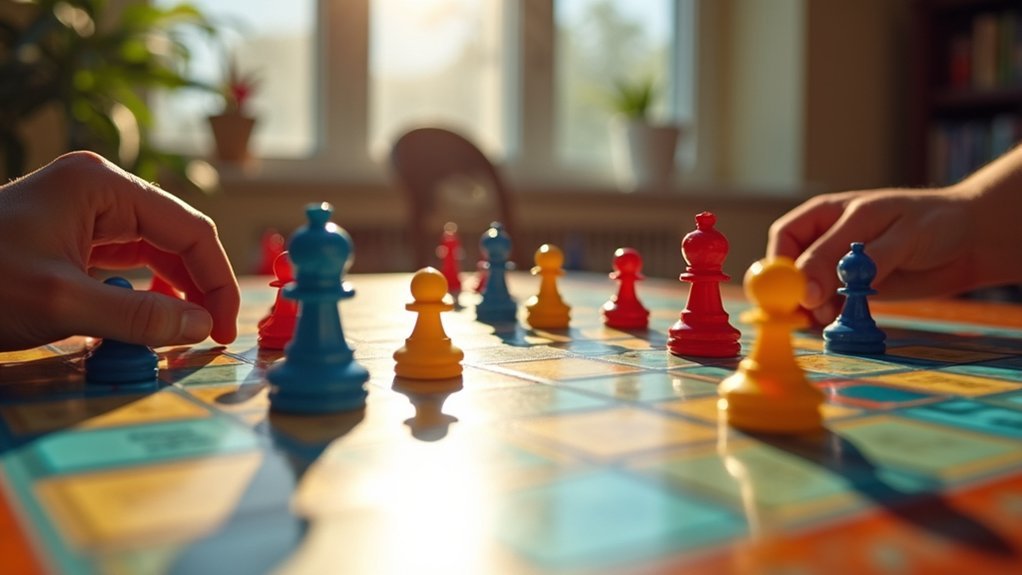
You’ll find strategy games easier to manage with oversized pieces that accommodate post-stroke grip challenges while preserving cognitive benefits.
Magnetic components prevent frustrating disruptions when pieces slip or boards get bumped during play.
Modified rules maintain the strategic challenge of games like Chess or Catan while accounting for your current dexterity limitations.
Oversized Pieces Help Grip
Stroke survivors often face frustrating dexterity challenges when attempting to enjoy traditional board games. Oversized pieces offer a practical solution that transforms the gaming experience, allowing you to focus on cognitive engagement rather than struggling with manipulation.
These modifications provide four key benefits:
- Larger surface area for easier gripping, reducing hand fatigue during extended play
- Textured surfaces enhance tactile feedback, improving your control and sensory experience
- Reduced frustration as you’ll spend less time retrieving dropped pieces
- Increased confidence letting you concentrate on strategy instead of physical limitations
You’ll find that games like chess and checkers with oversized pieces enable meaningful social interaction while supporting your recovery journey.
These adaptations make classic strategy games accessible again, turning challenging experiences into enjoyable opportunities for healing.
Adapted Rules Maintain Challenge
The beauty of modified board games lies in preserving strategic depth while accommodating physical limitations. When you’re working with stroke survivors, adapted rules guarantee the cognitive challenge remains intact while addressing dexterity issues. Modified game pieces with textured surfaces or larger dimensions allow players to focus on strategy rather than struggling with manipulation.
| Game | Adaptation for Stroke Survivors |
|---|---|
| Chess | Oversized pieces with textured tops |
| Catan | Resource cards in standing holders |
| Ticket to Ride | Magnetic trains that stay in place |
| Scrabble | Letter tiles with built-in grips |
| Dominoes | High-contrast, weighted pieces |
You’ll find that these adaptations don’t simplify the mental challenge—they simply remove physical barriers. Players can still experience the satisfaction of complex decision-making while using equipment that works with their abilities.
Magnetic Components Prevent Slipping
Four key advantages make magnetic game components invaluable for stroke recovery sessions.
When you’re focusing on cognitive rehabilitation, magnetic components in strategy games create a more accessible and rewarding experience.
- Enhanced stability – Magnetic pieces stay firmly in place, allowing stroke survivors to concentrate on strategy rather than constantly readjusting fallen game pieces.
- Improved manipulation – Modified pieces with magnetic bases offer better grip for those facing dexterity challenges.
- Reduced frustration – You’ll spend less time struggling with physical aspects and more time enjoying the mental stimulation of gameplay.
- Inclusive gameplay – Everyone can participate equally in cooperative games regardless of physical limitations.
These strategic adaptations create an environment where your cognitive recovery takes center stage, not your physical limitations.
Word-Building Games to Enhance Speech and Language Recovery
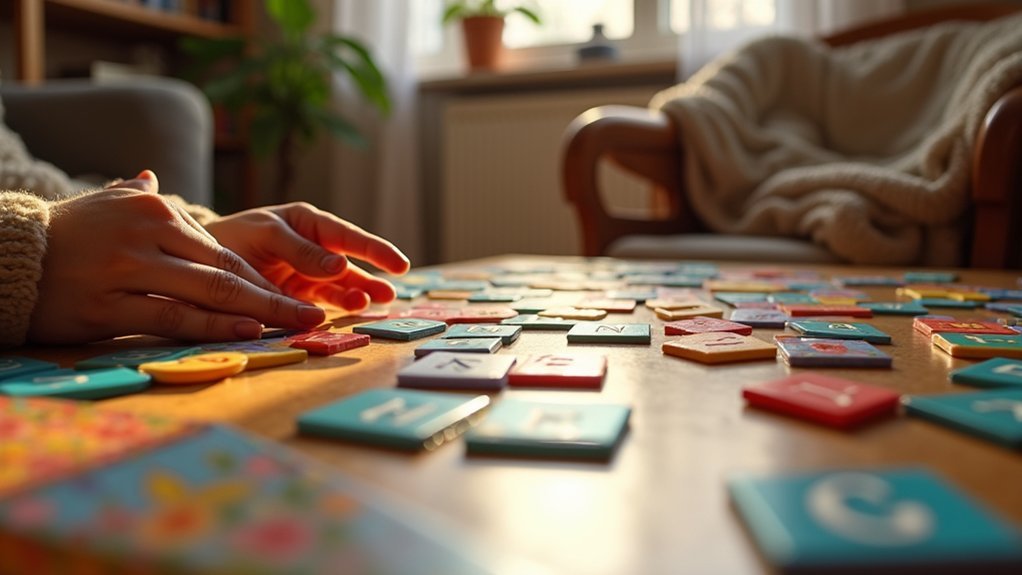
When communication skills need rebuilding after a stroke, word-building games like Scrabble and Bananagrams can become powerful rehabilitation tools.
These word games strengthen your language skills by challenging you to form words from available letters, naturally enhancing vocabulary and spelling abilities essential for speech recovery.
Letter-based word games create natural language workouts, building vocabulary and spelling skills vital for post-stroke communication recovery.
You’ll find these games particularly valuable because they improve cognitive flexibility and word retrieval—both critical for regaining conversational abilities.
The best part? You can adjust time constraints to match your comfort level, creating a low-pressure environment to practice.
Playing with friends or family adds social interaction to your recovery journey, helping combat isolation while you work on communication skills.
Regular gameplay stimulates language-related brain areas, supporting your ongoing rehabilitation and improving your ability to express yourself.
Visual Scanning Games for Improved Spatial Awareness
Visual scanning games offer powerful rehabilitation benefits for stroke survivors struggling with spatial awareness challenges. They’ll help you rebuild cognitive flexibility while making therapy enjoyable. Your brain relearns to process visual information through engaging gameplay that strengthens hand-eye coordination.
Try these effective visual scanning options:
- Connect 4 and Sequence – Identify patterns across the board to enhance spatial recognition
- Spot It! and Blink – Quickly differentiate visual elements to improve visual memory
- Battleship – Navigate grid coordinates to rebuild visuospatial skills
- Giant-sized versions – Larger game pieces provide additional visual engagement
These games transform rehabilitation into an enjoyable activity while systematically improving your ability to process visual information—a vital skill for regaining independence in daily activities.
Turn-Based Board Games With Extended Time Allowances
Taking turns provides stroke survivors with essential breathing room during rehabilitation gameplay. When you’re recovering from a stroke, turn-based board games create an ideal environment for cognitive processing without the pressure of quick decisions.
Games like Chess and Scrabble can be played with generous time limits, allowing you to thoroughly consider each move. The structured format helps you maintain focus while exercising memory skills at your own pace.
You’ll find these games particularly beneficial because they can be adjusted to match your current abilities—challenging enough to stimulate progress but not so difficult that they cause frustration.
Additionally, the social aspect encourages meaningful interaction as you discuss strategies with others, creating a supportive community that enhances both your cognitive rehabilitation and emotional wellbeing.
Cooperative Games That Reduce Competitive Pressure
Cooperative games like Pandemic and Forbidden Island offer you and fellow stroke survivors a chance to work together toward team-based recovery goals rather than competing against each other.
You’ll find these games create a stress-free play environment where everyone can contribute at their own pace without the anxiety of individual performance pressure.
Your rehabilitation journey benefits from these collaborative experiences as they build communication skills while fostering a supportive atmosphere where mistakes become learning opportunities rather than setbacks.
Team-Based Recovery Goals
While competition can sometimes create unnecessary stress during recovery, board games that emphasize teamwork offer a rejuvenating alternative for stroke survivors. Cooperative games like Pandemic and Forbidden Island establish team-based recovery goals that benefit both cognitive engagement and emotional well-being.
These collaborative experiences provide:
- Shared decision-making opportunities that stimulate problem-solving skills
- Communication practice in a low-pressure, supportive environment
- A sense of belonging and collective achievement when overcoming challenges
- Reduced anxiety compared to competitive gameplay
When you participate in these games, you’re not just playing—you’re rebuilding connections with others while exercising executive function skills.
The collaborative nature creates a pressure-free experience where success is measured by how effectively you work together, making rehabilitation feel more like enjoyment than therapy.
Stress-Free Play Environment
Creating a stress-free atmosphere stands among the most vital elements for effective stroke recovery, which is why cooperative board games have become valuable rehabilitation tools.
Games like Pandemic and Forbidden Island eliminate competitive pressure that might otherwise trigger anxiety or frustration in stroke survivors.
When you participate in cooperative games, you’re working with others toward shared goals rather than against them. This supportive dynamic helps develop essential cognitive skills through collaborative problem-solving while accommodating your individual pace and abilities.
You’ll find these games naturally allow for breaks and discussions as needed.
The collaborative nature of these activities contributes greatly to your emotional well-being, providing a sense of accomplishment without the stress of competition.
This positive experience keeps you motivated throughout your recovery journey.
Large-Format Games for Patients With Visual Impairments
For many stroke survivors with visual impairments, standard board games can present significant challenges due to their small components and detailed boards.
Large-format games offer an excellent solution, providing accessible and engaging gameplay while supporting rehabilitation.
Oversized, accessible adaptations transform favorite games into powerful rehabilitation tools while keeping the fun intact.
These oversized adaptations help you in several ways:
- Enhanced visibility – Larger pieces and boards make game elements easier to see, reducing visual strain during play.
- Improved motor skills – Manipulating bigger components strengthens fine motor skills and hand-eye coordination.
- Visual rehabilitation – Games encourage visual scanning and attention, supporting cognitive flexibility.
- Social connection – Group play with familiar, accessible games reduces frustration and promotes emotional well-being.
You’ll find these adaptations of classic games particularly valuable, as they let you enjoy familiar activities while accommodating your specific visual needs.
One-Handed Game Adaptations for Hemiplegic Players
Stroke survivors with hemiplegia face unique challenges when playing traditional board games, as limited use of one side of the body can make handling small pieces and managing game components frustrating. One-handed adaptations can transform this experience, making gameplay accessible while helping promote recovery.
| Game Type | Adaptation | Benefits |
|---|---|---|
| Connect Four | Secured board | Enhances cognitive skills |
| Jenga | Oversized blocks | Improves motor control |
| Strategy Games | Suction cup holders | Enables independent play |
Consider cooperative games like Pandemic, where hemiplegic players can focus on strategy while teammates handle physical components. These adaptations not only make games playable but serve a therapeutic purpose—strengthening coordination, problem-solving abilities, and social connections that are essential to stroke recovery.
Progressive Difficulty Games That Grow With Recovery Progress
Recovery from stroke is rarely a linear journey, which is why games that adapt to a patient’s evolving abilities prove particularly valuable in rehabilitation settings.
Progressive difficulty games offer you customized challenges that evolve as your cognitive skills improve during stroke recovery.
Consider these adaptable options:
- Word games like Scrabble and Boggle let you start with simple formations before advancing to complex vocabulary challenges.
- Dexterity games such as Jenga begin with basic stacking, then progress to strategic piece removal as fine motor control returns.
- Memory matching games start with fewer cards and expand as your retention improves.
- Strategy games like Chess can be simplified initially, then incorporate advanced tactics as you regain cognitive flexibility.
You’ll experience meaningful accomplishment as gameplay difficulty grows alongside your recovery progress.
Frequently Asked Questions
What Games Are Good for People Recovering From a Stroke?
You’ll benefit from memory games like Memory Match, strategy games like Chess, language games like Boggle, and visual skill games like Connect 4. Cooperative games also boost social interaction during your recovery journey.
What Helps Strokes Heal Faster?
You’ll heal faster from strokes with proper medical care, physical therapy, early rehabilitation, good nutrition, adequate rest, and consistency in exercises. Your commitment to following doctor’s recommendations greatly impacts recovery speed.
How Can I Maximize My Stroke Recovery?
To maximize your stroke recovery, commit to regular therapy, maintain a consistent exercise routine, eat a brain-healthy diet, stay socially engaged, and get enough rest. Don’t rush—recovery is a marathon, not a sprint.
What Card Games Are Good for Stroke Recovery?
You’ll benefit from playing Uno, Go Fish, Rummy, Skip-Bo, and Crazy Eights during stroke recovery. These games improve your memory, cognitive flexibility, fine motor skills, and social interaction while being adaptable to your abilities.
In Summary
You’ll find that board games offer more than just entertainment on your recovery journey. They’re powerful therapy tools that strengthen cognitive abilities, motor skills, and social connections in an enjoyable way. Choose games that match your current abilities and don’t be afraid to modify rules or pieces as needed. Remember, every move you make on the game board is a small victory in your stroke recovery process.

Leave a Reply