

Five stroke-friendly crafts can accelerate your at-home recovery: simple paper crafts for fine motor skills, adaptive painting with specialized tools, therapeutic clay modeling to rebuild hand strength, easy textile projects using modified equipment, and nature-based crafting for sensory stimulation. Each activity offers both physical rehabilitation and creative fulfillment while adapting to your current abilities. The right craft combines enjoyable artistic expression with the therapeutic benefits you need for continued improvement.
Simple Paper Crafts That Improve Fine Motor Skills
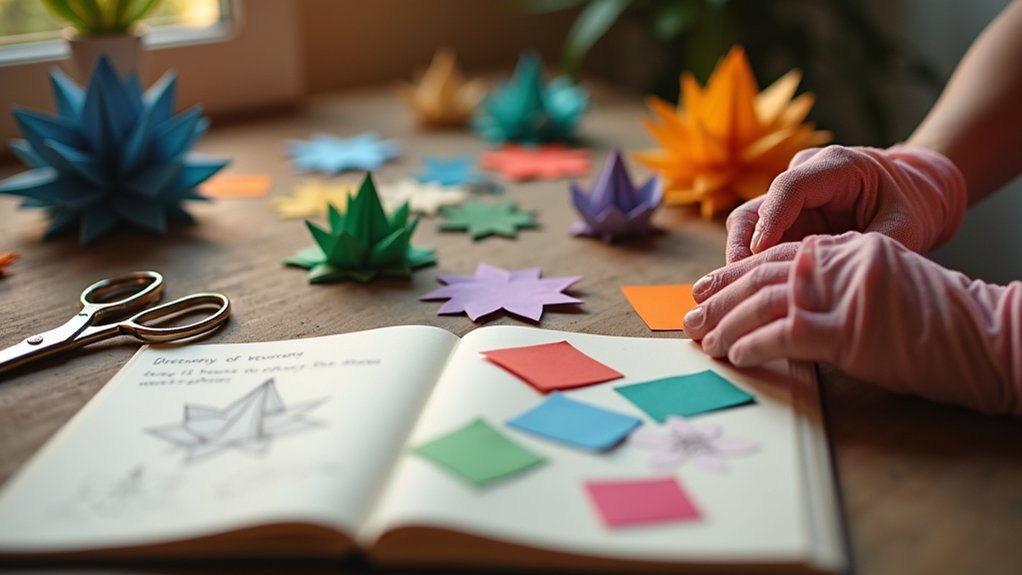
The humble art of paper crafting offers a powerful pathway to recovery after a stroke. By engaging in activities like origami or simple paper tearing projects, you’ll exercise the precise hand movements that strengthen fine motor skills vital for stroke survivors.
As you fold, cut, or glue colorful papers, you’re actually rebuilding hand function through purposeful, repetitive motions. These crafts help improve your grip strength and finger dexterity—skills that directly transfer to daily living tasks like buttoning shirts or handling utensils.
Try creating greeting cards or paper collages to practice hand-eye coordination in a relaxing environment. The visual stimulation from bright colors and patterns keeps your brain engaged while you work, providing both cognitive benefits and the satisfaction of completing something beautiful despite physical challenges.
Adaptive Painting Techniques for One-Handed Artists
After experiencing a stroke, painting can remain a fulfilling creative outlet when you adapt your approach to accommodate one-handed techniques.
You’ll find success using sponges or brushes anchored to a table, giving you control without needing to hold them directly.
Invest in adaptive tools with built-up handles or special grips designed specifically for stroke survivors.
Adaptive tools with specialized grips empower stroke survivors to reclaim their artistic expression one brushstroke at a time.
These modifications make brush manipulation easier and enhance your creative experience.
Position a tabletop easel for stability and ideal painting angles while working one-handed.
Consider simplifying your process with paint rollers or large stamps that don’t require complex hand movements.
Beyond creating beautiful art, you’re also supporting your rehabilitation—painting as therapy improves fine motor skills and cognitive function.
With these adaptations, you’ll continue expressing yourself artistically during recovery.
Therapeutic Clay Modeling for Hand Strength
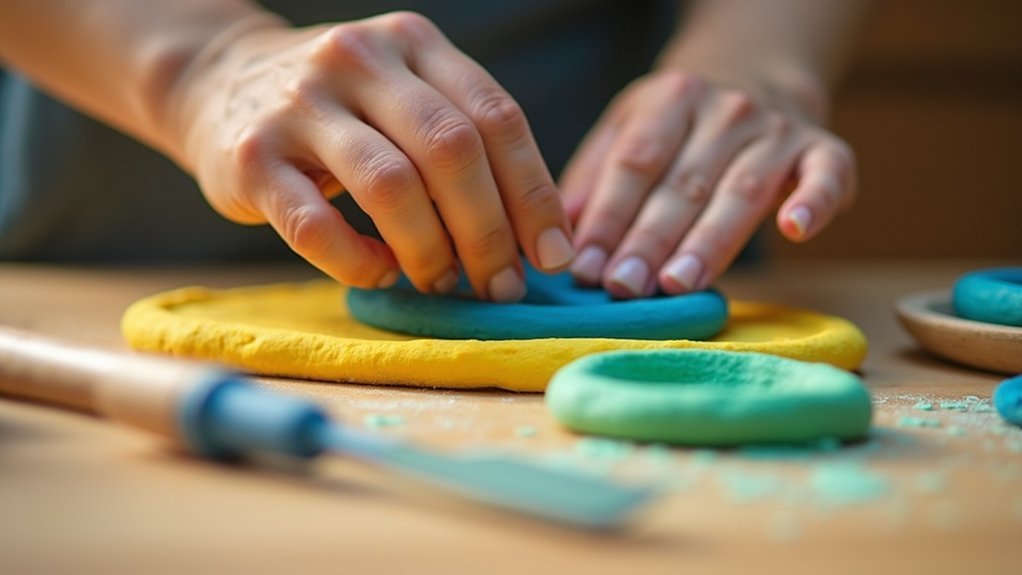
Clay modeling offers another powerful avenue for stroke rehabilitation while allowing artistic expression.
When you work with this malleable material, you’re actually strengthening your hands and improving fine motor skills essential for daily activities.
For stroke survivors, manipulating clay provides both therapeutic benefits and creative satisfaction. You’ll notice improvements in your grip strength and dexterity as you pinch, roll, and shape the soft material.
The adaptable nature of clay makes it perfect for all recovery stages—you can start with softer varieties and progress to firmer ones as your strength returns.
Occupational therapists recommend clay work because it creates a state of relaxed concentration, reducing anxiety while you focus on rehabilitation goals.
This combination of physical therapy and artistic outlet supports both your physical recovery and emotional wellbeing.
Easy Textile Projects With Modified Tools
Textile crafts become accessible again through thoughtfully modified tools that accommodate your post-stroke abilities.
Even with limited arm mobility, you’ll find projects like needlepoint or simple knitting can improve both fine motor and cognitive skills. Survivors and their families can enjoy these activities together, creating meaningful connections during recovery.
- Try larger yarns and needles for easier handling and quick progress
- Use ergonomic scissors and built-up handles to enhance your grip control
- Start with simple projects like bookmarks or pillowcase decorations
- Incorporate these crafts into your daily routine for mood improvement and anxiety reduction
These adaptable textile activities provide therapeutic benefits while giving you a sense of accomplishment, making them perfect companions on your recovery journey.
Nature-Based Crafting for Sensory Stimulation
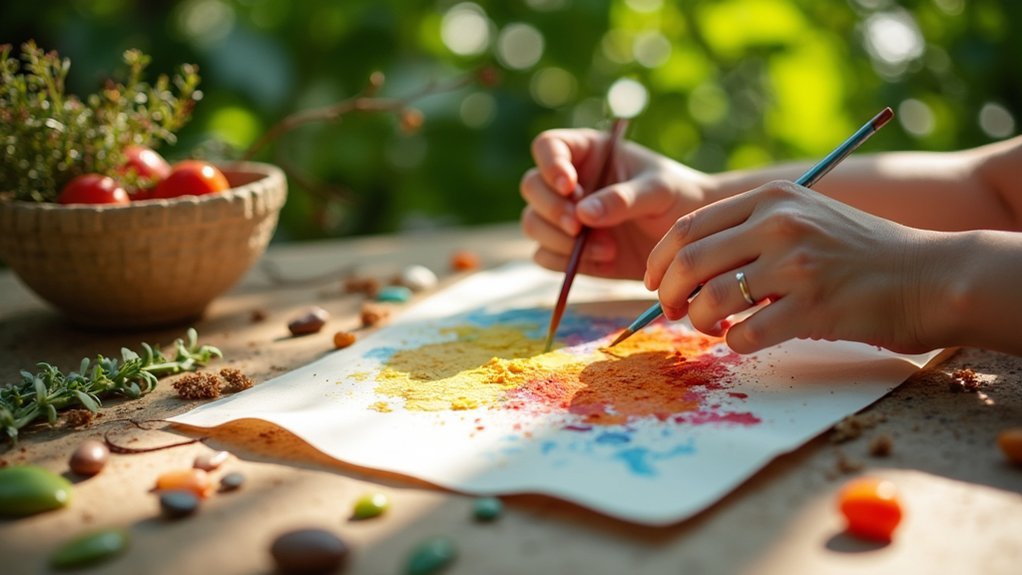
Natural materials offer a rich sensory playground for stroke survivors seeking rehabilitation through creative expression.
You’ll find that collecting and arranging leaves, flowers, and twigs not only stimulates your senses but also improves fine motor skills as you handle different shapes and textures.
Nature-based crafting provides dual benefits—it reduces stress through connection with the outdoors while challenging your hands and mind during recovery.
The varied textures of bark, smoothness of river stones, or delicacy of pressed flowers enhance cognitive engagement as you make decisions about color, placement, and design.
Best of all, these activities adapt to your abilities.
Whether you’re creating simple leaf prints or intricate natural collages, you can work at your comfort level while experiencing the satisfaction of creating something beautiful from nature’s bounty.
Frequently Asked Questions
What Crafts Are Good for Stroke Victims?
You’ll find needlework, weaving, beading, clay modeling, and art projects especially beneficial for your recovery. They’ll improve your mood, enhance fine motor skills, and strengthen grip while providing creative expression opportunities.
What Can You Do at Home After a Stroke?
After a stroke, you can practice gentle exercises, engage in crafts like knitting or painting, rest adequately, follow your therapy program, and stay mentally active with puzzles or reading to support your recovery at home.
What Is the 4-Hour Rule for Stroke?
The 4-hour rule means you should get medical treatment within 4 hours of stroke symptoms. It’s your critical window for clot-busting drugs that can greatly improve your recovery outcomes and reduce potential disabilities.
What Are the Best Activities After a Stroke?
After a stroke, you’ll benefit from knitting, pottery, gardening, cooking and painting activities. They’ll improve your mood, cognitive function, and motor skills while providing therapeutic engagement during your recovery journey.
In Summary
You’ve now got five accessible crafts to support your stroke recovery journey at home. These activities aren’t just enjoyable—they’re powerful rehabilitation tools that improve dexterity, strength, and cognitive function. Whether you’re creating paper art, adapting painting techniques, molding clay, working with textiles, or crafting with natural materials, you’re taking meaningful steps toward recovery. Start with what interests you most, and you’ll build confidence while healing.


Leave a Reply